The Impact of Virtual-Reality-Based Physiotherapy on Upper Limb Function in Children with Cerebral Palsy
Zuzanna Wojtowicz, Katarzyna Czech, Adrianna Lechowska, Justyna Paprocka

TL;DR
This review shows that virtual reality physiotherapy improves upper limb function in children with cerebral palsy, offering a safe and engaging treatment option.
Contribution
The paper provides a systematic review of virtual reality's effectiveness for upper limb therapy in children with cerebral palsy.
Findings
Virtual reality therapy improved range of motion, muscle strength, coordination, and manual precision in children with CP.
Task-oriented and immersive virtual reality environments were most effective for upper limb rehabilitation.
Children with moderate impairment (GMFCS I–III) showed the most noticeable improvements.
Abstract
Background/Objectives: Cerebral palsy (CP) is one of the most common causes of permanent motor disability in children, and its consequences for upper limb function have a significant impact on the patient’s independence and quality of life. Virtual reality is attracting increasing interest as a modern, engaging and effective method of physiotherapy for children with cerebral palsy. This systematic literature review aimed to synthesize current scientific data on the impact of virtual-reality-based physiotherapy on upper limb function in children with cerebral palsy. Methods: The review was conducted in accordance with PRISMA 2020 guidelines. PubMed, Science Direct, Scopus, Web of Science, Research Gate and Google Scholar databases were searched for studies published between 2010 and 2025. Six original studies meeting the following criteria were included in the analysis: virtual reality…
Genes, proteins, chemicals, diseases, species, mutations and cell lines named across the full text — each resolved to its canonical identifier and authoritative record.
Click any figure to enlarge with its caption.
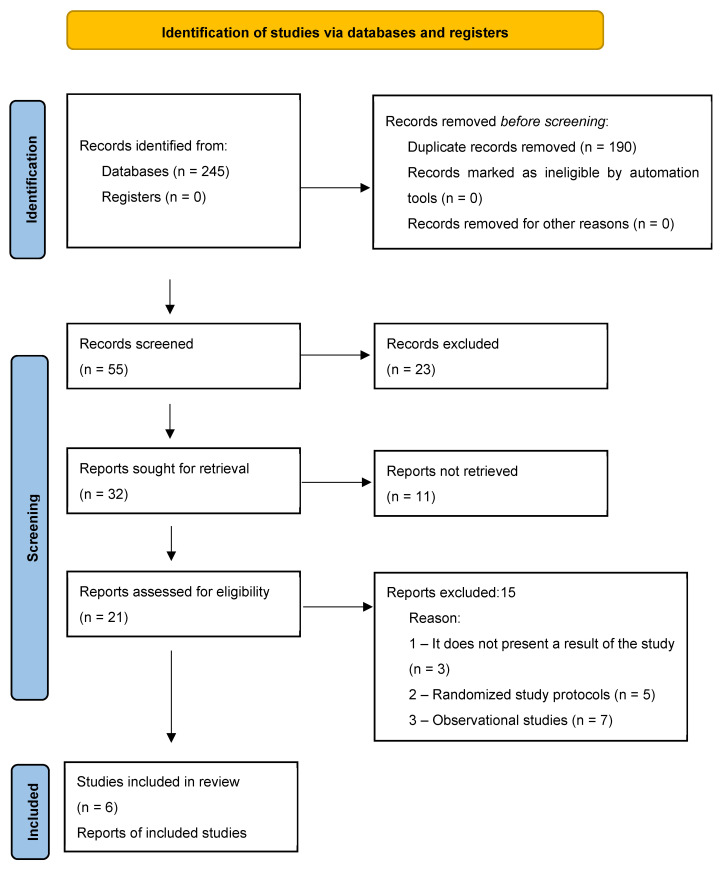 Figure 1
Peer Reviews
No public reviews on file for this paper yet. If you reviewed it on a platform where reviews are public (OpenReview, ICLR, NeurIPS, ICML), you can paste yours below so the community can read it here.
Videos
No videos yet. Explain this paper in a talk, walkthrough, or lecture? Add one.
Taxonomy
TopicsCerebral Palsy and Movement Disorders · Stroke Rehabilitation and Recovery · Botulinum Toxin and Related Neurological Disorders