Real-World Effectiveness and Safety of Golimumab in Patients with Ulcerative Colitis: A Retrospective Cohort Study
Rodrigo Galhardi Gasparini, Carlos Taxonera, Antônio José Tibúrcio Alves Júnior, Bianca Loyo Pona Schiavetti, Francisco Guilherme Cancela e Penna, Richard Borba Magalhães, Sandro da Costa Ferreira, Renata de Sá Brito Fróes, Carlos Henrique Marques dos Santos, Cristina Flores

TL;DR
This study shows that golimumab is effective and safe for treating moderate-to-severe ulcerative colitis in Brazil, with many patients achieving remission and staying on the drug for over a year.
Contribution
The study provides real-world evidence of golimumab's effectiveness and safety in a Brazilian UC patient cohort over short and long terms.
Findings
63% of patients achieved corticosteroid-free remission at 54 weeks.
86.1% of patients remained on golimumab after 54 weeks.
Only 4.1% of patients discontinued golimumab due to adverse events.
Abstract
Background/Objectives: Golimumab has proven efficacy in inducing and maintaining remission in moderate-to-severe ulcerative colitis (UC). This study evaluated the short-term and long-term effectiveness and safety of golimumab for the treatment of patients with active UC in Brazil. Methods: This observational, multicenter, retrospective, cohort study included patients with moderate-to-severe UC treated with golimumab. The primary outcome was corticosteroids-free clinical remission at weeks 24 and 54, defined as a partial Mayo score (PMS) of 0 or 1, without the need for corticosteroids (CS,) in continued treatment with golimumab. Secondary outcomes were clinical response, defined as a reduction in PMS of 50% or 3 points, and endoscopic remission, defined as a Mayo endoscopic subscore of 0. We also evaluated persistence with golimumab during follow-up. Results: Seventy-three patients were…
Genes, proteins, chemicals, diseases, species, mutations and cell lines named across the full text — each resolved to its canonical identifier and authoritative record.
Click any figure to enlarge with its caption.
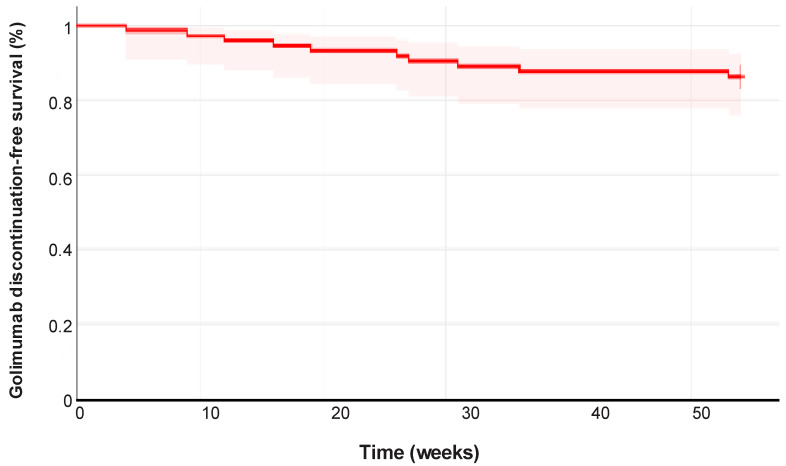 Figure 1
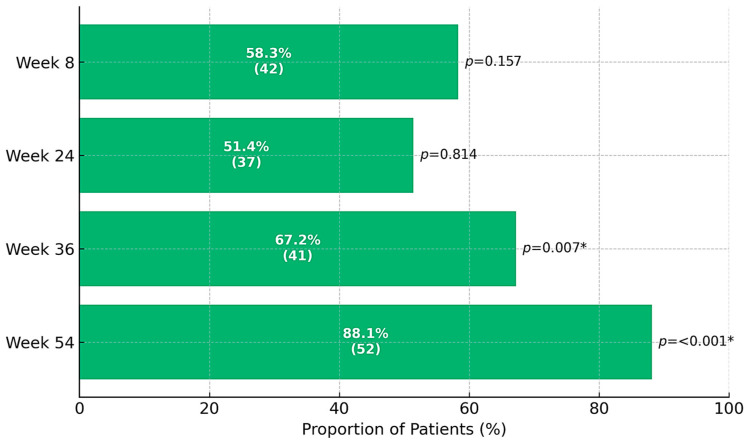 Figure 2
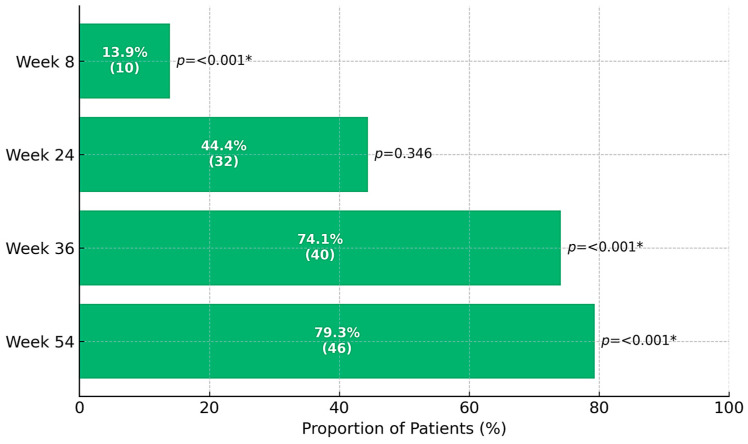 Figure 3
 Figure 4
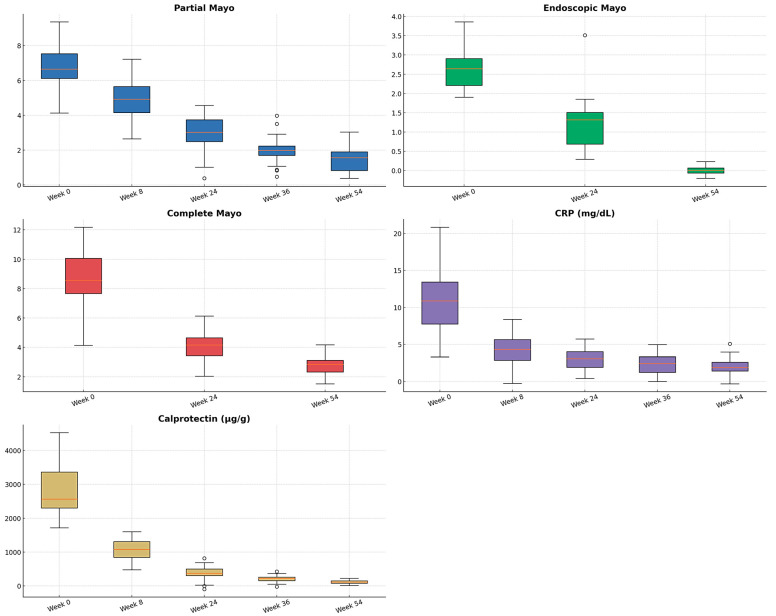 Figure 5
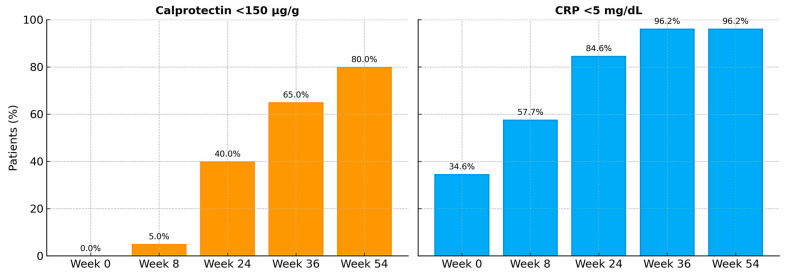 Figure 6
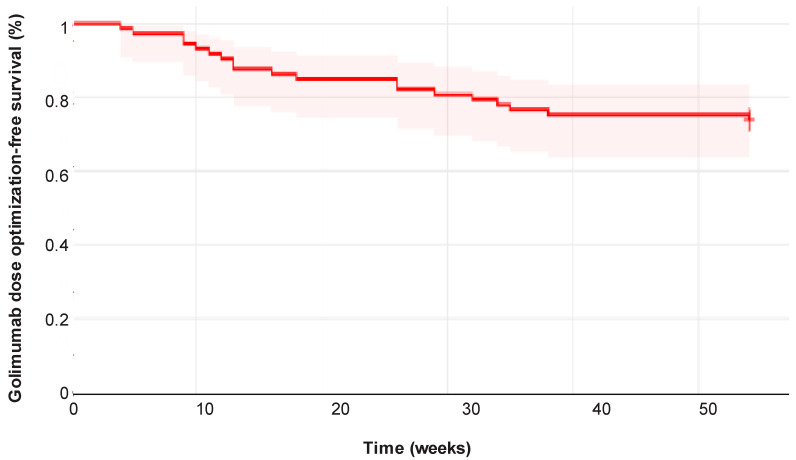 Figure 7
Peer Reviews
No public reviews on file for this paper yet. If you reviewed it on a platform where reviews are public (OpenReview, ICLR, NeurIPS, ICML), you can paste yours below so the community can read it here.
Videos
No videos yet. Explain this paper in a talk, walkthrough, or lecture? Add one.
Taxonomy
TopicsInflammatory Bowel Disease · Microscopic Colitis · Immunodeficiency and Autoimmune Disorders