Distal Adding-On as a Natural Shoulder Rebalancing Mechanism in Lenke Type 2A AIS with Right Sacral Slanting
Jae-Hyuk Yang, Jae Min Park, Hyukjune Seong, Chang Ju Hwang, Hyung Rae Lee

TL;DR
This study explores how distal adding-on in Lenke type 2A scoliosis with right sacral slanting may help rebalance shoulder alignment after surgery.
Contribution
The study identifies distal adding-on as a potential compensatory mechanism for shoulder imbalance in Lenke type 2A AIS with right sacral slanting.
Findings
The RSS group showed the highest distal wedge angle and most DA occurrences.
RSH decreased over time in all groups, but the RSS group had the strongest inverse relationship between DWA and RSH.
Postoperative RSH and sacral slanting were significant predictors of DWA in univariate analysis.
Abstract
Background/Objectives: Distal adding-on (DA) is a common postoperative phenomenon in Lenke type 2A adolescent idiopathic scoliosis (AIS). Postoperative shoulder imbalance (PSI) is a clinically significant issue following AIS correction, as it may lead to aesthetic dissatisfaction, functional impairment, and reduced quality of life. This study investigated radiographic changes in DA and shoulder balance in Lenke type 2A AIS, particularly focusing on distal wedge angle (DWA) and radiologic shoulder height (RSH) in patients with right sacral slanting (RSS). Methods: We retrospectively analyzed 120 patients with Lenke type 2A AIS who underwent posterior spinal fusion. Patients were grouped by sacral slanting: right (RSS), left (LSS), or none (NS). Radiographic parameters including proximal thoracic curve angle, main thoracic curve angle, DWA, RSH were assessed at multiple time points.…
Genes, proteins, chemicals, diseases, species, mutations and cell lines named across the full text — each resolved to its canonical identifier and authoritative record.
Click any figure to enlarge with its caption.
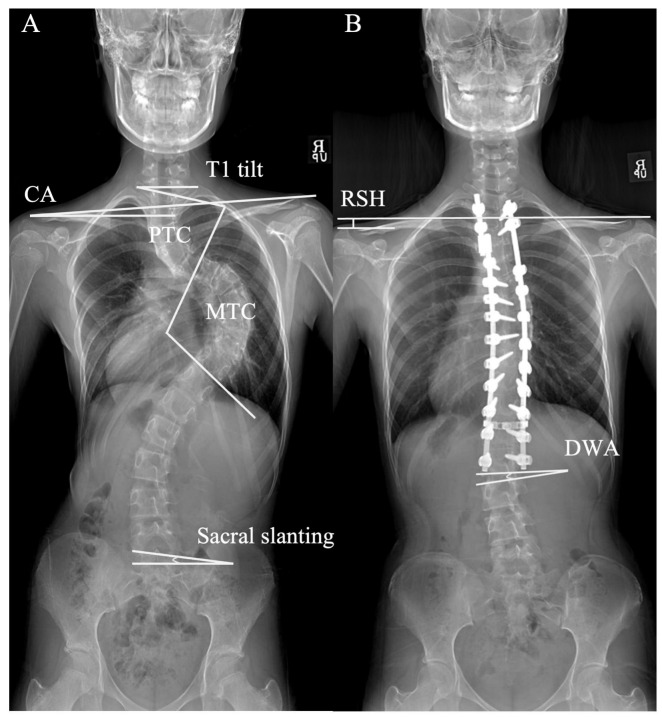 Figure 1
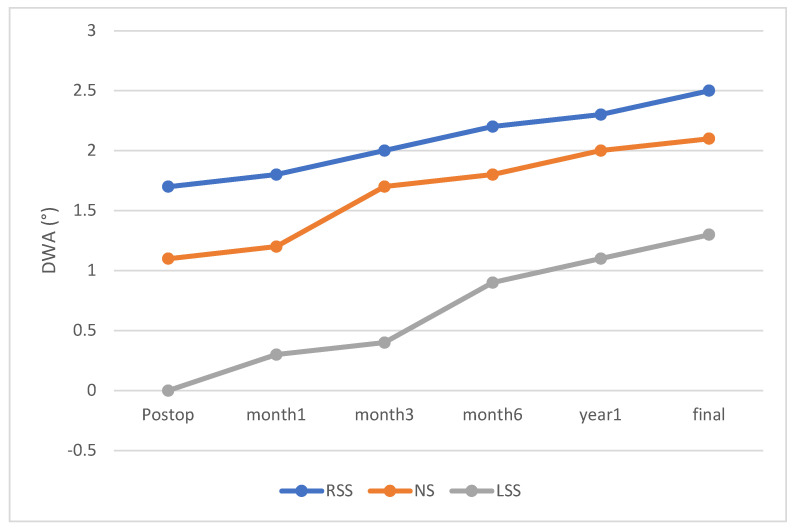 Figure 2
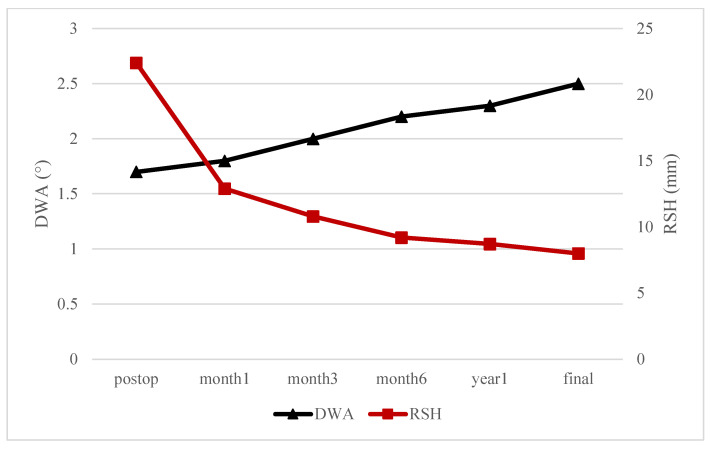 Figure 3
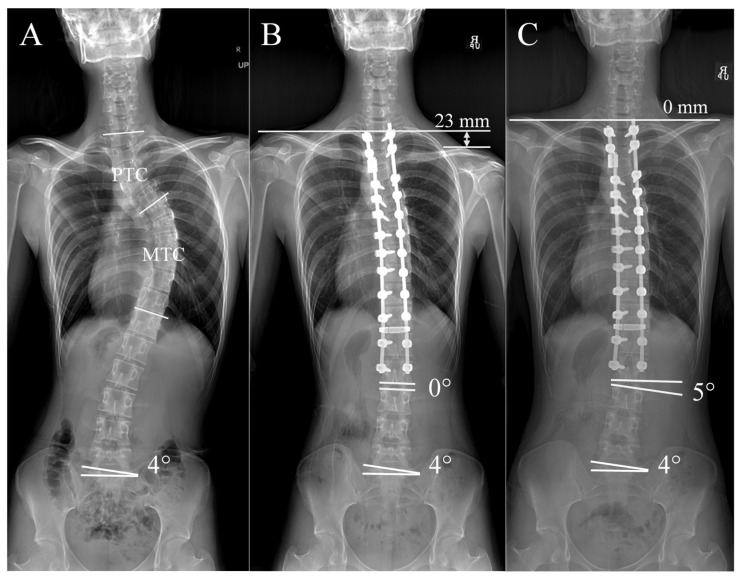 Figure 4
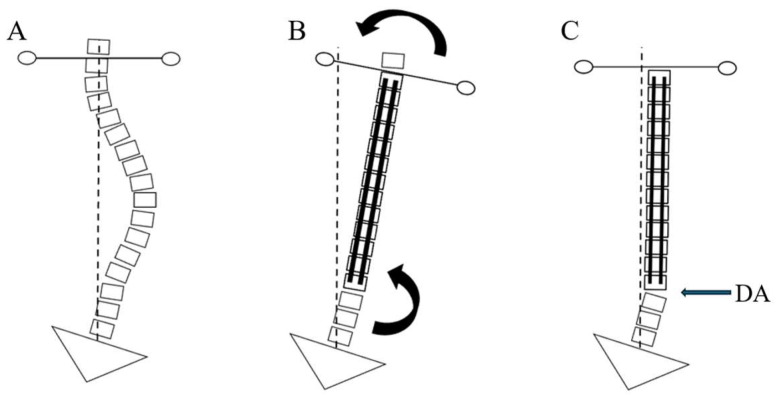 Figure 5
Peer Reviews
No public reviews on file for this paper yet. If you reviewed it on a platform where reviews are public (OpenReview, ICLR, NeurIPS, ICML), you can paste yours below so the community can read it here.
Videos
No videos yet. Explain this paper in a talk, walkthrough, or lecture? Add one.
Taxonomy
TopicsScoliosis diagnosis and treatment · Pelvic and Acetabular Injuries · Hip disorders and treatments