Local Non-Coding Regulatory Elements in Muscular Dystrophies
Harry Wilton-Clark, Sebastian Hernandez Rodriguez, Toshifumi Yokota

TL;DR
This paper reviews how non-coding genetic elements play a key role in regulating various types of muscular dystrophies.
Contribution
The paper provides a comprehensive overview of local non-coding regulatory mechanisms specific to muscular dystrophies.
Findings
Non-coding elements are key regulators in multiple forms of muscular dystrophies.
Local, disease-specific non-coding elements have been identified for individual dystrophies.
The review highlights the importance of non-coding regulation in understanding dystrophic mechanisms.
Abstract
Muscular dystrophies are a class of diseases characterized by muscular weakness, breakdown, and heavily impaired function and quality of life. Numerous types of muscular dystrophies have been identified, with different causative genes and dystrophic mechanisms. While the majority of studies emphasize the protein product encoded by each gene, a growing body of research has identified non-coding elements as key regulators of muscular dystrophy. In this review, we summarize the common noncoding mechanisms known to regulate multiple forms of muscular dystrophies. We also highlight individual studies exploring local, disease-specific noncoding elements to each disease. Together, this provides a comprehensive overview of the major role of non-coding regulation in muscular dystrophies.
Genes, proteins, chemicals, diseases, species, mutations and cell lines named across the full text — each resolved to its canonical identifier and authoritative record.
Click any figure to enlarge with its caption.
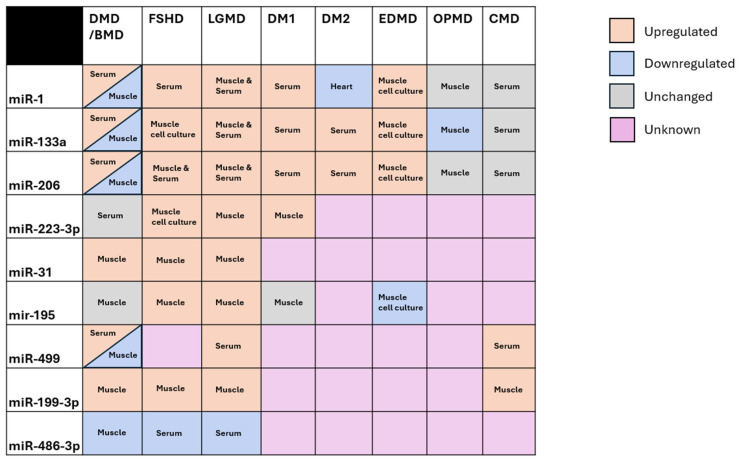 Figure 1
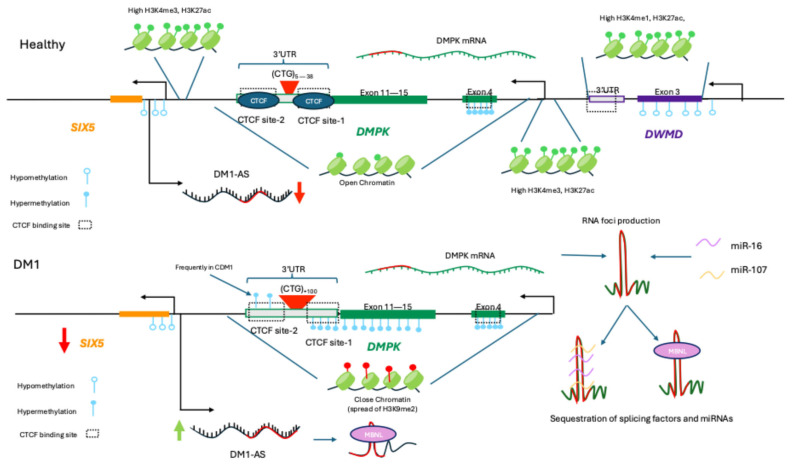 Figure 2
Peer Reviews
No public reviews on file for this paper yet. If you reviewed it on a platform where reviews are public (OpenReview, ICLR, NeurIPS, ICML), you can paste yours below so the community can read it here.
Videos
No videos yet. Explain this paper in a talk, walkthrough, or lecture? Add one.
Taxonomy
TopicsMuscle Physiology and Disorders · RNA Research and Splicing · RNA modifications and cancer