A Closer Look at Potential Underlying Factors Related to Possible Disparity Between Sexes in Delayed Cerebral Ischemia After Aneurysmal Subarachnoid Hemorrhage
Michael Veldeman, Tobias Philip Schmidt, Katharina Seyfried, Charlotte Weyland, Karlijn Hakvoort, Tobias Rossmann, Laura Victoria Vossen, Anke Hoellig, Catharina Conzen-Dilger

TL;DR
This study found no significant differences between males and females in delayed cerebral ischemia after aneurysmal subarachnoid hemorrhage, despite higher overall incidence in females.
Contribution
The study provides new evidence that sex differences in delayed cerebral ischemia after SAH are not due to infarct size, timing, or treatment response.
Findings
DCI rates were similar between males and females.
Infarct volume and location did not differ by sex.
ERT use and outcomes were not significantly different between sexes.
Abstract
Background: Aneurysmal subarachnoid hemorrhage (SAH) is over twice as common in females compared to males, who may also experience more severe hemorrhages and worse outcomes. Differences in SAH severity, susceptibility to delayed cerebral ischemia (DCI), and treatment responsiveness may underlie this disparity. This study evaluated sex-based differences in DCI timing, severity, treatment responsiveness, and outcomes after SAH. Methods: We analyzed 650 consecutive SAH patients admitted to RWTH Aachen University Hospital (2006–2021). SAH severity was assessed via the (World Federation of Neurological Surgeons) WFNS and modified Fisher scales. DCI-related infarction was defined as new infarcts on CT not present initially or within 48 h post-aneurysm occlusion. Endovascular rescue therapy (ERT) was used for treatment-resistant DCI. Outcomes were assessed at discharge and 12 months using the…
Genes, proteins, chemicals, diseases, species, mutations and cell lines named across the full text — each resolved to its canonical identifier and authoritative record.
Click any figure to enlarge with its caption.
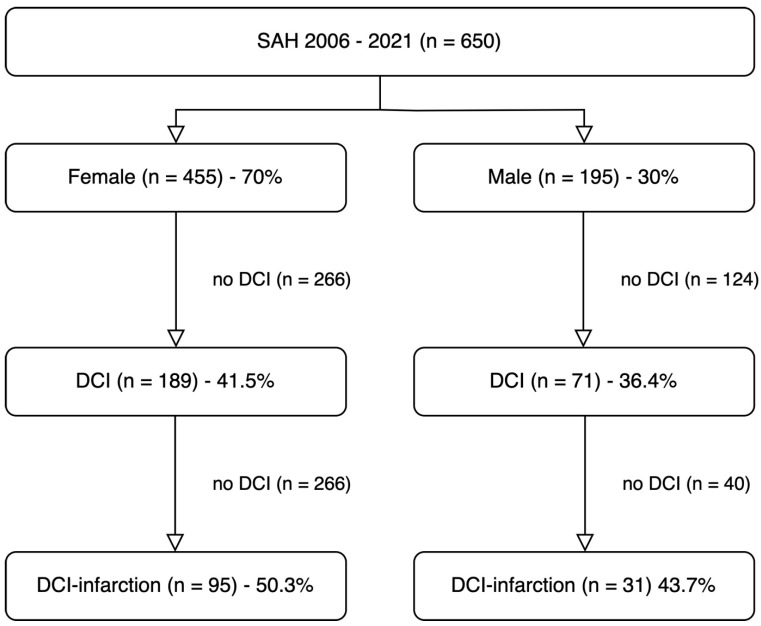 Figure 1
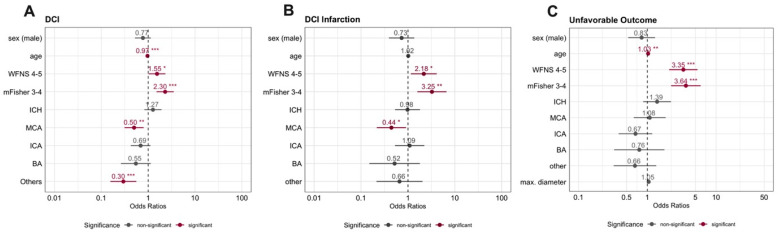 Figure 2
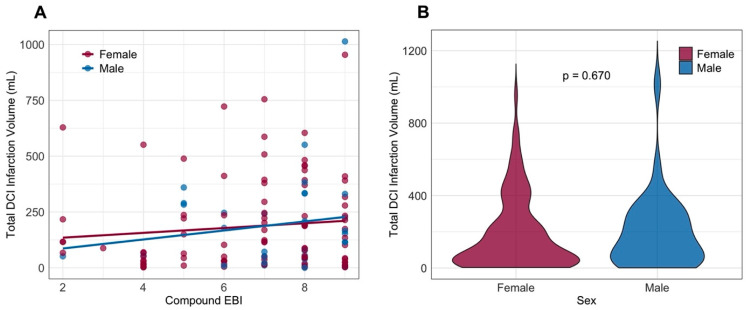 Figure 3
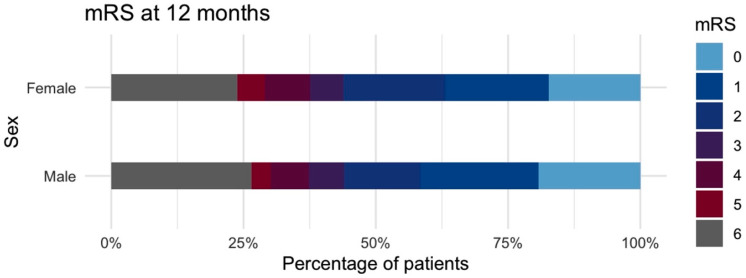 Figure 4
Peer Reviews
No public reviews on file for this paper yet. If you reviewed it on a platform where reviews are public (OpenReview, ICLR, NeurIPS, ICML), you can paste yours below so the community can read it here.
Videos
No videos yet. Explain this paper in a talk, walkthrough, or lecture? Add one.
Taxonomy
TopicsIntracranial Aneurysms: Treatment and Complications · Traumatic Brain Injury and Neurovascular Disturbances · Cerebrovascular and Carotid Artery Diseases