Sleep-Disordered Breathing and Clinical Presentation in Infants with Congenital Laryngomalacia: A Polysomnographic Study
Sergii Bredun, Anatoli L. Kosakovskiy, Krzysztof Trzpis, Jakub Sroczyński, Anna Wiśniewska, Beniamin Oskar Grabarek, Piotr Żychowski, Jarosław Szydłowski

TL;DR
This study shows that sleep-disordered breathing in infants with laryngomalacia worsens with disease severity and improves after surgery.
Contribution
The study provides objective PSG data linking LM severity to sleep-disordered breathing and surgical outcomes.
Findings
Type III LM infants had the highest apnea-hypopnea index and oxygen desaturation index before surgery.
Surgery significantly reduced sleep-disordered breathing and improved oxygen levels in severe LM cases.
Feeding difficulties and mixed apnea types were more common in higher LM severity subtypes.
Abstract
Background/Objectives: Congenital laryngomalacia (LM) is the most common cause of stridor in infants, presenting with a clinical spectrum that ranges from benign, self-limiting symptoms to severe airway obstruction. This study aimed to objectively characterize the type and severity of sleep-disordered breathing in infants with LM using polysomnography (PSG) and to correlate findings with LM subtypes, clinical presentation, and type of surgical intervention. Methods: A cohort of 42 infants diagnosed with LM (Type I: n = 14, Type II: n = 18, Type III: n = 10) underwent overnight PSG before surgical treatment. The Apnea–Hypopnea Index (AHI), Oxygen Desaturation Index (ODI), minimum and mean SpO2, and heart rate were recorded. Clinical features (stridor, feeding difficulties, respiratory effort) and type of surgery (supraglottoplasty [S] or supraglottoplasty with epiglottopexy [S + E]) were…
Genes, proteins, chemicals, diseases, species, mutations and cell lines named across the full text — each resolved to its canonical identifier and authoritative record.
Click any figure to enlarge with its caption.
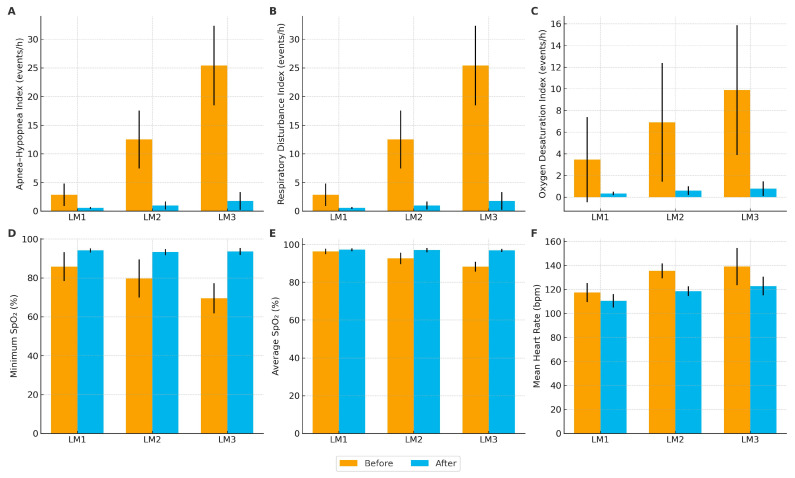 Figure 1
Peer Reviews
No public reviews on file for this paper yet. If you reviewed it on a platform where reviews are public (OpenReview, ICLR, NeurIPS, ICML), you can paste yours below so the community can read it here.
Videos
No videos yet. Explain this paper in a talk, walkthrough, or lecture? Add one.
Taxonomy
TopicsTracheal and airway disorders · Voice and Speech Disorders · Dysphagia Assessment and Management