Serum Granulysin Levels in Vitiligo and Alopecia Areata: A Potential Biomarker for Disease Activity and Dermoscopic Evaluation
Hayam Ali AlRasheed, Amira Aboelmakarem Korkor, Yasmina Ahmed El Attar, Rowida Raafat Yousef, Mostafa M. Bahaa, Zainab Abdel Samad Ibrahim

TL;DR
This study explores serum granulysin levels in vitiligo and alopecia areata patients, suggesting it could be a biomarker for disease activity.
Contribution
The study identifies granulysin as a potential biomarker for monitoring disease activity in vitiligo and alopecia areata.
Findings
Serum granulysin levels were significantly higher in active vitiligo and alopecia areata patients compared to controls.
Granulysin levels correlated with dermoscopic signs of disease activity but not with age or sex.
Higher granulysin levels were observed in active vitiligo compared to stable vitiligo or active alopecia areata.
Abstract
Background: Vitiligo is a chronic, progressive skin disorder characterized by the development of sharply demarcated depigmented patches due to the loss of melanocytes. Alopecia areata (AA) is an autoimmune condition that presents with sudden, non-scarring hair loss affecting the scalp or other body areas. Objective: To evaluate serum granulysin (GNLY) levels in patients with vitiligo and AA to explore its potential role in the pathogenesis and activity of both diseases. Methods: A total of 80 participants were included: 65 patients and 15 healthy controls. Patients were divided into four groups: active vitiligo (n = 25), stable vitiligo (n = 25), active AA (n = 15), and a control group (n = 15). Serum GNLY levels were measured and analyzed in relation to clinical and dermoscopic features. Results: No significant correlation was found between GNLY levels and either age or Vitiligo Area…
Genes, proteins, chemicals, diseases, species, mutations and cell lines named across the full text — each resolved to its canonical identifier and authoritative record.
Click any figure to enlarge with its caption.
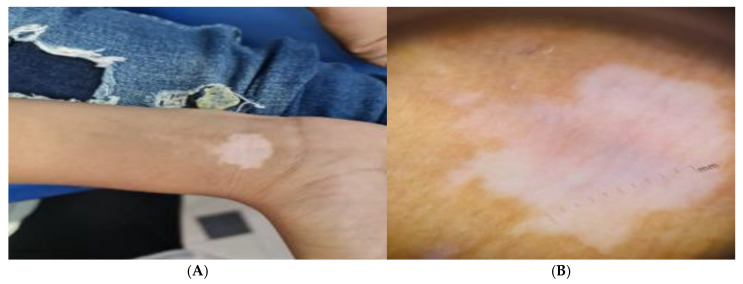 Figure 1
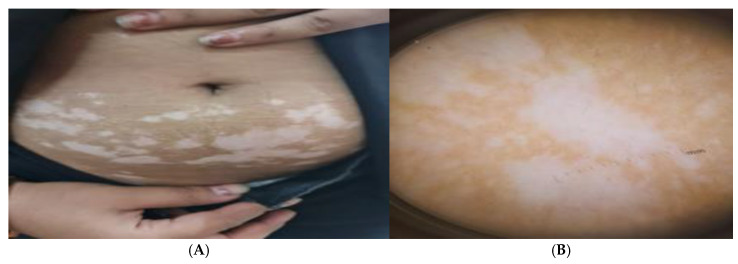 Figure 2
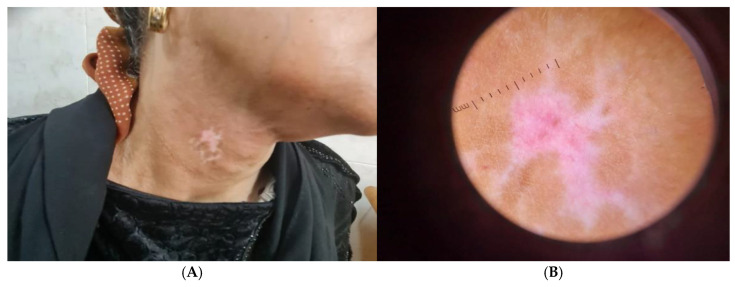 Figure 3
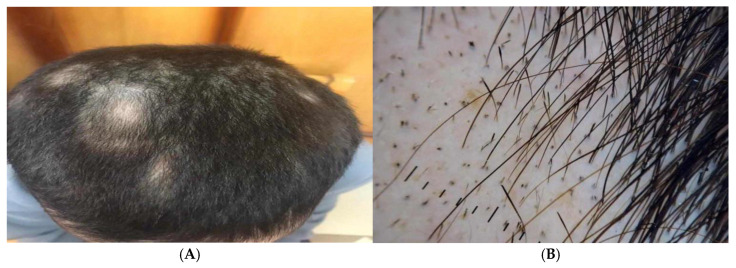 Figure 4
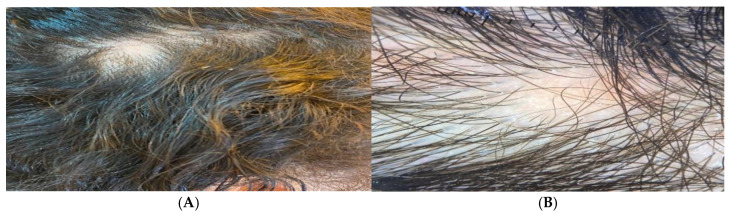 Figure 5
Peer Reviews
No public reviews on file for this paper yet. If you reviewed it on a platform where reviews are public (OpenReview, ICLR, NeurIPS, ICML), you can paste yours below so the community can read it here.
Videos
No videos yet. Explain this paper in a talk, walkthrough, or lecture? Add one.
Taxonomy
Topicsmelanin and skin pigmentation · Hair Growth and Disorders · Mast cells and histamine