Neurocognitive Interventions Informed by Cognitive–Behavioral Therapy (CBT) Principles and Physical Exercise for Complex Regional Pain Syndrome: A Systematic Review
Leidy Tatiana Ordoñez-Mora, Daihana Stefany Quintero-López, Marco Antonio Morales-Osorio, Juan Fernando Gómez-Gómez, Giovanna Patricia Rivas-Tafurt, María Fernanda Serna-Orozco

TL;DR
This review shows that combining physical exercise and CBT-based neurocognitive interventions can help reduce pain and improve function in people with Complex Regional Pain Syndrome.
Contribution
The study systematically evaluates the combined effectiveness of physical and CBT-based interventions for CRPS management.
Findings
Aerobic exercise consistently reduced pain and improved function in CRPS patients.
CBT-based neurocognitive interventions like mirror therapy and graded exposure decreased pain and improved independence.
Combining physical and psychological approaches showed positive effects on pain and daily activity performance.
Abstract
Background: Complex Regional Pain Syndrome (CRPS) is a chronic pain condition that usually affects a limb following injury or surgery and is characterized by severe pain accompanied by sensory, motor, autonomic, and trophic disturbances. Methods: This systematic review aimed to synthesize the available evidence on the effectiveness of physical exercise and neurocognitive interventions grounded in cognitive–behavioral therapy (CBT) principles for the management of CRPS. A comprehensive search was conducted in Medline (via Ovid), LILACS, ScienceDirect, PEDro, OTseeker, and the Cochrane Central Register of Controlled Trials (CENTRAL). Eligible studies included clinical trials, cohort studies, and cross-sectional studies, whereas case reports, pediatric populations, and animal studies were excluded. Fifteen studies met the inclusion criteria. Results: The findings indicated that aerobic…
Genes, proteins, chemicals, diseases, species, mutations and cell lines named across the full text — each resolved to its canonical identifier and authoritative record.
Click any figure to enlarge with its caption.
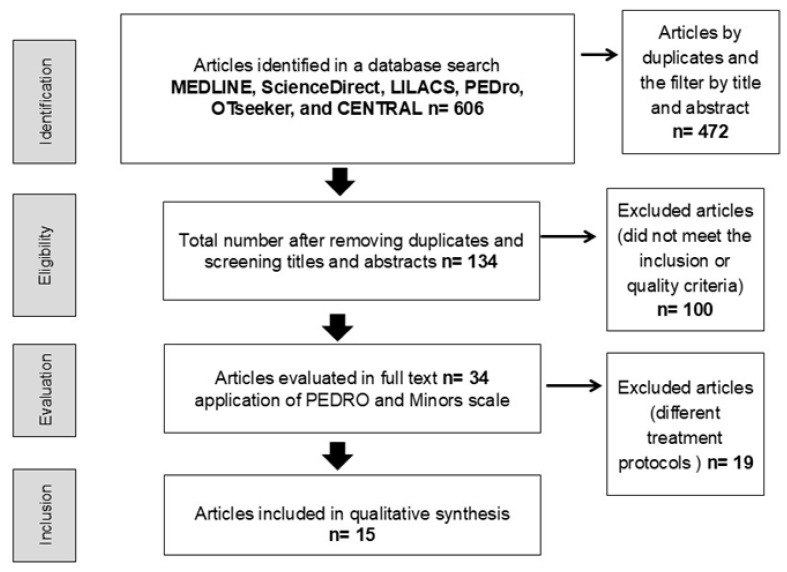 Figure 1
 Figure 2
 Figure 3
Peer Reviews
No public reviews on file for this paper yet. If you reviewed it on a platform where reviews are public (OpenReview, ICLR, NeurIPS, ICML), you can paste yours below so the community can read it here.
Videos
No videos yet. Explain this paper in a talk, walkthrough, or lecture? Add one.
Taxonomy
TopicsPain Management and Treatment · Musculoskeletal pain and rehabilitation · Myofascial pain diagnosis and treatment