TRPC6 Deficiency Attenuates Mitochondrial and Cardiac Dysfunction in Heart Failure with Preserved Ejection Fraction Induced by High-Fat Diet Plus L-NAME
Xuan Li, Yiling Fu, Xuemei Dai, Jussara M. do Carmo, Alexandre A. da Silva, Alan J. Mouton, Ana C. M. Omoto, Robert W. Spitz, Lucas Wang, John E. Hall, Zhen Wang

TL;DR
TRPC6 deficiency protects the heart from mitochondrial and functional damage in a mouse model of heart failure with preserved ejection fraction.
Contribution
This study reveals a novel protective role of TRPC6 deficiency in preventing mitochondrial and cardiac dysfunction in HFpEF.
Findings
TRPC6 knockout mice showed preserved diastolic function and exercise tolerance under HFD+L-NAME conditions.
TRPC6 deficiency reduced mitochondrial ROS and preserved mitochondrial respiration in cardiac fibers.
Wild-type mice developed cardiac hypertrophy and diastolic dysfunction under the same conditions.
Abstract
Transient receptor potential canonical channel type 6 (TRPC6), a non-selective cation channel that mediates Ca2+ influx, is expressed in the heart and implicated in pathological cardiac hypertrophy. However, the role of TRPC6 in regulating cardiac mitochondrial metabolism and contributing to development of HFpEF remains unclear. We examined whether TRPC6 deficiency prevents mitochondrial dysfunction and offers cardiac protection in a mouse model of HFpEF induced by high-fat diet (HFD) for 12 weeks combined with L-NAME administration during the final 8 weeks in TRPC6 knockout (KO) and wild-type (WT) control mice. Cardiac systolic and diastolic functions were assessed at baseline, 4 and 8 weeks after HFD+L-NAME. Dobutamine-induced stress test and treadmill exercise test were performed at the end of the protocol to evaluate cardiac reserve capacity and exercise tolerance. Mitochondrial…
Genes, proteins, chemicals, diseases, species, mutations and cell lines named across the full text — each resolved to its canonical identifier and authoritative record.
Click any figure to enlarge with its caption.
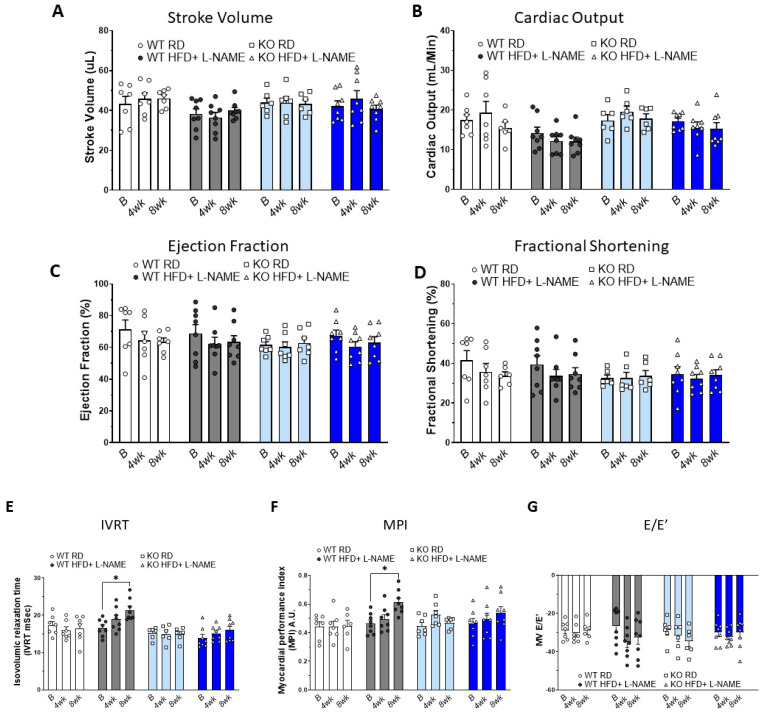 Figure 1
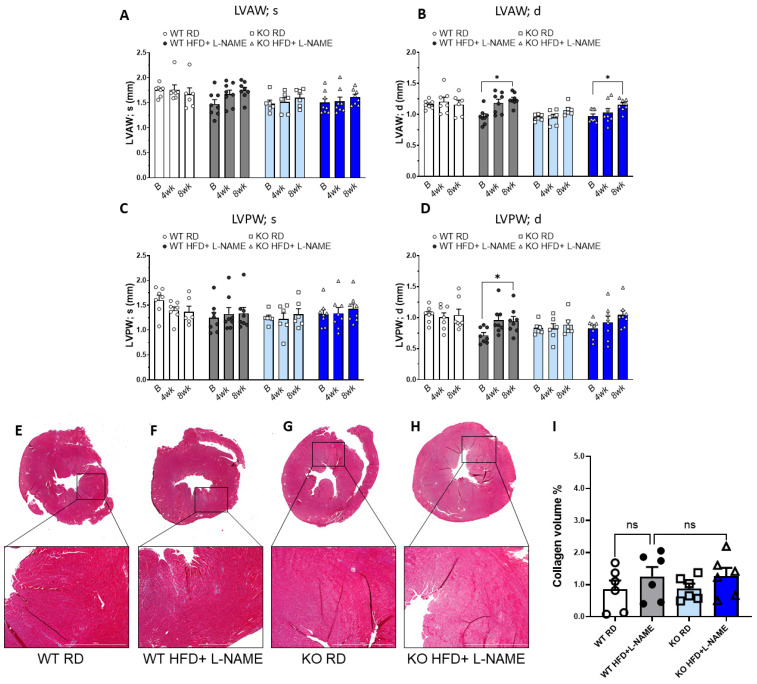 Figure 2
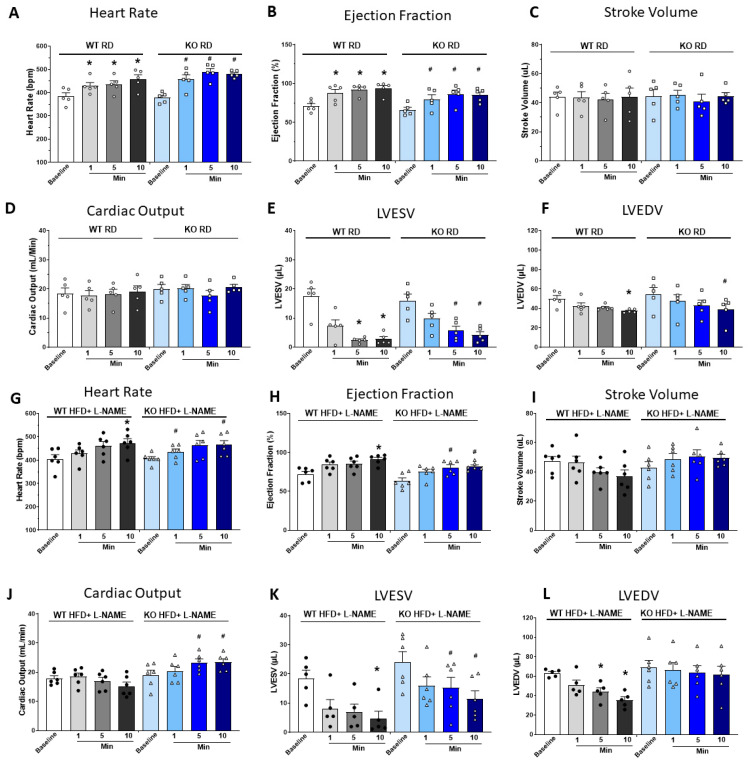 Figure 3
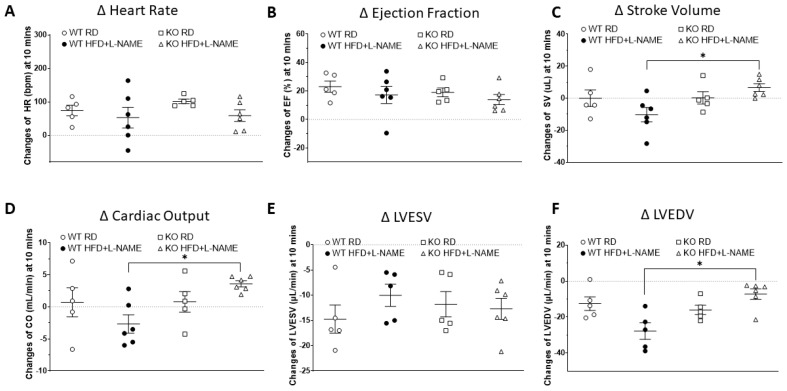 Figure 4
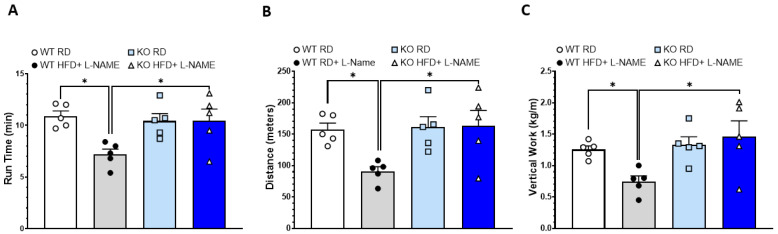 Figure 5
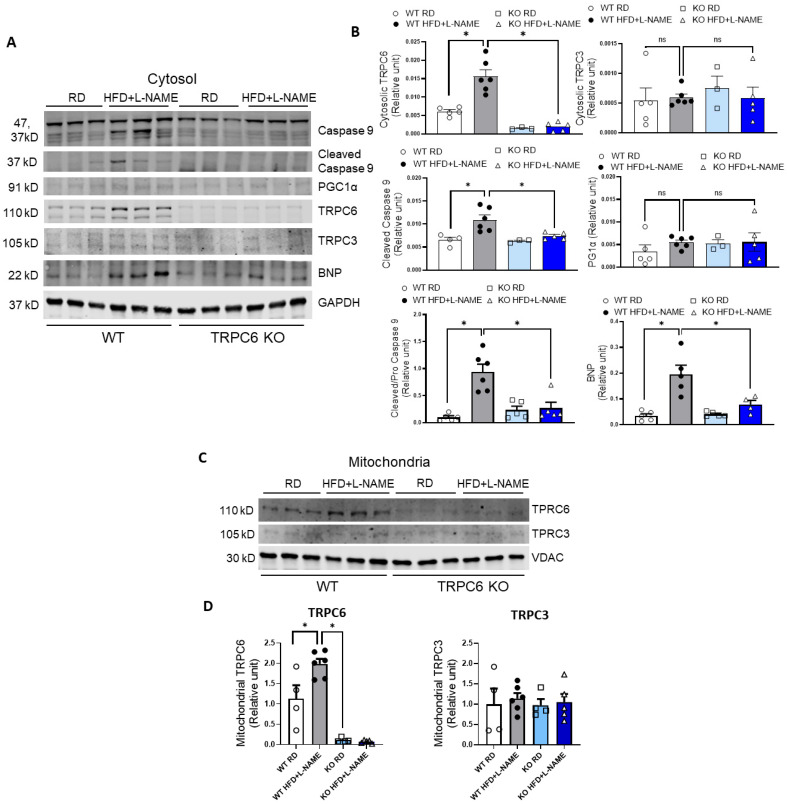 Figure 6
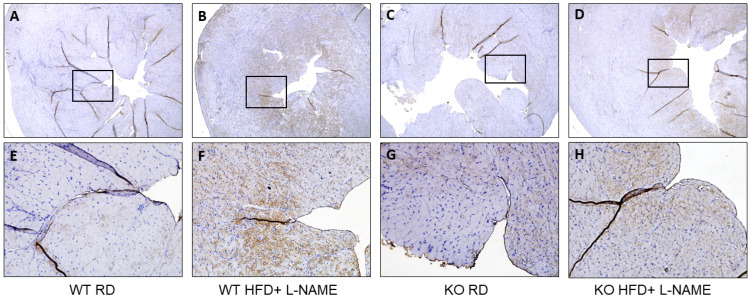 Figure 7
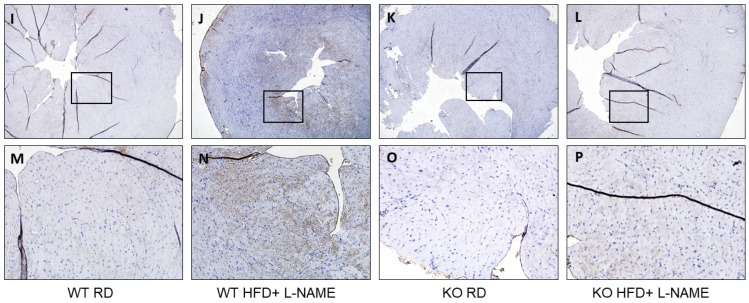 Figure 8
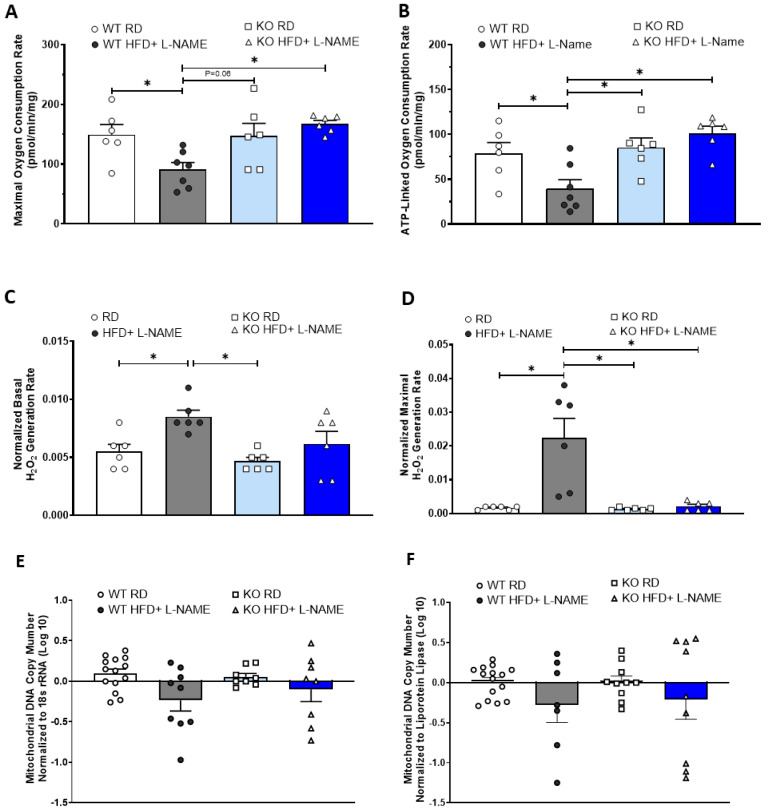 Figure 9
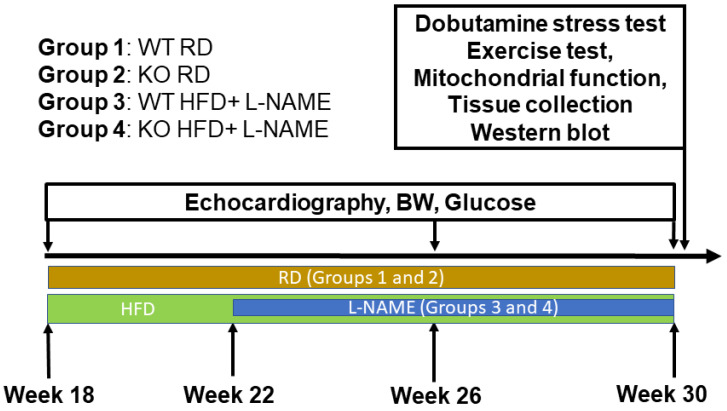 Figure 10
Peer Reviews
No public reviews on file for this paper yet. If you reviewed it on a platform where reviews are public (OpenReview, ICLR, NeurIPS, ICML), you can paste yours below so the community can read it here.
Videos
No videos yet. Explain this paper in a talk, walkthrough, or lecture? Add one.
Taxonomy
TopicsCardiovascular Effects of Exercise