Glia Cells Are Selectively Sensitive to Nanosized Titanium Dioxide Mineral Forms
Eszter Geiszelhardt, Erika Tóth, Károly Bóka, Norbert Bencsik, Katalin Schlett, Krisztián Tárnok

TL;DR
Nanosized titanium dioxide particles, especially rutile form, may harm specific brain cells like astroglia and microglia, raising concerns about their safety in consumer products.
Contribution
The study reveals that rutile TiO2 nanoparticles selectively harm glial cells, depending on brain region and cell type.
Findings
Rutile TiO2 nanoparticles caused cell death in cortical astroglia at concentrations above 10 µg/mL after 24 hours.
Hippocampal astroglia and mixed neuron-glia cultures were less affected by rutile or anatase nanoparticles.
Rutile nanoparticles also damaged microglial cells, suggesting a specific vulnerability to this cell type.
Abstract
Nanosized titanium dioxide is widely used by the industry, e.g., in pigments, suncreams, and food colors. Its environmental and biological effects have been investigated in the past; however, few studiesd have focused on its crystal structure-specific effects. In our experiments, the toxicity of two types of synthetic nanoparticles was examined on primary neural cultures with different cell compositions using MTT and LDH assays. Primary murine cell cultures containing only astroglia cells originated from two brain regions, as well as mixed neurons and glia cells or microglia cells exclusively, were treated with anatase (15.8 ± 1.7 nm average diameter) and rutile (46.7 ± 2.2 nm average length and 13.7 ± 0.7 nm average diameter) TiO2 nanoparticles at varying concentrations for 24 or 48 h. Our results show that neither anatase nor rutile nanoparticles reduced viability in cell cultures…
Genes, proteins, chemicals, diseases, species, mutations and cell lines named across the full text — each resolved to its canonical identifier and authoritative record.
Click any figure to enlarge with its caption.
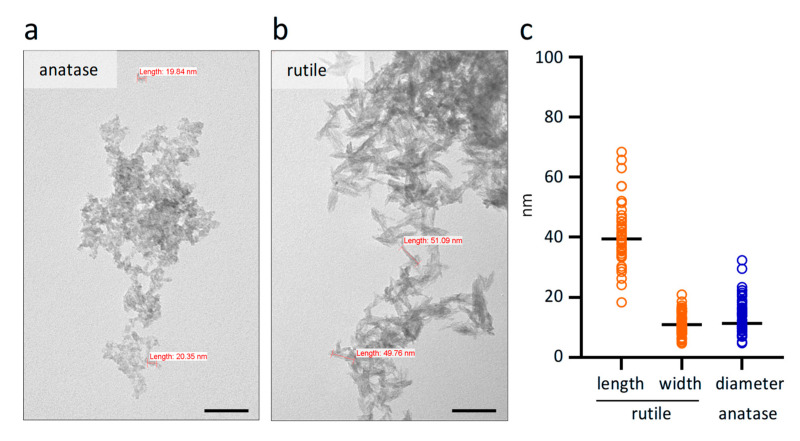 Figure 1
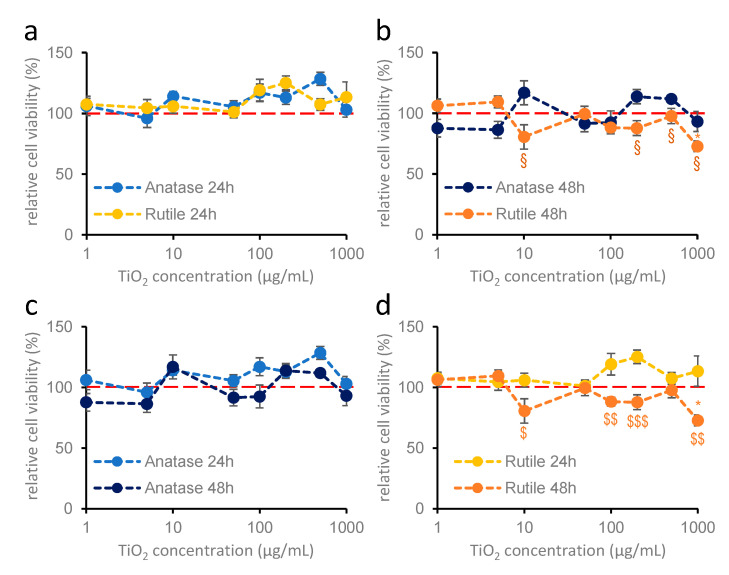 Figure 2
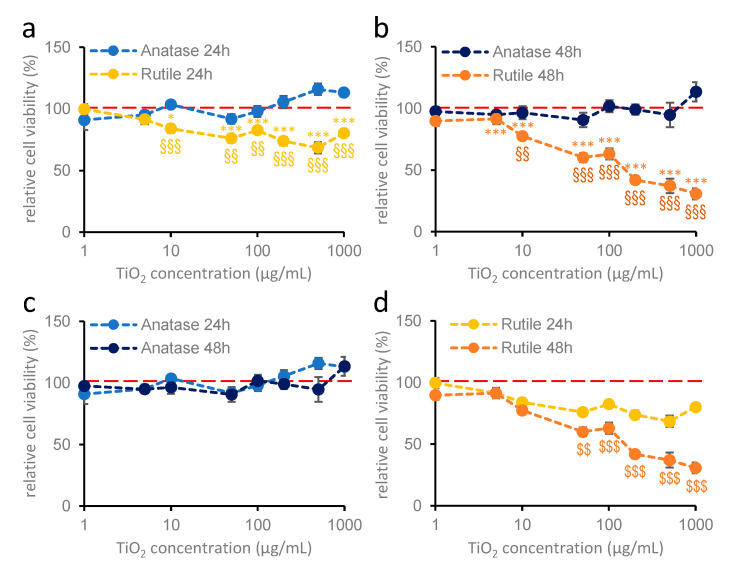 Figure 3
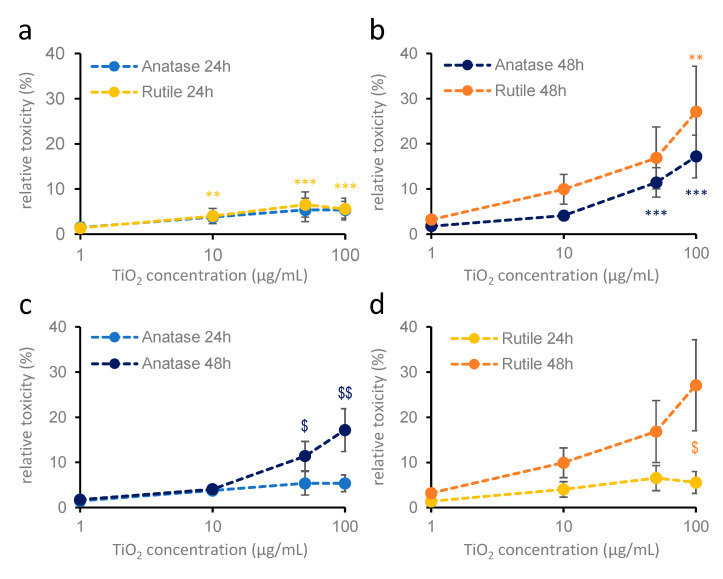 Figure 4
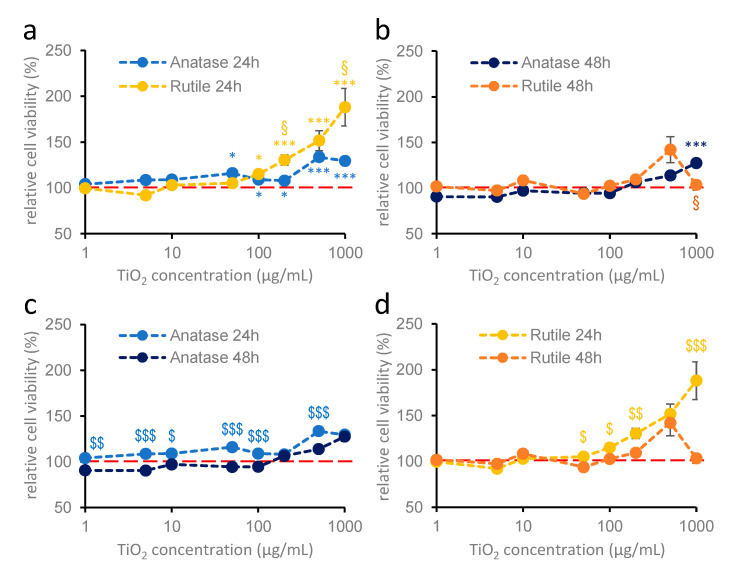 Figure 5
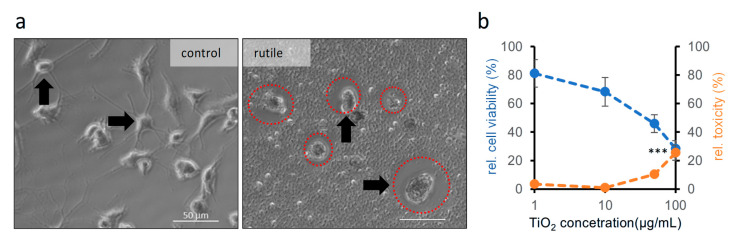 Figure 6
Peer Reviews
No public reviews on file for this paper yet. If you reviewed it on a platform where reviews are public (OpenReview, ICLR, NeurIPS, ICML), you can paste yours below so the community can read it here.
Videos
No videos yet. Explain this paper in a talk, walkthrough, or lecture? Add one.
Taxonomy
TopicsNanoparticles: synthesis and applications · Neuroinflammation and Neurodegeneration Mechanisms · Anesthesia and Neurotoxicity Research