Comparison of Cerebral Blood Flow During General Anesthesia in Elderly Patients with and Without Dementia: A Prospective Controlled Clinical Trial
Yoshinari Morimoto, Megumi Hayashi, Yohei Tanaka, Hitomi Nishizaki, Masayoshi Shirakawa, Ryota Tamura, Lou Mikuzuki

TL;DR
This study shows that cerebral blood flow drops significantly in elderly dementia patients during general anesthesia, even when vital signs are kept stable.
Contribution
The study provides new evidence that dementia patients experience a larger decrease in cerebral blood flow during anesthesia despite maintained physiological parameters.
Findings
Cerebral blood flow, measured by nTHI, decreased by 40% in dementia patients during anesthesia.
Dementia patients had significantly lower nTHI values compared to non-dementia patients under similar conditions.
Physiological parameters like MAP, BIS, SpO2, and etCO2 remained within target ranges in both groups.
Abstract
Background/Objectives: The maintenance of cerebral blood flow (CBF) by managing blood pressure and brain cell activity and avoiding hypocapnia is important when administering anesthesia to patients with dementia. This study aimed to evaluate CBF during general anesthesia in elderly patients with severe dementia while maintaining their physiological parameters within an adequate range. Methods: The patients were anesthetized within a set range of parameters without affecting CBF (mean arterial pressure [MAP] > 50 mmHg; bispectral index [BIS] > 20; percutaneous arterial oxygen saturation [SpO2] > 95%; end-tidal CO2 [etCO2] 35–40 mmHg). The normalized tissue hemoglobin index (nTHI), which reflects CBF, was measured using near-infrared spectroscopy. The parameters were compared between patients with severe dementia (n = 13) and those without cognitive impairment (n = 13). Results: There…
Genes, proteins, chemicals, diseases, species, mutations and cell lines named across the full text — each resolved to its canonical identifier and authoritative record.
Click any figure to enlarge with its caption.
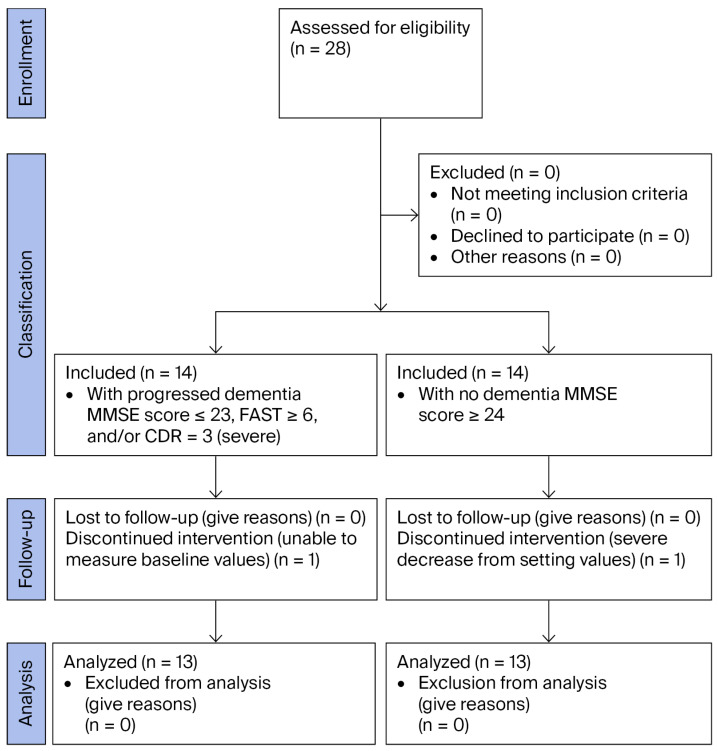 Figure 1
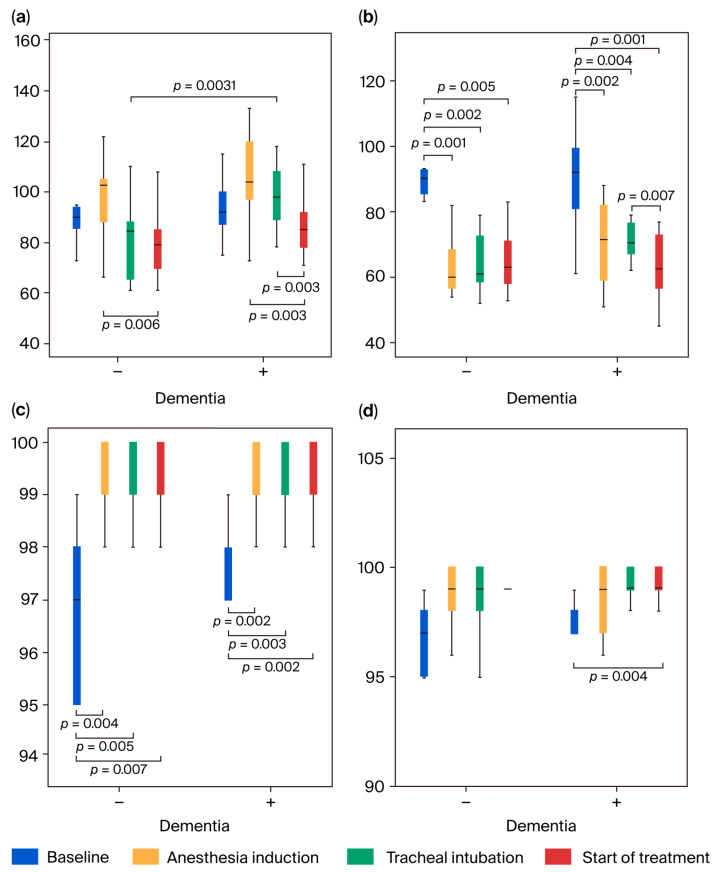 Figure 2
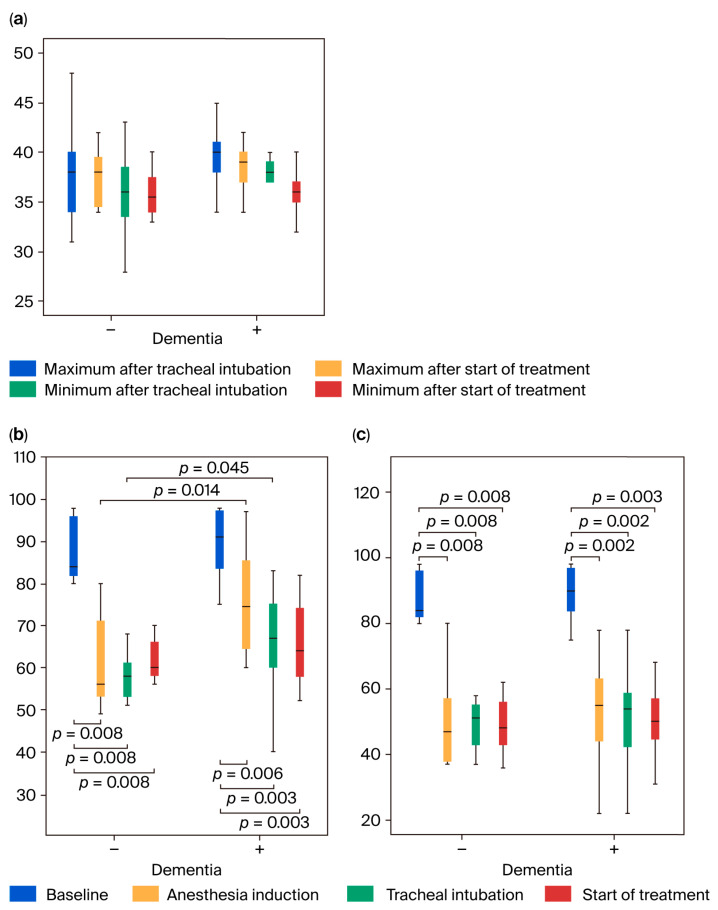 Figure 3
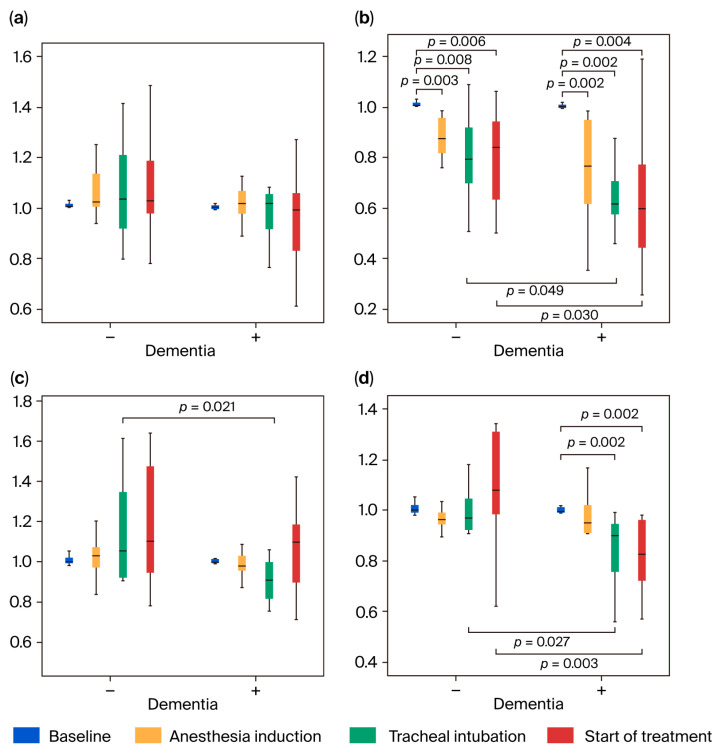 Figure 4
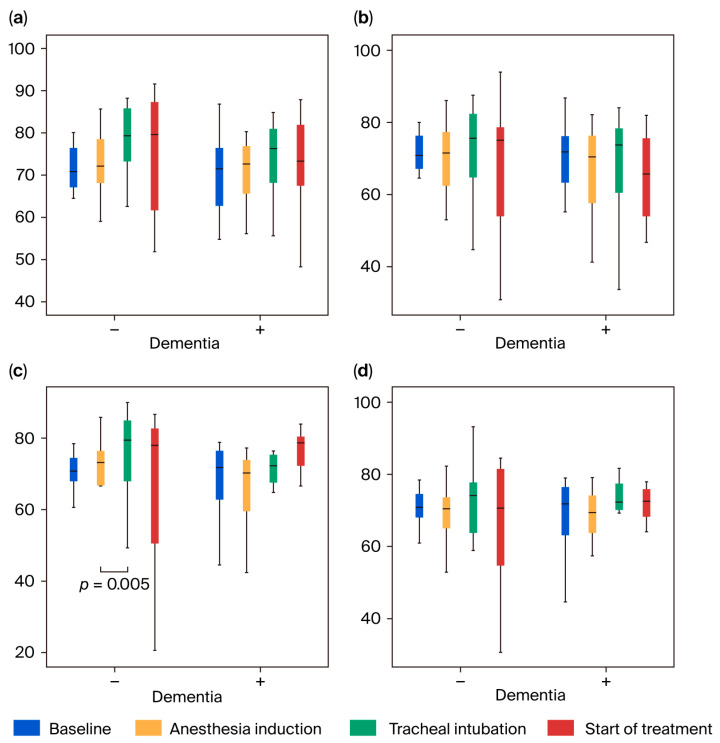 Figure 5
Peer Reviews
No public reviews on file for this paper yet. If you reviewed it on a platform where reviews are public (OpenReview, ICLR, NeurIPS, ICML), you can paste yours below so the community can read it here.
Videos
No videos yet. Explain this paper in a talk, walkthrough, or lecture? Add one.
Taxonomy
TopicsCardiac, Anesthesia and Surgical Outcomes · Intensive Care Unit Cognitive Disorders · Anesthesia and Neurotoxicity Research