Elevated Serum Protease 3 Antineutrophil Cytoplasmic Antibody in Mesalazine-Intolerant Ulcerative Colitis: A Potential Diagnostic Biomarker
Yuhei Oyama, Takashi Taida, Yoshiki Matsubara, Tomomi Ozaki, Takuya Ohashi, Toshiyuki Ito, Shohei Mukai, Nobuaki Shu, Yushi Koshibu, Yusuke Ozeki, Makoto Furuya, Yukiyo Mamiya, Hayato Nakazawa, Ryosuke Horio, Chihiro Goto, Satsuki Takahashi, Akane Kurosugi, Michiko Sonoda

TL;DR
This study suggests that elevated PR3-ANCA levels in blood could help identify ulcerative colitis patients who are intolerant to mesalazine.
Contribution
The study identifies PR3-ANCA as a potential biomarker to distinguish mesalazine intolerance from active UC.
Findings
PR3-ANCA levels were significantly higher in mesalazine-intolerant UC patients compared to tolerant ones.
A PR3-ANCA cutoff of 15.05 U/mL showed moderate sensitivity and specificity in identifying mesalazine intolerance.
High PR3-ANCA levels were an independent risk factor for mesalazine intolerance in UC patients.
Abstract
Background/Objectives: Mesalazine agents are essential drugs for treating ulcerative colitis (UC). Biomarkers that can differentiate mesalazine intolerance from exacerbated UC are needed because of the similarity of their symptoms and increasing prevalence of mesalazine intolerance. The study aim was to assess the usefulness of proteinase 3 antineutrophil cytoplasmic antibody (PR3-ANCA) to identify mesalazine intolerance in patients with UC. Methods: In this single-center retrospective study, patients with UC in whom serum PR3-ANCA was measured were included, and the serum levels were compared between the mesalazine-intolerant and -tolerant patient groups. The predictability of the marker to discriminate between these patients was analyzed. Results: Among 406 patients with UC with measured serum PR3-ANCA levels, 68 (17%) had mesalazine intolerance. The PR3-ANCA levels were significantly…
Genes, proteins, chemicals, diseases, species, mutations and cell lines named across the full text — each resolved to its canonical identifier and authoritative record.
Click any figure to enlarge with its caption.
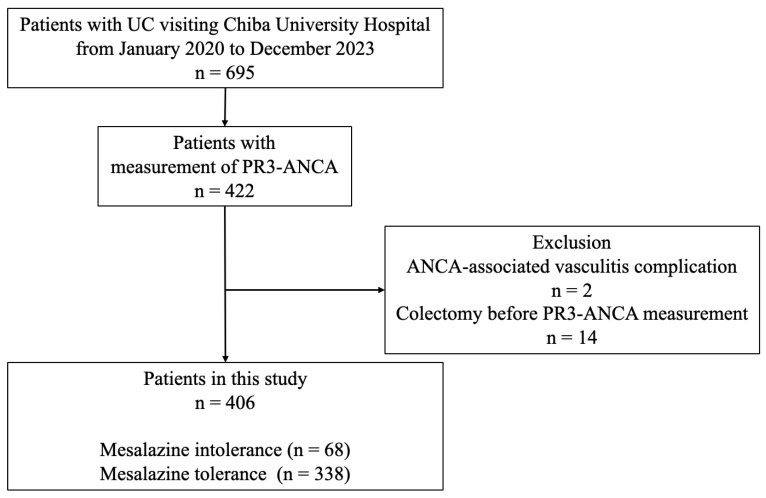 Figure 1
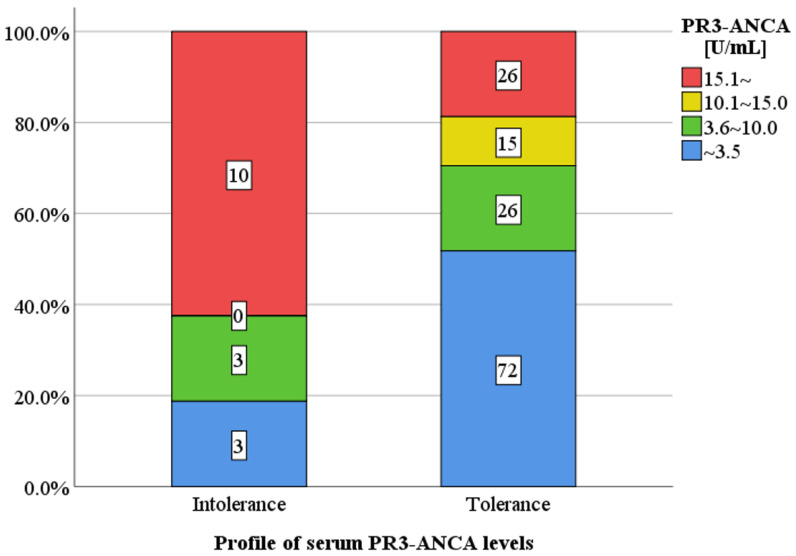 Figure 2
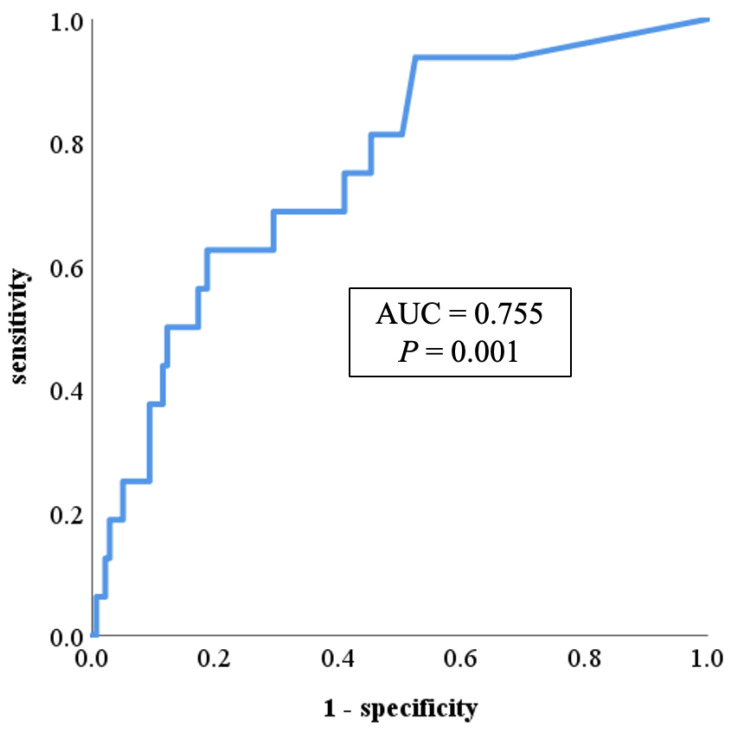 Figure 3
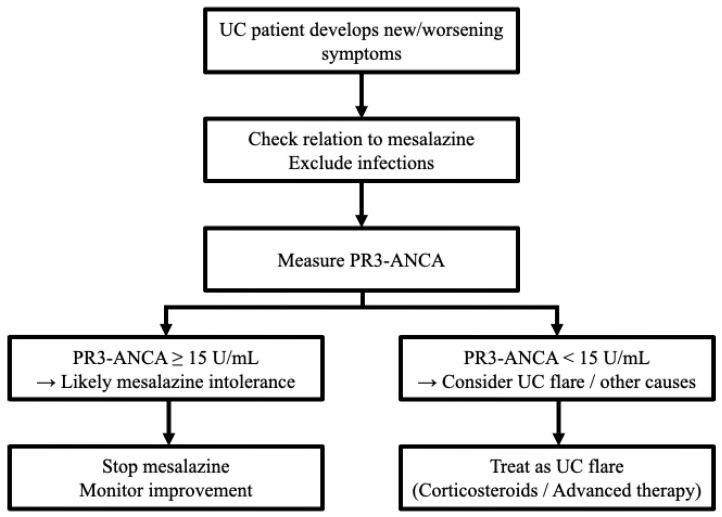 Figure 4
Peer Reviews
No public reviews on file for this paper yet. If you reviewed it on a platform where reviews are public (OpenReview, ICLR, NeurIPS, ICML), you can paste yours below so the community can read it here.
Videos
No videos yet. Explain this paper in a talk, walkthrough, or lecture? Add one.
Taxonomy
TopicsInflammatory Bowel Disease · Celiac Disease Research and Management · Renal Diseases and Glomerulopathies