Predictive Value of C-Reactive Protein/Albumin Ratio (CAR) for Malnutrition and Sarcopenia in Acute Ischemic Stroke Patients
Hasan Dogan, Sugra Simsek, Ahmet Hakan Bayram, Aydan Topal, Mehlika Berra Pamuk, Ozkan Ozmuk, Nedim Ongun, Cetin Kursad Akpinar

TL;DR
This study shows that a blood test measuring the C-reactive protein/albumin ratio (CAR) can predict malnutrition and muscle loss in patients who have had a stroke.
Contribution
The study demonstrates CAR as a novel, reliable biomarker for early detection of malnutrition and sarcopenia in acute ischemic stroke patients.
Findings
CAR was an independent predictor of malnutrition risk with an AUC of 0.750.
CAR also predicted probable sarcopenia with an AUC of 0.814.
Higher CAR values were strongly associated with increased risk of both conditions.
Abstract
Background/Objective: Malnutrition and sarcopenia are common complications after ischemic stroke and have a negative impact on prognosis. The C-reactive protein/albumin ratio (CAR) reflects both inflammation and nutritional status, but its predictive role in this setting has not been widely studied. This study aimed to investigate the predictive value of CAR (C-reactive protein/albumin ratio) for malnutrition risk and probable sarcopenia in patients with ischemic stroke. Methods: In this prospective observational study, 197 patients with acute ischemic stroke were evaluated. Patients with chronic renal or hepatic failure, malignancy, active infection, and hand disability preventing grip strength measurement were excluded. Demographic data (age, sex), vascular risk factors, the NIHSS score, and laboratory parameters were recorded. The nutritional status of patients was assessed using the…
Genes, proteins, chemicals, diseases, species, mutations and cell lines named across the full text — each resolved to its canonical identifier and authoritative record.
Click any figure to enlarge with its caption.
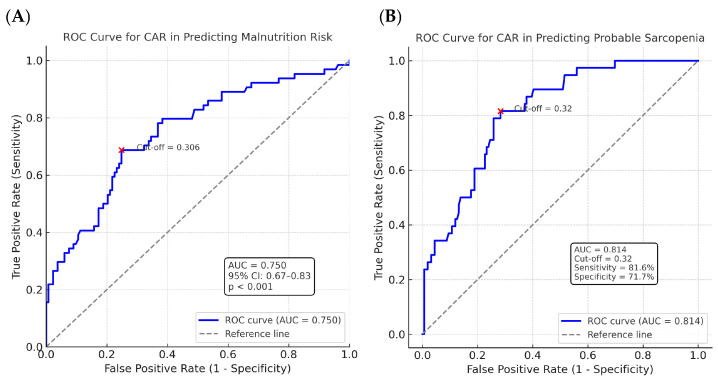 Figure 1
Peer Reviews
No public reviews on file for this paper yet. If you reviewed it on a platform where reviews are public (OpenReview, ICLR, NeurIPS, ICML), you can paste yours below so the community can read it here.
Videos
No videos yet. Explain this paper in a talk, walkthrough, or lecture? Add one.
Taxonomy
TopicsNutrition and Health in Aging