Neurobiological and Existential Profiles in Posttraumatic Stress Disorder: The Role of Serotonin, Cortisol, Noradrenaline, and IL-12 Across Chronicity and Age
Barbara Paraniak-Gieszczyk, Ewa Alicja Ogłodek

TL;DR
This study explores how PTSD affects both biological stress markers and existential attitudes, finding significant differences based on disease duration and age.
Contribution
The study identifies distinct neurobiological and existential profiles in PTSD patients based on chronicity and age.
Findings
PTSD patients with disease duration ≤5 years show reduced serotonin and elevated IL-12, alongside lower existential scores.
Longer PTSD duration (>5 years) is associated with elevated cortisol and persistent existential deficits.
Older PTSD patients show improved existential attitudes but worsened biological stress markers.
Abstract
Posttraumatic Stress Disorder (PTSD) is characterized by disruptions in central nervous system functioning and existential crises, yet the mechanistic links between neurobiological processes and dimensions of life meaning and identity remain underexplored. The aim of this study was to examine the relationships between stress biomarkers (serotonin, cortisol, noradrenaline, and interleukin-12 [IL-12]) and existential attitudes (measured using the Life Attitude Profile (Revised) [LAP-R]) in mining rescuers, considering PTSD duration and participant age. This cross-sectional study included 92 men aged 18–50 years, divided into three groups: no PTSD (n = 28), PTSD ≤ 5 years (n = 33), and PTSD > 5 years (n = 31). Serum levels of four biomarkers and LAP-R scores across eight domains were evaluated. Statistical analyses employed nonparametric tests, including the Kruskal–Wallis test for overall…
Genes, proteins, chemicals, diseases, species, mutations and cell lines named across the full text — each resolved to its canonical identifier and authoritative record.
Click any figure to enlarge with its caption.
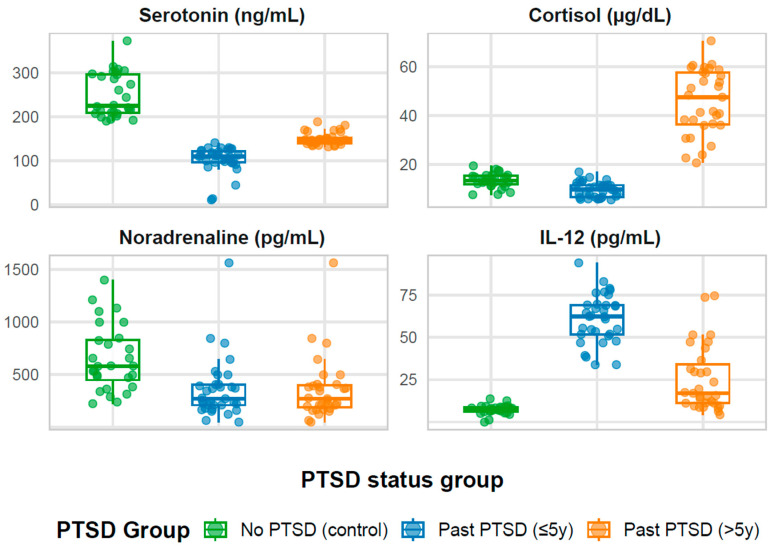 Figure 1
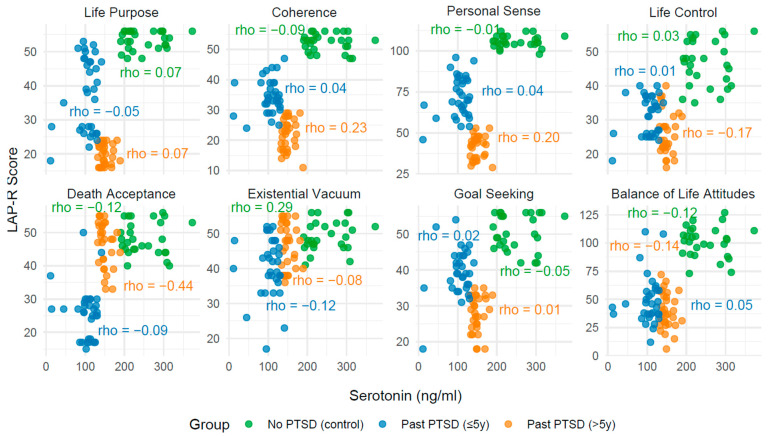 Figure 2
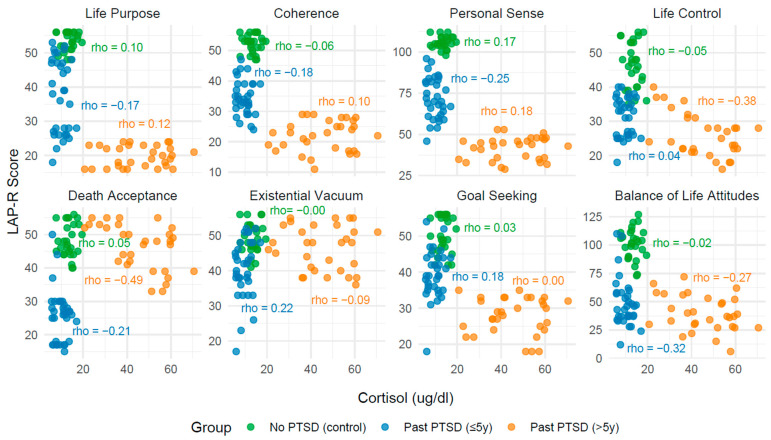 Figure 3
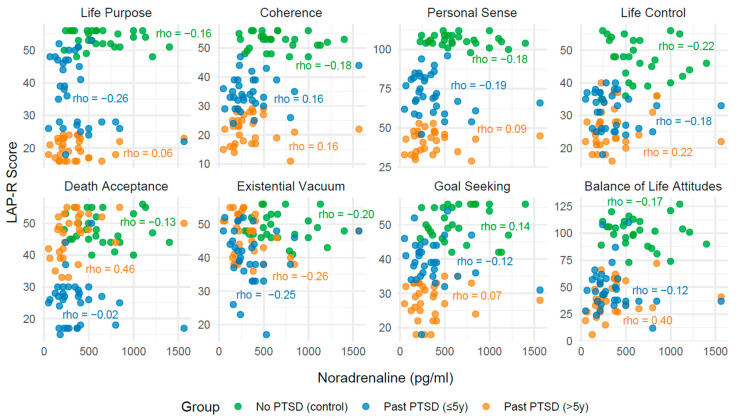 Figure 4
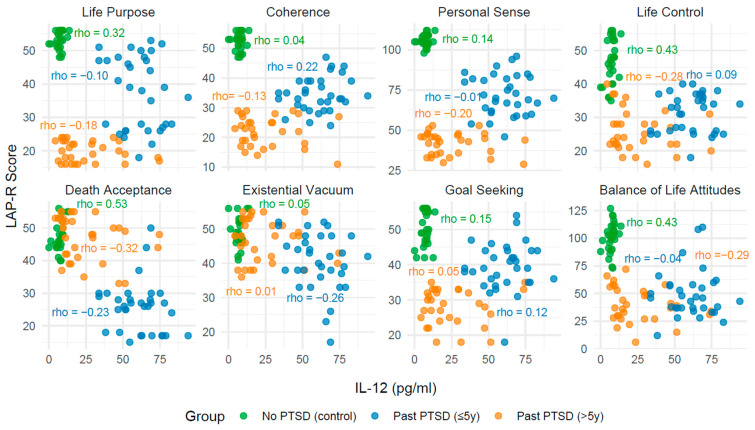 Figure 5
Peer Reviews
No public reviews on file for this paper yet. If you reviewed it on a platform where reviews are public (OpenReview, ICLR, NeurIPS, ICML), you can paste yours below so the community can read it here.
Videos
No videos yet. Explain this paper in a talk, walkthrough, or lecture? Add one.
Taxonomy
TopicsPosttraumatic Stress Disorder Research · Stress Responses and Cortisol · Health, psychology, and well-being