Frozen Elephant Trunk in Acute Aortic Syndrome: Retrospective Results from a Low-Volume Center
Andreas Voetsch, Roman Gottardi, Andreas Winkler, Domenic Meissl, Katja Gansterer, Rainald Seitelberger, Philipp Krombholz-Reindl

TL;DR
This study shows that the frozen elephant trunk technique for treating acute aortic dissections can be successfully used in low-volume hospitals with outcomes similar to high-volume centers.
Contribution
The study provides evidence that the frozen elephant trunk technique is feasible in low-volume centers, with insights into surgical practice evolution and outcomes.
Findings
FET procedures had longer cardiopulmonary bypass and hypothermic circulatory arrest times compared to less invasive repairs.
FET patients had higher rates of completion TEVAR but similar mortality and stroke rates as non-FET patients.
FET proximalization and liberal use of LSA grafts helped reduce the learning curve in low-volume centers.
Abstract
Objective: The role of the frozen elephant trunk technique in the treatment of acute aortic dissections is currently based on results from high-volume centers only. We investigated the patient selection process, intraoperative data, the evolution of surgical practice and outcomes from a low-volume center. Methods: A retrospective analysis was conducted on 202 acute aortic dissection (AAD) patients treated between October 2014 and December 2023. Patients were categorized into those receiving less invasive open aortic repair (group 1, n = 136) and those undergoing frozen elephant trunk procedures (FETs) (group 2, n = 66). Data on demographics, surgical procedures, and outcomes were analyzed. Results: Overall 30-day mortality was 16% (13% vs. 23%; p = 0.068). Rates of postoperative disabling stroke were similar (9% vs. 8%, p = 0.190). FET procedures required longer cardiopulmonary bypass…
Genes, proteins, chemicals, diseases, species, mutations and cell lines named across the full text — each resolved to its canonical identifier and authoritative record.
Click any figure to enlarge with its caption.
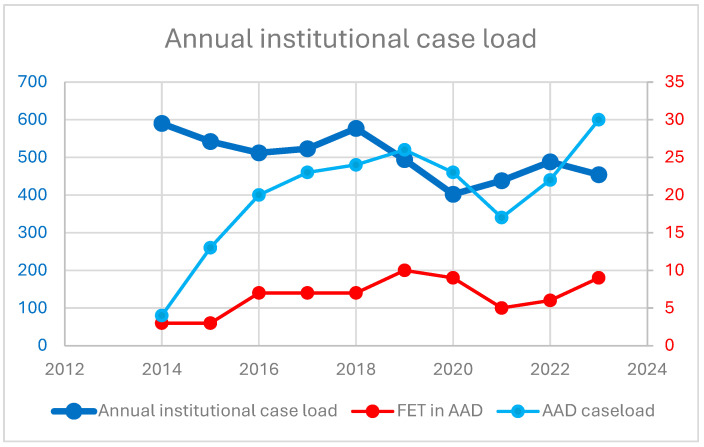 Figure 1
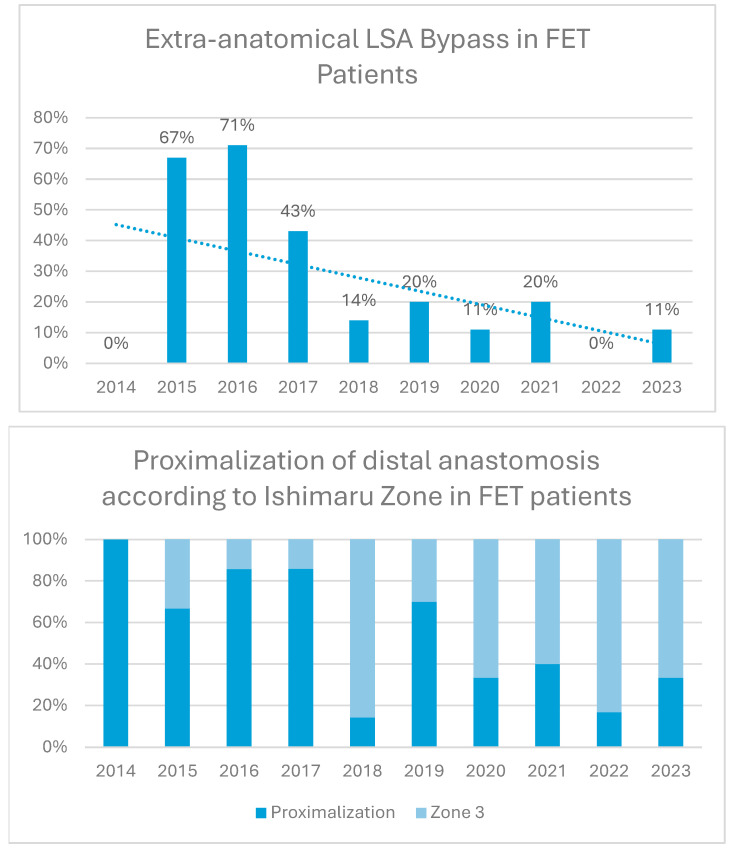 Figure 2
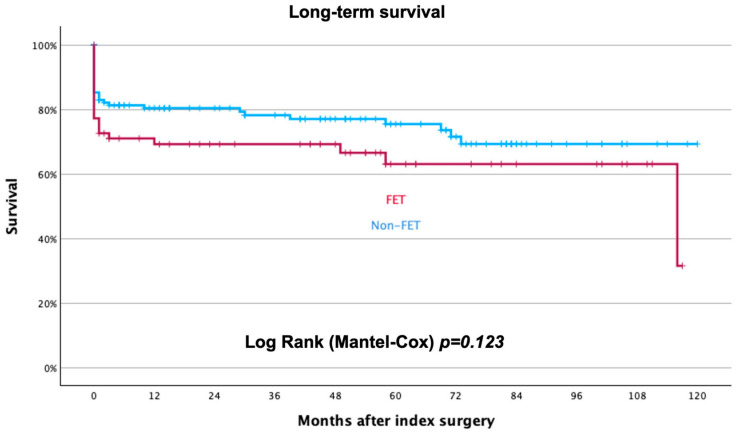 Figure 3
Peer Reviews
No public reviews on file for this paper yet. If you reviewed it on a platform where reviews are public (OpenReview, ICLR, NeurIPS, ICML), you can paste yours below so the community can read it here.
Videos
No videos yet. Explain this paper in a talk, walkthrough, or lecture? Add one.
Taxonomy
TopicsAortic Disease and Treatment Approaches · Aortic aneurysm repair treatments · Infectious Aortic and Vascular Conditions