Early Prognostication After Out-of-Hospital Cardiac Arrest: Modified rCAST Score Incorporating Age and Brainstem Reflexes
Youn-Jung Kim, Yonghun Jung, Byung Kook Lee, Chun Song Youn, Won Young Kim

TL;DR
This study improves a scoring system to predict poor neurological outcomes after cardiac arrest by adding age and brainstem reflexes, enhancing early prognostication.
Contribution
The modified rCAST (mCAST) score integrates age and brainstem reflexes to enhance prognostic accuracy for OHCA survivors.
Findings
Age >65 years and absence of brainstem reflexes were independent predictors of poor neurological outcomes.
The mCAST score showed higher prognostic accuracy (AUC 0.849) compared to the original rCAST (AUC 0.823).
The mCAST improved risk stratification in high-severity groups without reducing clinical feasibility.
Abstract
Background: Out-of-hospital cardiac arrest (OHCA) survivors demonstrate wide variation in neurological outcomes due to hypoxic–ischemic brain injury. Early prognostic stratification in the emergency department is essential to inform clinical decisions. This study aimed to improve the revised Cardiac Arrest Syndrome for Therapeutic hypothermia (rCAST) score by incorporating additional clinical variables and to evaluate its ability to predict poor neurological outcomes. Methods: This multicenter observational study analyzed OHCA survivors treated with targeted temperature management (TTM) between October 2015 and December 2018 at 22 university-affiliated hospitals participating in the Korean Hypothermia Network prospective registry. The primary outcome was poor neurological status at one month, defined as a Cerebral Performance Category (CPC) score of 3–5. Independent predictors were…
Genes, proteins, chemicals, diseases, species, mutations and cell lines named across the full text — each resolved to its canonical identifier and authoritative record.
Click any figure to enlarge with its caption.
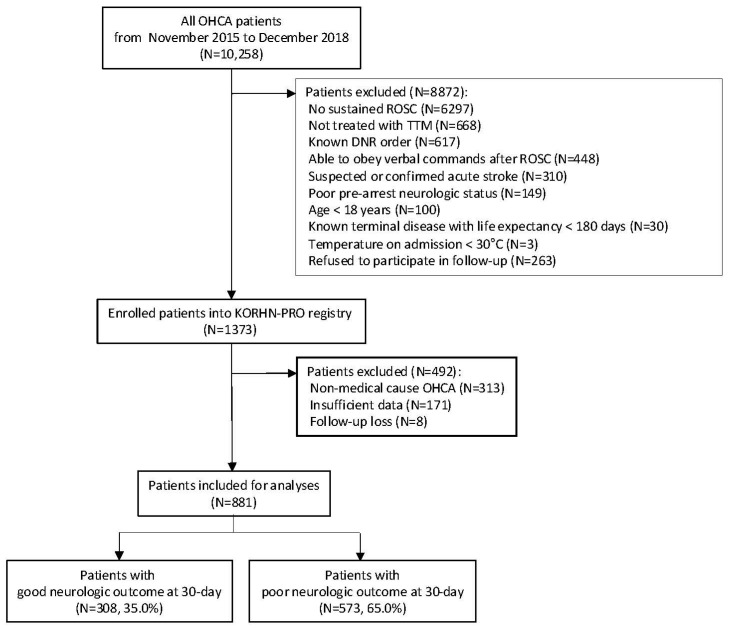 Figure 1
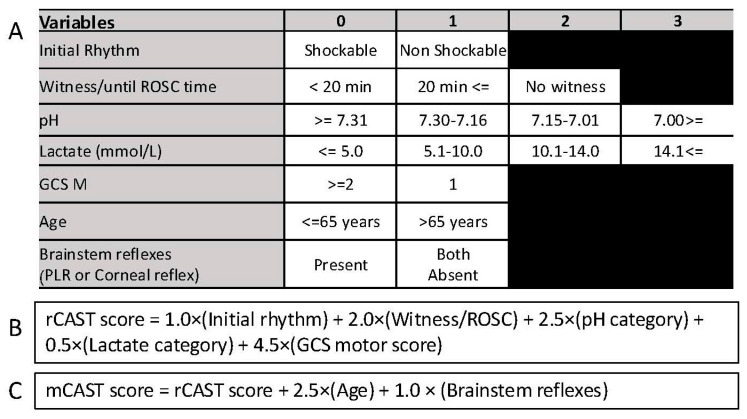 Figure 2
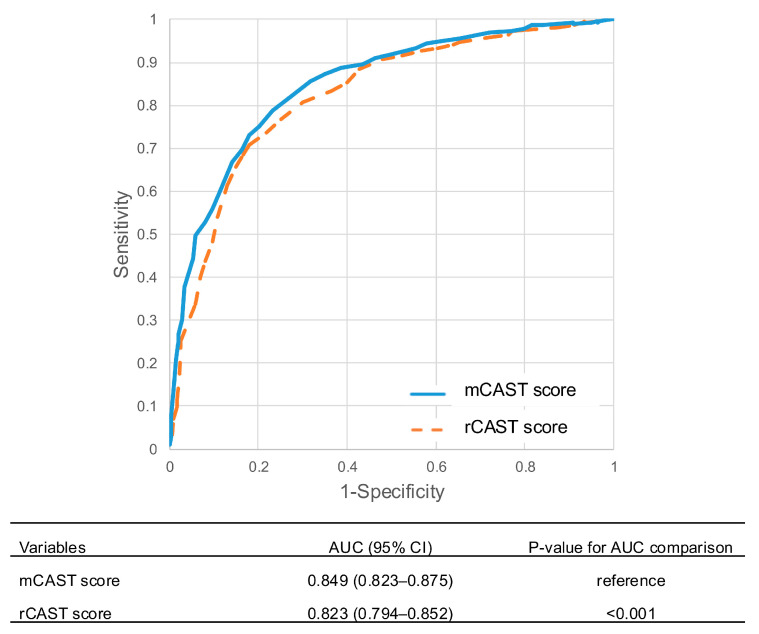 Figure 3
Peer Reviews
No public reviews on file for this paper yet. If you reviewed it on a platform where reviews are public (OpenReview, ICLR, NeurIPS, ICML), you can paste yours below so the community can read it here.
Videos
No videos yet. Explain this paper in a talk, walkthrough, or lecture? Add one.
Taxonomy
TopicsCardiac Arrest and Resuscitation · Traumatic Brain Injury and Neurovascular Disturbances · Cerebrospinal fluid and hydrocephalus