A Cluster Analysis of EPOCH Questionnaire Data from University Students in Sichuan, China: Exploring Group Differences in Psychological Well-Being and Demographic Factors
Juan Wan, Lijuan Ren, Yufei Tan, Yin How Wong, Ching Sin Siau, Lei Hum Wee

TL;DR
This study used cluster analysis to identify two distinct groups of university students in China with differing levels of psychological well-being and demographic characteristics.
Contribution
The study introduces a machine learning approach to uncover distinct psychological profiles and their demographic correlates among Chinese university students.
Findings
Two clusters were identified: one with high well-being and another with low well-being scores.
Demographic factors like gender, family background, and financial status were linked to well-being differences.
A subgroup of students from rural, low-income families showed particularly low scores in Connectedness and Happiness.
Abstract
(1) Background: University students face increasing mental health challenges, with sociodemographic disparities shaping well-being outcomes and highlighting the need for machine learning approaches to identify distinct psychological profiles. (2) Methods: This cross-sectional study surveyed 4911 Chinese university students (aged 18–25) using the EPOCH Questionnaire, which measures Engagement, Perseverance, Optimism, Connectedness, and Happiness. Data were collected via WenjuanXing (WJX), with recruitment promoted through official channels. Well-being profiles were identified through exploratory K-means clustering, with internal validity and the optimal cluster number assessed using the silhouette coefficient. (3) Results: Cluster analysis identified two distinct groups: Cluster 0 (41.09%) with higher well-being scores and Cluster 1 (58.91%) with lower scores. Differences across all five…
Genes, proteins, chemicals, diseases, species, mutations and cell lines named across the full text — each resolved to its canonical identifier and authoritative record.
Click any figure to enlarge with its caption.
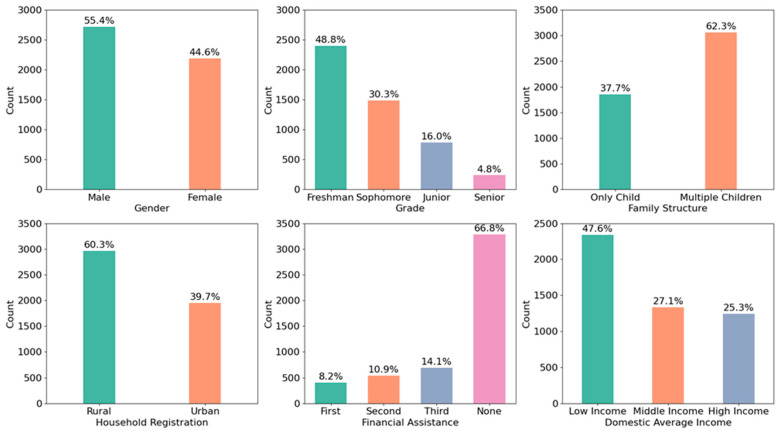 Figure 1
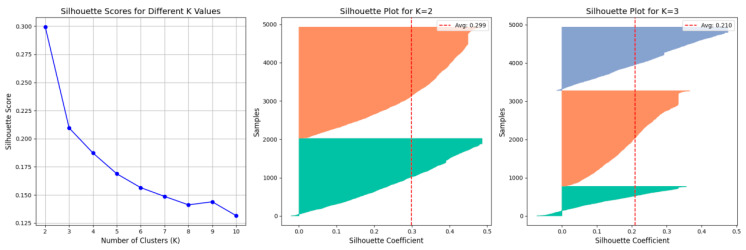 Figure 2
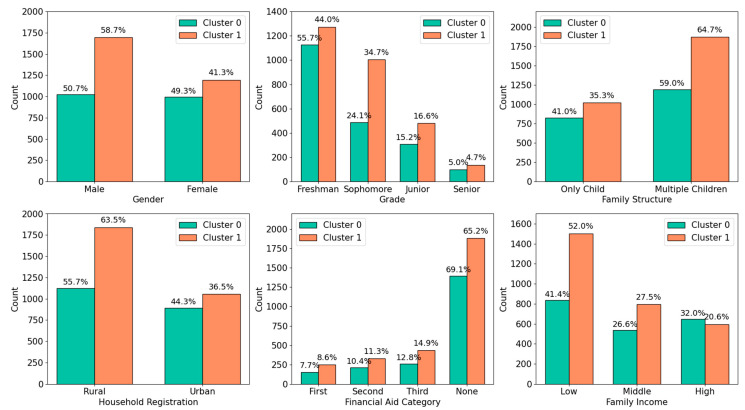 Figure 3
Peer Reviews
No public reviews on file for this paper yet. If you reviewed it on a platform where reviews are public (OpenReview, ICLR, NeurIPS, ICML), you can paste yours below so the community can read it here.
Videos
No videos yet. Explain this paper in a talk, walkthrough, or lecture? Add one.
Taxonomy
TopicsPsychological Well-being and Life Satisfaction · Optimism, Hope, and Well-being · Health disparities and outcomes