Study of the Patterns of DNA Methylation in Human Cells Through the Prism of Intra-Strand DNA Symmetry
Zamart Ramazanova, Aizhan Alikul, Dinara Begimbetova, Sabira Taipakova, Bakhyt T. Matkarimov, Murat Saparbaev

TL;DR
This study explores how DNA methylation patterns in human cells relate to intra-strand DNA symmetry, revealing non-random methylation and compensatory asymmetry during cell differentiation.
Contribution
The paper introduces a novel analysis of DNA methylation through the lens of intra-strand symmetry, uncovering compensatory asymmetry and non-random methylation patterns.
Findings
DNA methylation patterns deviate from Chargaff’s Second Parity Rule, showing methylation asymmetry in reverse-complementary oligomers.
Compensatory methylation asymmetry reduces deviations from intra-strand symmetry during cell differentiation.
Four out of six tetranucleotide pairs show pronounced methylation asymmetry, possibly linked to chromosome folding and 3D genome structure.
Abstract
Cellular organisms store heritable information in two forms, genetic and epigenetic, the latter being largely dependent on cytosine methylation (5mC). Chargaff’s Second Parity Rule (CSPR) describes the nucleotide composition of cellular genomes in terms of intra-strand DNA symmetry. However, it remains unknown whether DNA methylation patterns display intra-strand DNA symmetry. Computational analysis was conducted of the DNA methylation patterns observed in human cell lines and in tissue samples from healthy donors. Analysis of 5mC marks in mutually reverse-complementary pairs of short oligomers, containing CpG dinucleotide in the middle, revealed deviations from CSPR and methylation asymmetry that can be observed for two non-overlapping mirror groups defined by CpG methylation values. Deviations from CSPR, together with combinatorial probabilities of pattern distributions and computer…
Genes, proteins, chemicals, diseases, species, mutations and cell lines named across the full text — each resolved to its canonical identifier and authoritative record.
Click any figure to enlarge with its caption.
 Figure 1
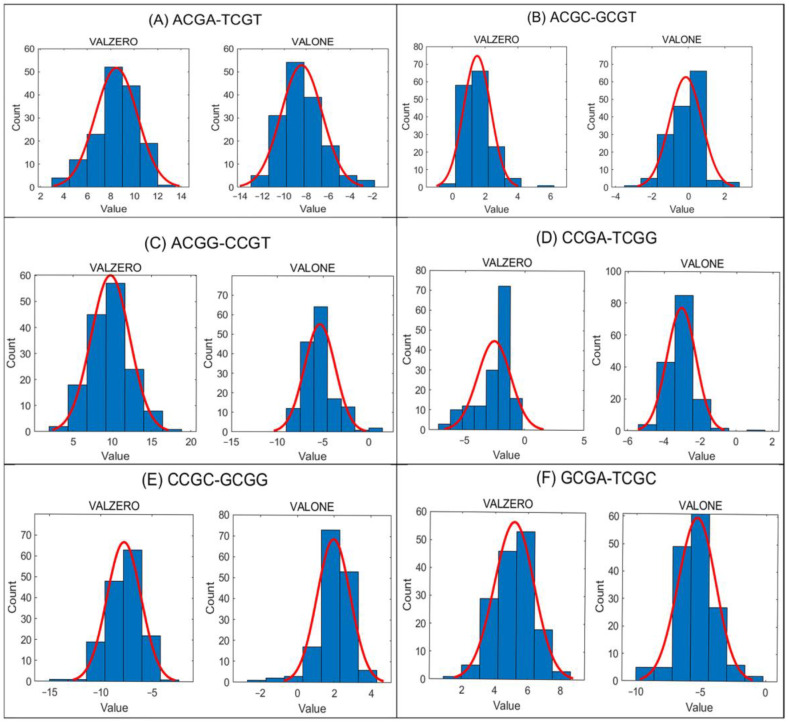 Figure 2
 Figure 3
 Figure 4
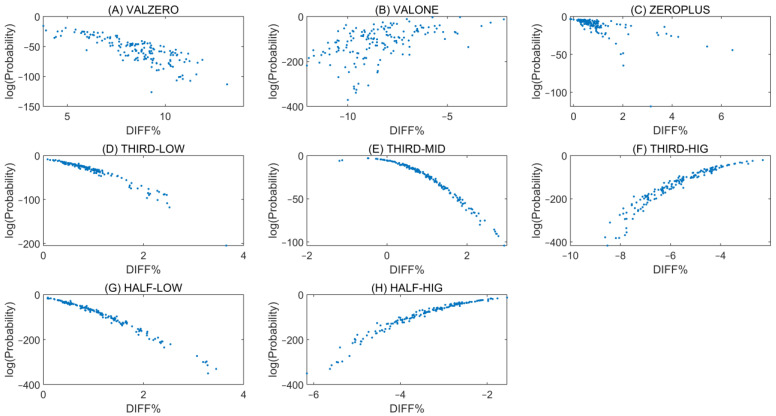 Figure 5
Peer Reviews
No public reviews on file for this paper yet. If you reviewed it on a platform where reviews are public (OpenReview, ICLR, NeurIPS, ICML), you can paste yours below so the community can read it here.
Videos
No videos yet. Explain this paper in a talk, walkthrough, or lecture? Add one.
Taxonomy
TopicsEpigenetics and DNA Methylation · Genomics and Chromatin Dynamics · DNA and Biological Computing