Selective Degradation and Inhibition of SARS-CoV-2 3CLpro by MMP14 Reveals a Novel Strategy for COVID-19 Therapeutics
Hyun Lee, Yunjeong Hwang, Elizabeth J. Mulder, Yuri Song, Calista Choi, Lijun Rong, Dimitri T. Azar, Kyu-Yeon Han

TL;DR
This paper shows that the enzyme MMP14 can selectively destroy a key SARS-CoV-2 protein, 3CLpro, offering a new approach for treating COVID-19.
Contribution
The study reveals that MMP14 can selectively degrade SARS-CoV-2 3CLpro and proposes a novel pro-PL-MMP14 construct for targeted antiviral therapy.
Findings
MMP14 selectively binds to and degrades SARS-CoV-2 3CLpro but not PLpro.
MMP14-mediated degradation of 3CLpro inhibits SARS-CoV-2 pseudovirus replication in 293 T cells.
A recombinant pro-PL-MMP14 construct is proposed to prevent off-target degradation.
Abstract
Novel therapies to treat infection by severe acute respiratory syndrome coronavirus 2 (SARS-CoV-2), the cause of respiratory coronavirus disease 2019 (COVID-19), would be of great clinical value to combat the current and future pandemics. Two viral proteases, papain-like protease (PLpro) and the main protease 3-chymotrypsin-like protease (3CLpro), are vital in processing the SARS-CoV-2 polyproteins (pp1a and pp1ab) and in releasing 16 nonstructural proteins, making them attractive antiviral drug targets. In this study, we investigated the degradation of the SARS-CoV-2 main protease 3CLpro by matrix metalloproteinase-14 (MMP14). MMP14 is known to recognize over 10 distinct substrate cleavage sequences. Through sequence analysis, we identified 17 and 10 putative MMP14 cleavage motifs within the SARS-CoV-2 3CLpro and PLpro proteases, respectively. Despite the presence of potential sites in…
Genes, proteins, chemicals, diseases, species, mutations and cell lines named across the full text — each resolved to its canonical identifier and authoritative record.
Click any figure to enlarge with its caption.
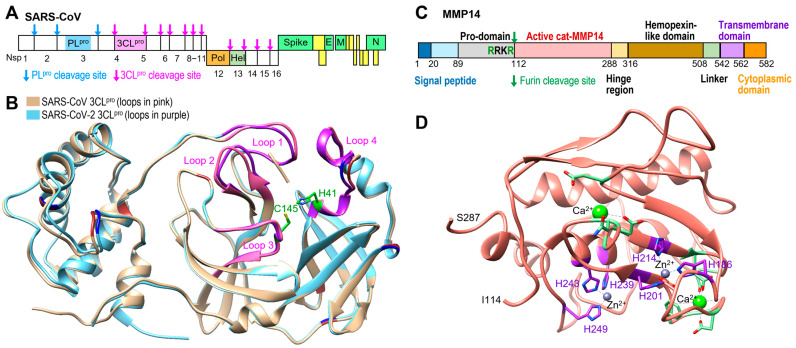 Figure 1
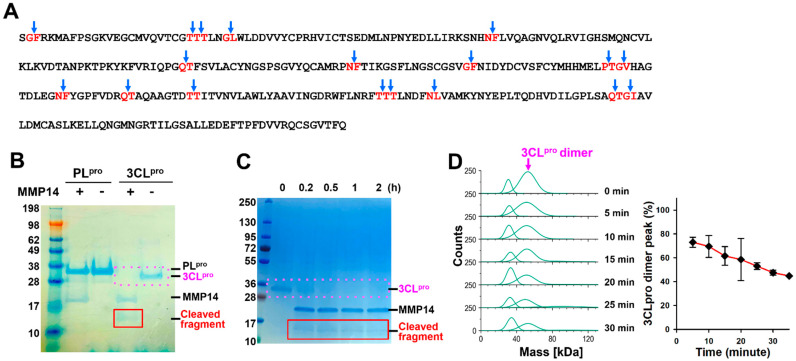 Figure 2
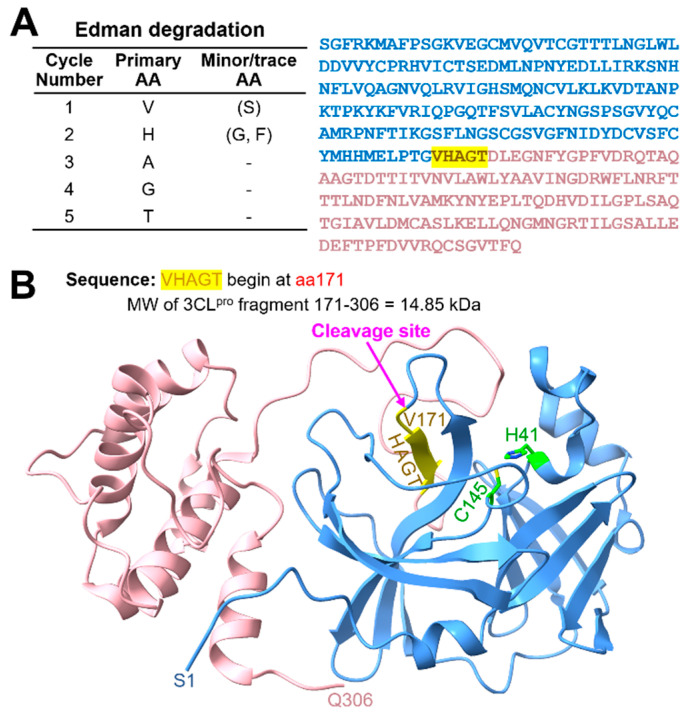 Figure 3
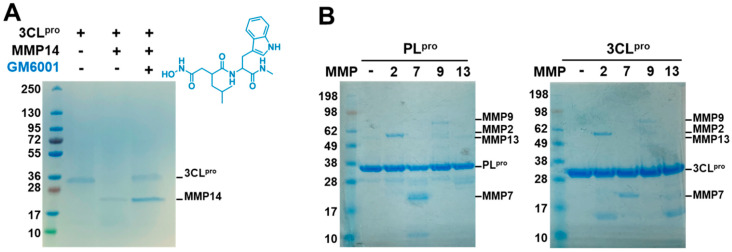 Figure 4
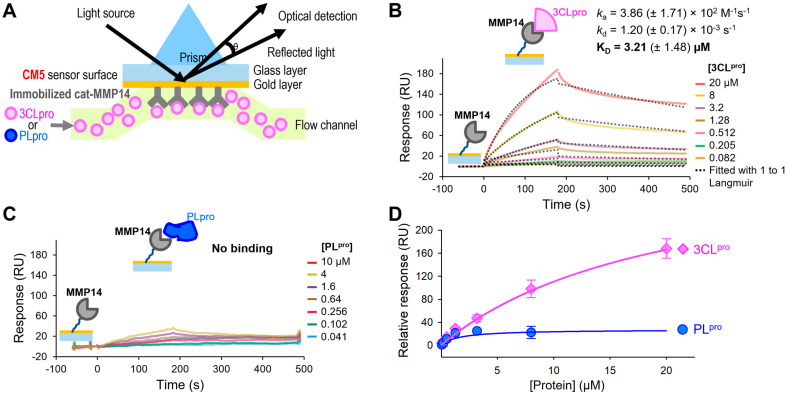 Figure 5
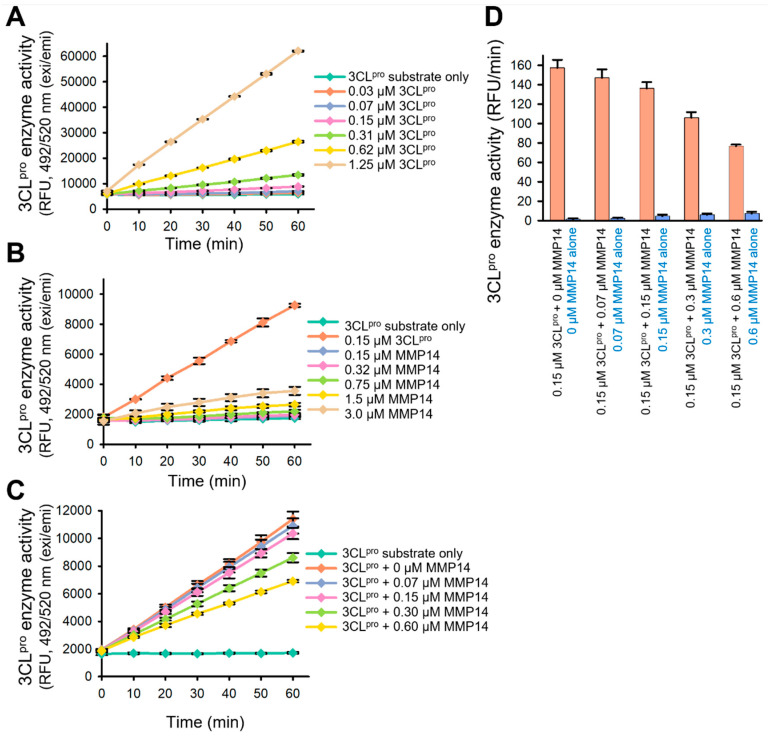 Figure 6
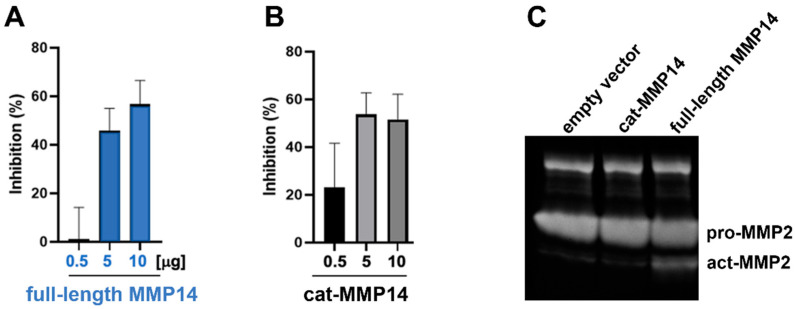 Figure 7
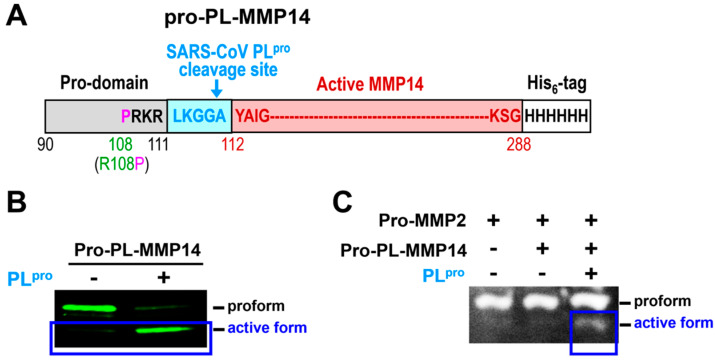 Figure 8
Peer Reviews
No public reviews on file for this paper yet. If you reviewed it on a platform where reviews are public (OpenReview, ICLR, NeurIPS, ICML), you can paste yours below so the community can read it here.
Videos
No videos yet. Explain this paper in a talk, walkthrough, or lecture? Add one.
Taxonomy
TopicsMosquito-borne diseases and control · Antimicrobial Peptides and Activities · SARS-CoV-2 and COVID-19 Research