Evaluating Reproducibility and Best Practices for Replicate Design in G-Quadruplex ChIP-Seq Studies
Ke Xiao, Rongxin Zhang, Jing Tu

TL;DR
This study evaluates the reproducibility of G-quadruplex ChIP-Seq data and provides guidelines for improving reliability through replication and computational methods.
Contribution
The study introduces best practices for replicate design and identifies MSPC as the optimal method for assessing reproducibility in G4 ChIP-Seq.
Findings
Only a minority of G4 peaks are shared across all replicates, highlighting reproducibility challenges.
Using at least three replicates improves detection accuracy, with four replicates being sufficient for reproducible outcomes.
Reproducibility-aware strategies help mitigate low sequencing depth but cannot fully replace high-quality data.
Abstract
G-quadruplex (G4) ChIP-Seq data are critical for studying the roles of G4 structures in various biological processes, yet their reproducibility remains systematically uncharacterized. In this study, we evaluated the consistency of in vivo G4 peaks across multiple replicates in three publicly available datasets. We observed considerable heterogeneity in peak calls, with only a minority of peaks shared across all replicates. To address this challenge, we compared three computational methods—IDR, MSPC, and ChIP-R—for assessing reproducibility and found that MSPC is the optimal solution in reconciling inconsistent signals in G4 ChIP-Seq data. We further demonstrated that employing at least three replicates significantly improved detection accuracy compared to conventional two-replicate designs, while four replicates proved sufficient to achieve reproducible outcomes, with diminishing…
Genes, proteins, chemicals, diseases, species, mutations and cell lines named across the full text — each resolved to its canonical identifier and authoritative record.
Click any figure to enlarge with its caption.
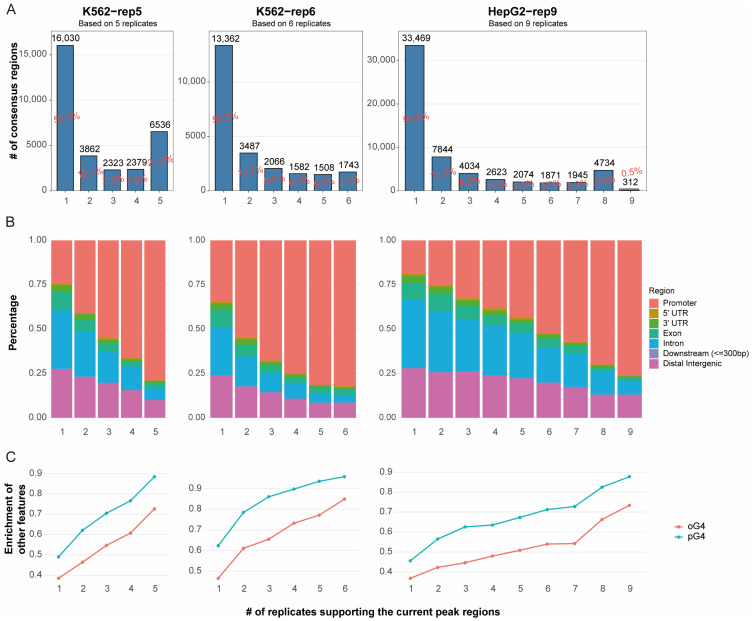 Figure 1
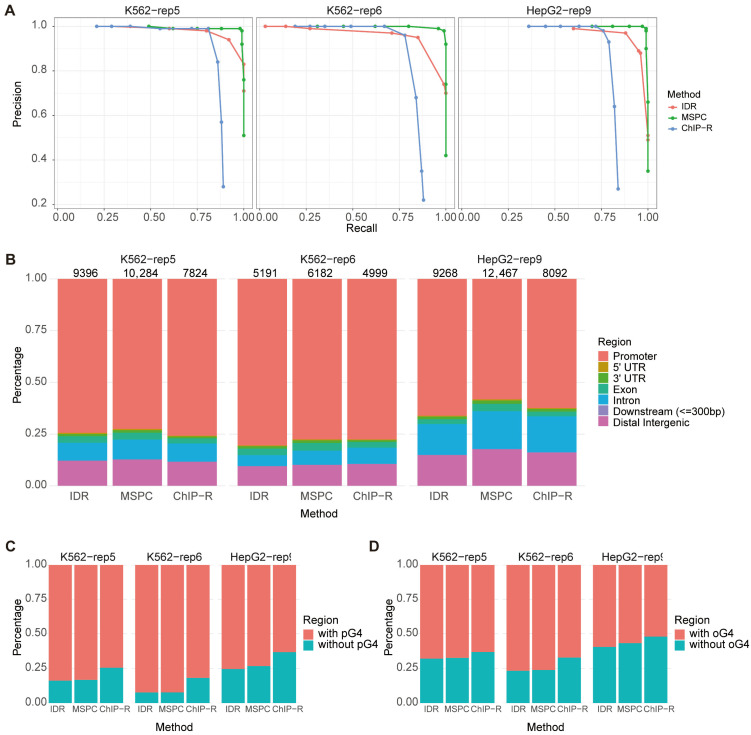 Figure 2
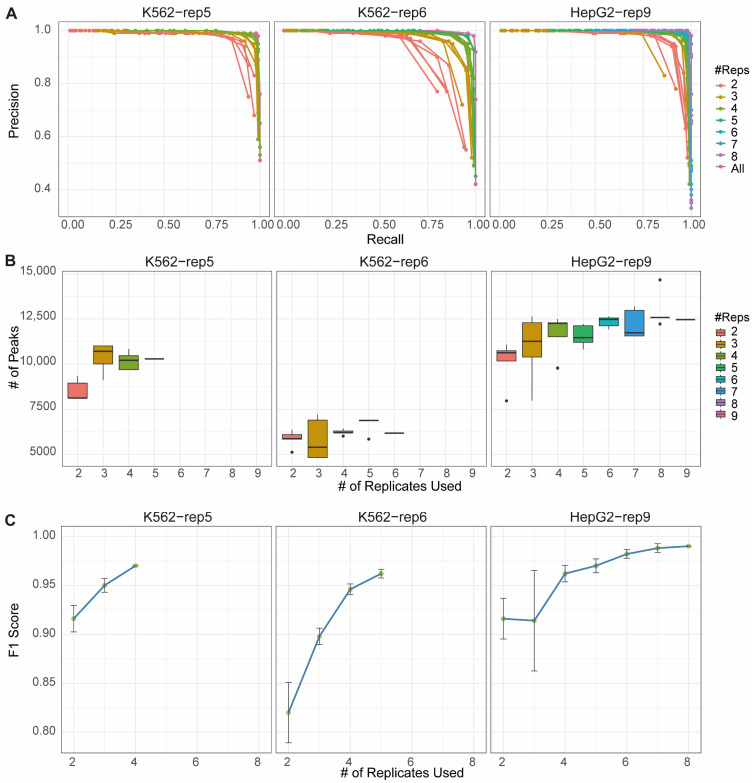 Figure 3
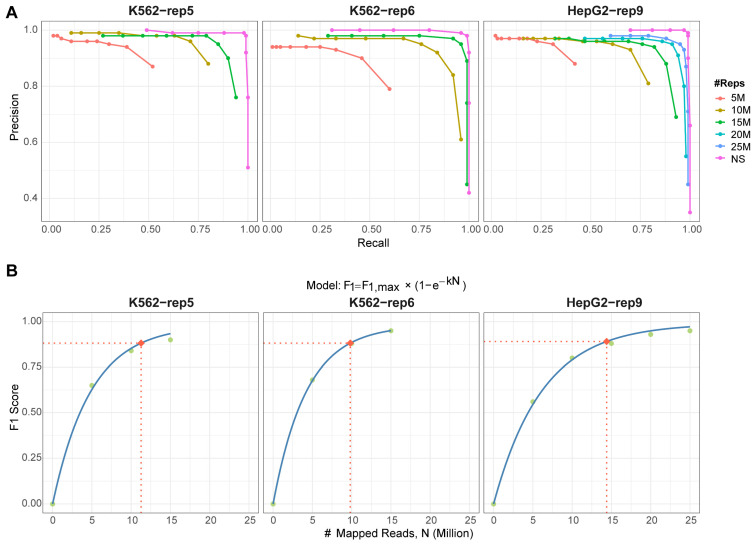 Figure 4
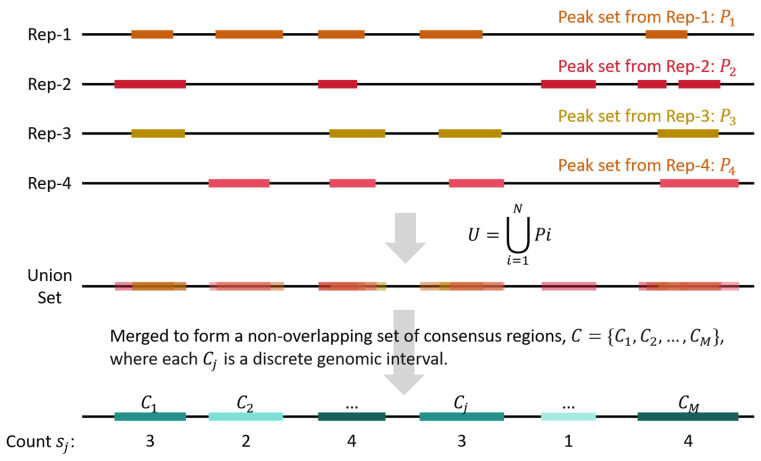 Figure 5
Peer Reviews
No public reviews on file for this paper yet. If you reviewed it on a platform where reviews are public (OpenReview, ICLR, NeurIPS, ICML), you can paste yours below so the community can read it here.
Videos
No videos yet. Explain this paper in a talk, walkthrough, or lecture? Add one.
Taxonomy
TopicsRNA and protein synthesis mechanisms · Advanced biosensing and bioanalysis techniques · DNA and Nucleic Acid Chemistry