Frank’s Sign as a Dose-Dependent Marker of White Matter Burden in CADASIL: A Brain MRI Study
Sungman Jo, Joon Hyuk Park, Ki Woong Kim

TL;DR
A diagonal earlobe crease, known as Frank’s sign, is linked to higher brain white matter damage in a genetic brain disease called CADASIL.
Contribution
This study introduces Frank’s sign as a dose-dependent biomarker for white matter burden in CADASIL using automated MRI-based detection.
Findings
Frank’s sign was more common in CADASIL patients than controls and correlated with greater white matter hyperintensity (WMH) volume.
Frank’s sign prevalence increased with higher WMH tertiles, showing a dose-response relationship.
CADASIL patients with Frank’s sign had lower cognitive scores but similar lacunes and microbleeds.
Abstract
Background/Objectives: Frank’s sign, a diagonal earlobe crease, may reflect systemic microvascular dysfunction. We investigated whether Frank’s sign serves as a clinical marker of white matter hyperintensity (WMH) burden in Cerebral Autosomal Dominant Arteriopathy with Subcortical Infarcts and Leukoencephalopathy (CADASIL), a monogenic model of pure cerebral small vessel disease. Methods: We analyzed 81 genetically confirmed CADASIL patients (61.8 ± 12.6 years, 40.7% female) and 54 age/sex-matched controls (70.3 ± 6.6 years, 48.1% female). Frank’s sign was detected using deep learning from brain MRI-reconstructed 3D facial surfaces. WMH volumes were automatically quantified and adjusted for confounders using Random Forest regression residuals. We compared Frank’s sign prevalence between groups, assessed within-CADASIL associations, and evaluated dose–response relationships across WMH…
Genes, proteins, chemicals, diseases, species, mutations and cell lines named across the full text — each resolved to its canonical identifier and authoritative record.
Click any figure to enlarge with its caption.
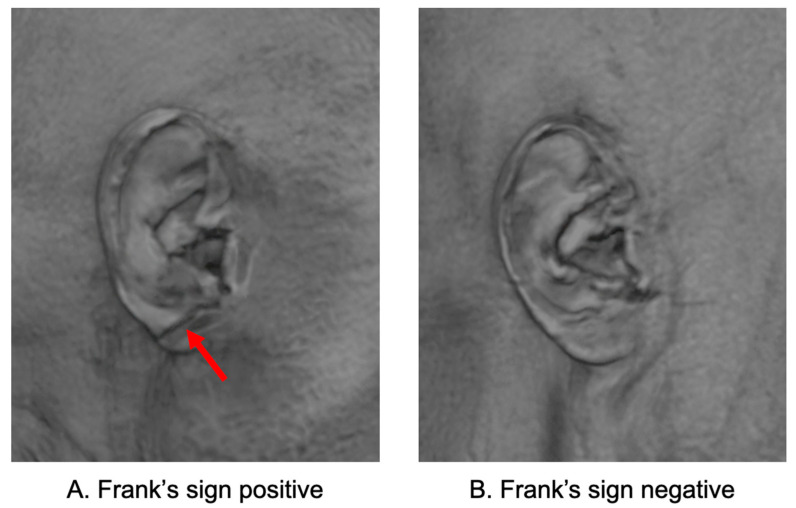 Figure 1
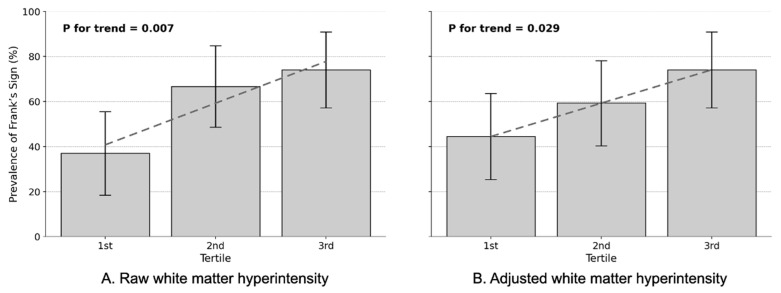 Figure 2
Peer Reviews
No public reviews on file for this paper yet. If you reviewed it on a platform where reviews are public (OpenReview, ICLR, NeurIPS, ICML), you can paste yours below so the community can read it here.
Videos
No videos yet. Explain this paper in a talk, walkthrough, or lecture? Add one.
Taxonomy
TopicsCerebrovascular and genetic disorders · Moyamoya disease diagnosis and treatment · Cell Adhesion Molecules Research