Emerging Role of Tripartite Synaptic Transmission in the Pathomechanism of Autosomal-Dominant Sleep-Related Hypermotor Epilepsy
Tomoka Oka, Ruri Okubo, Eishi Motomura, Motohiro Okada

TL;DR
This paper explores how a genetic mutation in CHRNA4 contributes to a rare form of epilepsy by affecting brain communication during sleep.
Contribution
The paper proposes a new hypothetical pathomechanism for ADSHE involving tripartite synaptic transmission and astroglial hemichannels.
Findings
Loss-of-function of S284L-mutant nAChRs leads to GABAergic disinhibition and enhanced ripple-burst oscillations during sleep.
Upregulation of astroglial hemichannels under GABAergic disinhibition contributes to epileptogenic fast-ripple oscillations.
ADSHE-mutant nAChRs alone are insufficient for ictogenesis but initiate epileptogenesis during neurodevelopment.
Abstract
Autosomal-dominant sleep-related hypermotor epilepsy (ADSHE) was the first distinct genetic epilepsy proven to be caused by mutation of the CHRNA4 gene, originally reported in 1994. In the past three decades, pathomechanisms of ADSHE associated with mutant nicotinic acetylcholine receptors (nAChRs) have been explored via various studies, including in vitro experiments and genetic rodent models. However, findings emphasize that functional abnormalities of ADSHE-mutant nAChRs alone cannot generate ictogenesis; rather, development of abnormalities in various other transmission systems induced by ADSHE-mutant nAChRs during the neurodevelopmental process before the ADSHE onset is involved in development of epileptogenesis/ictogenesis. Intra-thalamic GABAergic disinhibition induced by loss-of-function of S284L-mutant nAChRs (S286L-mutant nAChRs in rat ADSHE models) contributes to enhancing…
Genes, proteins, chemicals, diseases, species, mutations and cell lines named across the full text — each resolved to its canonical identifier and authoritative record.
Click any figure to enlarge with its caption.
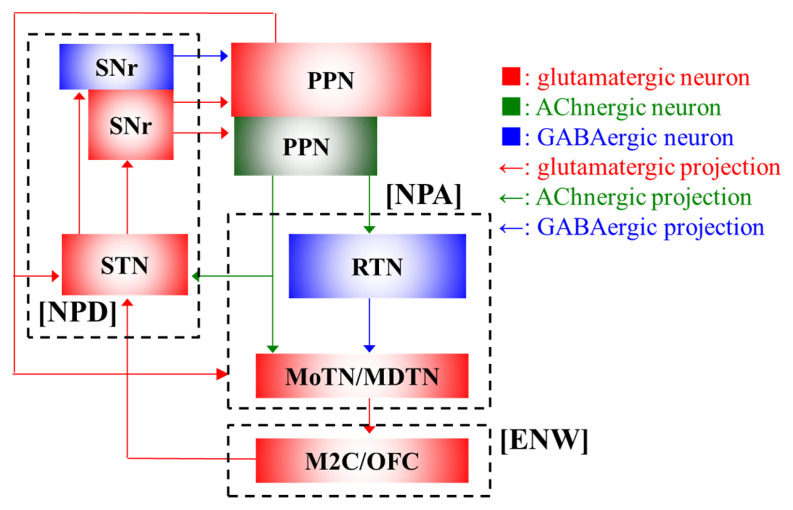 Figure 1
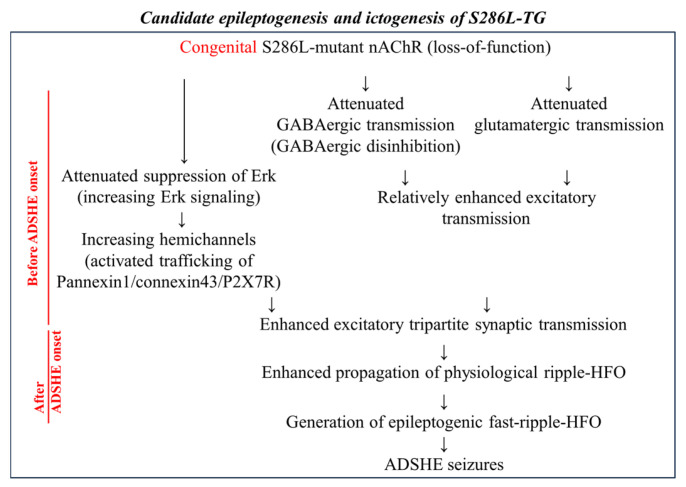 Figure 2
Peer Reviews
No public reviews on file for this paper yet. If you reviewed it on a platform where reviews are public (OpenReview, ICLR, NeurIPS, ICML), you can paste yours below so the community can read it here.
Videos
No videos yet. Explain this paper in a talk, walkthrough, or lecture? Add one.
Taxonomy
TopicsNeuroscience and Neuropharmacology Research · Nicotinic Acetylcholine Receptors Study · Connexins and lens biology