Unveiling Social Media Content Related to ADHD Treatment: Machine Learning Study Using X’s Posts over 15 Years
Alba Gómez-Prieto, Alejandra Mercado-Rodriguez, Juan Pablo Chart-Pascual, Cesar I. Fernandez-Lazaro, Francisco J. Lara-Abelenda, María Montero-Torres, Claudia Aymerich, Javier Quintero, Melchor Alvarez-Mon, Ana Gonzalez-Pinto, Cesar A. Soutullo, Miguel Angel Alvarez-Mon

TL;DR
This study analyzes 15 years of X posts to understand public discussions about ADHD medications, revealing trends in medication mentions, misuse concerns, and language-specific differences.
Contribution
The study introduces a machine learning approach to analyze ADHD medication discussions on X, revealing insights into public perceptions and language-specific trends.
Findings
Stimulant medications were more frequently mentioned and engaged with than non-stimulant ones.
English tweets showed more mentions of inappropriate medication use compared to Spanish tweets.
Patients were the most active users in English tweets, and online medication requests were common in both languages.
Abstract
Background: Public discourse on social media plays an increasingly influential role in shaping health-related perceptions and behaviours. Individuals share experiences, concerns, and opinions beyond clinical settings around different issues. X (formerly Twitter) provides a unique lens through which to examine how different treatments are perceived, used, and debated across diverse communities over time. Objective: The study aims to (a) identify the types of ADHD medications mentioned in posts, depending on language and user type; (b) evaluate the popularity of content related to these medications, considering language and user type; (c) analyse temporal changes in the frequency of mentions between 2006 and 2022; and (d) examine the distribution of tweets across different content categories. By addressing these objectives, this study provides insights into public perceptions of ADHD…
Genes, proteins, chemicals, diseases, species, mutations and cell lines named across the full text — each resolved to its canonical identifier and authoritative record.
Click any figure to enlarge with its caption.
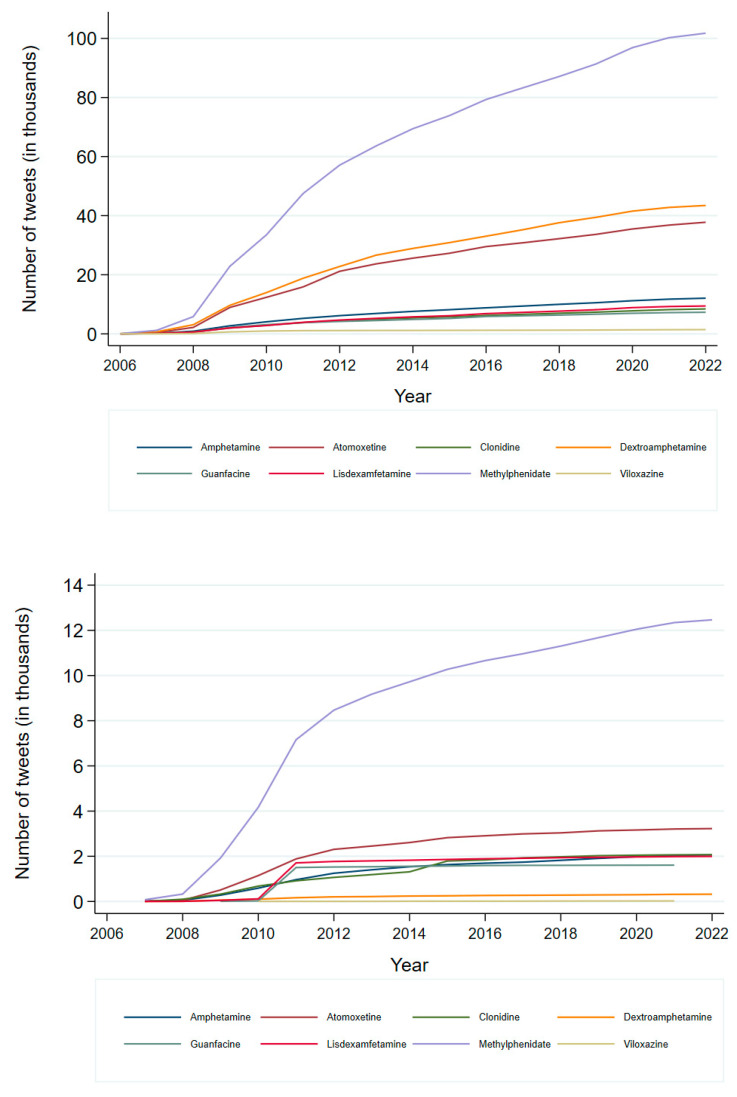 Figure 1
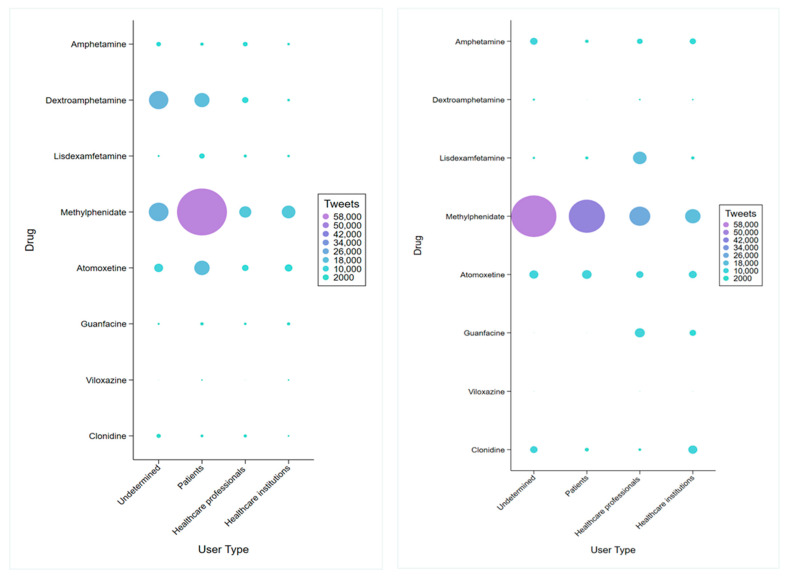 Figure 2
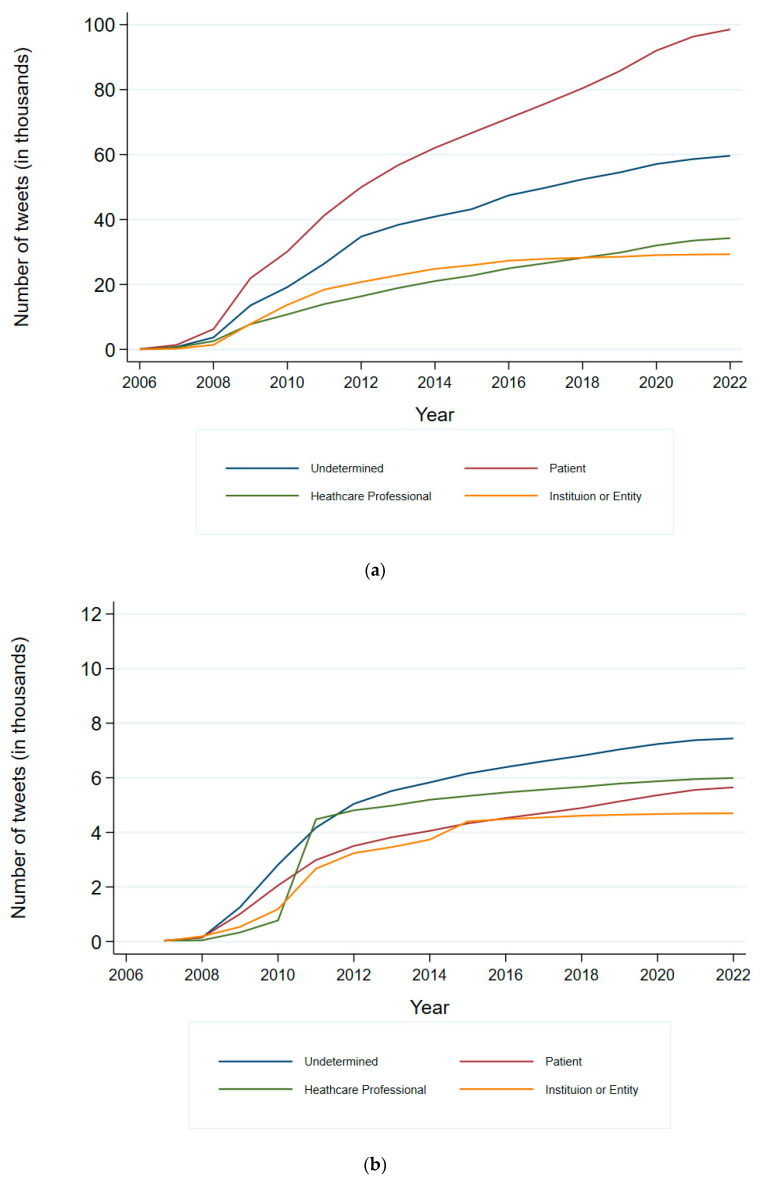 Figure 3
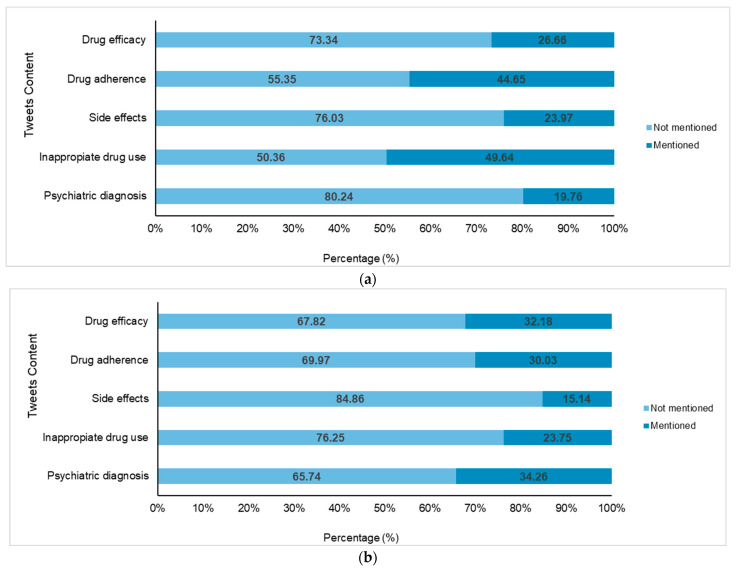 Figure 4
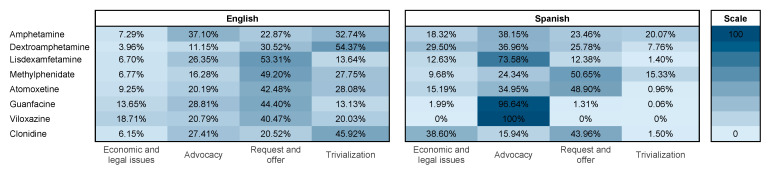 Figure 5
Peer Reviews
No public reviews on file for this paper yet. If you reviewed it on a platform where reviews are public (OpenReview, ICLR, NeurIPS, ICML), you can paste yours below so the community can read it here.
Videos
No videos yet. Explain this paper in a talk, walkthrough, or lecture? Add one.
Taxonomy
TopicsAttention Deficit Hyperactivity Disorder · Autism Spectrum Disorder Research