Omicron Subvariants Infection Kinetics and Nirmatrelvir Efficacy in Transgenic K18-hACE2 Mice
Vijeta Sharma, Enriko Dolgov, Taylor Tillery, Camila Mendez Romero, Alberto Rojas-Triana, Diana M. Villalba Guzman, Kira Goldgirsh, Risha Rasheed, Irene Gonzalez-Jimenez, Nadine Alvarez, Steven Park, Madhuvika Murugan, Andrew M. Nelson, David S. Perlin

TL;DR
This study examines how new Omicron subvariants of SARS-CoV-2 infect mice and how well the drug Nirmatrelvir works against them.
Contribution
The study evaluates the infection dynamics and Nirmatrelvir efficacy against newly emerged Omicron subvariants in a transgenic mouse model.
Findings
Omicron subvariants showed an early peak in lung viral titers followed by a decline.
Subvariant-infected mice had earlier pulmonary cytokine responses compared to the parent strain.
Nirmatrelvir treatment was more effective in reducing viral titers in subvariant-infected mice than in those infected with the parent strain.
Abstract
The persistent evolution of SARS-CoV-2 has led to the emergence of antigenically distinct Omicron subvariants exhibiting increased transmissibility, immune evasion, and altered pathogenicity. Among these, recent subvariants such as JN.1, KP.3.1.1, and LB.1 possess unique antigenic and virological features, underscoring the need for continued surveillance and therapeutic evaluation. As vaccines and commercial monoclonal antibodies show reduced effectiveness against these variants, the role of direct-acting antivirals, such as Nirmatrelvir, targeting conserved viral elements like the main protease inhibitor, becomes increasingly crucial. In this study, we investigated the replication kinetics, host immune responses, and therapeutic susceptibility of three recently circulating Omicron subvariants in the K18-hACE2 transgenic mouse model, using the SARS-CoV-2 parent WA1/2020 strain as a…
Genes, proteins, chemicals, diseases, species, mutations and cell lines named across the full text — each resolved to its canonical identifier and authoritative record.
Click any figure to enlarge with its caption.
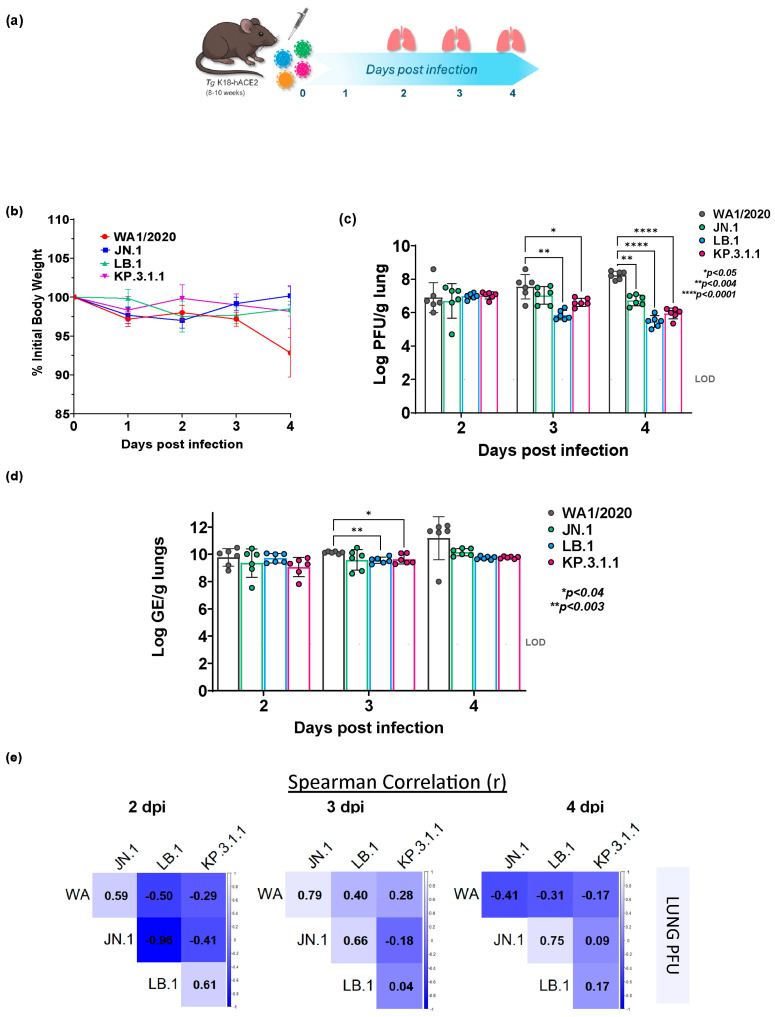 Figure 1
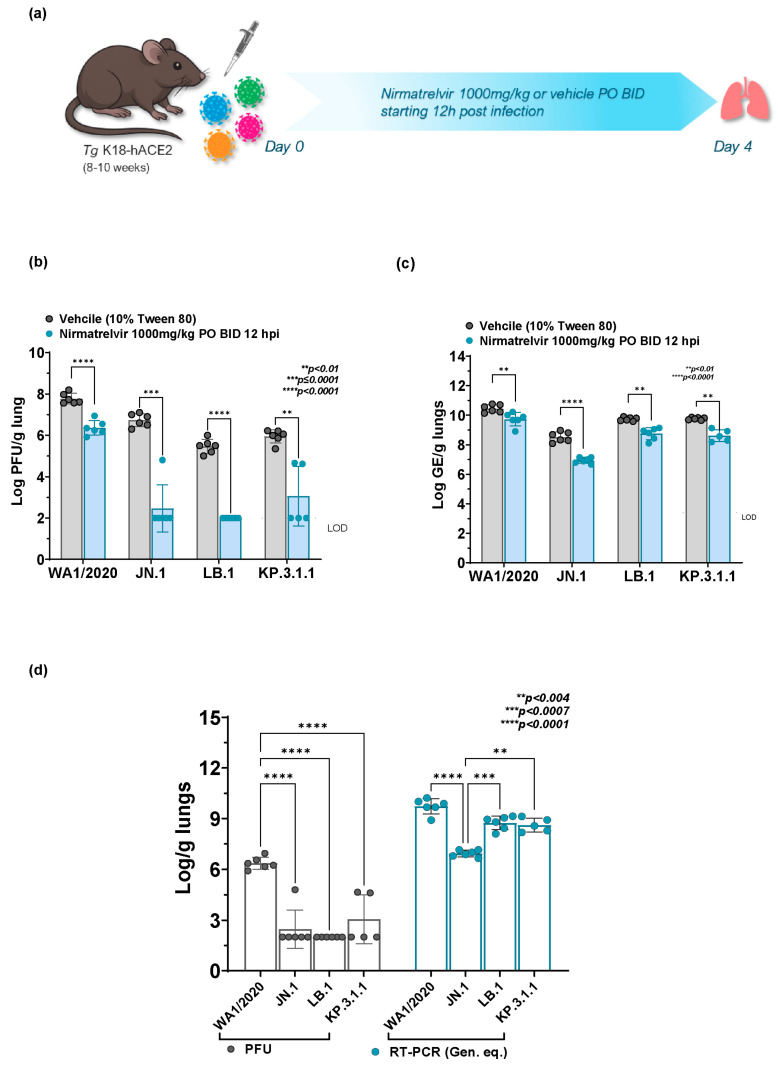 Figure 2
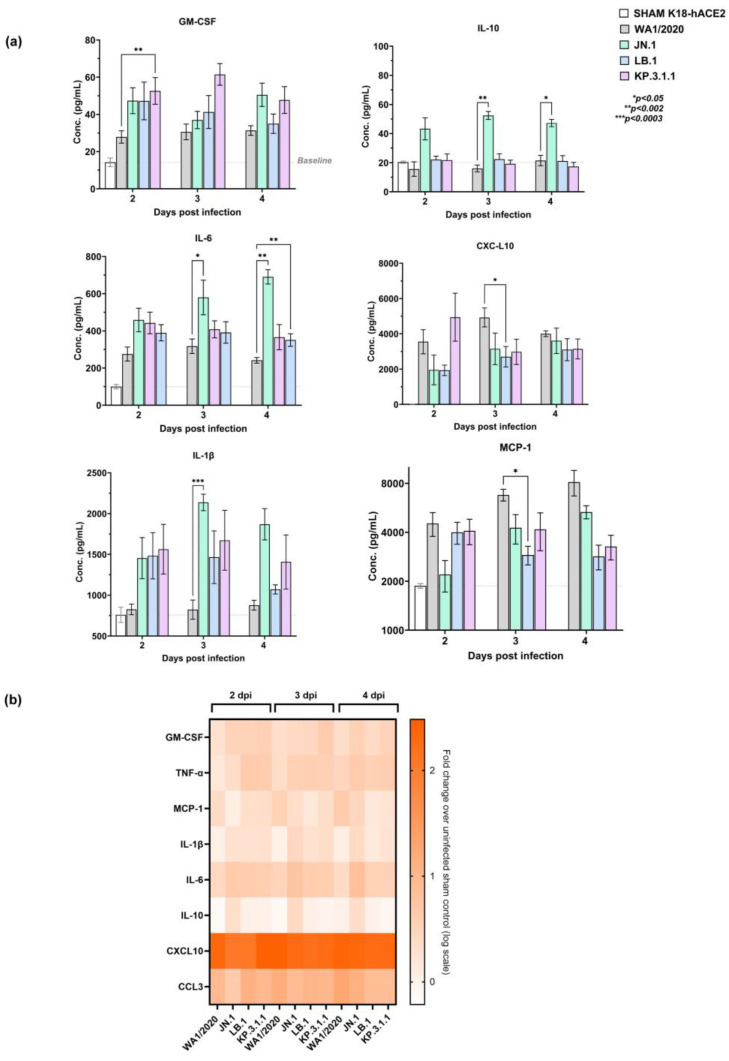 Figure 3
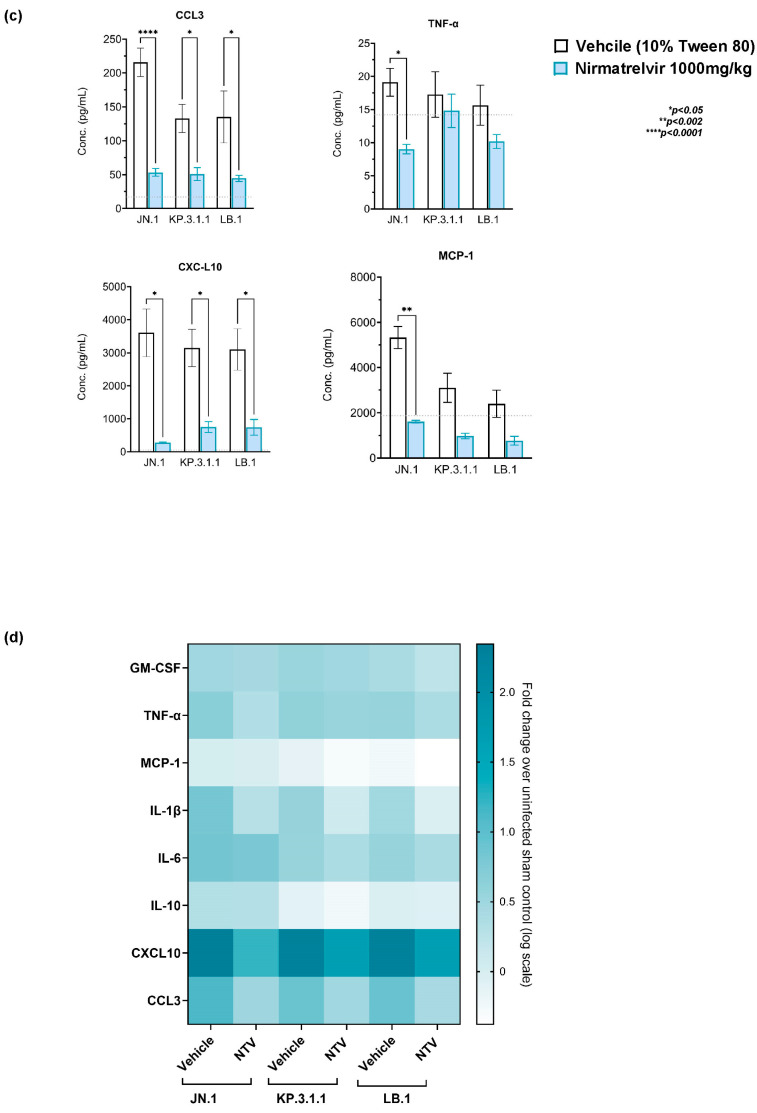 Figure 4
Peer Reviews
No public reviews on file for this paper yet. If you reviewed it on a platform where reviews are public (OpenReview, ICLR, NeurIPS, ICML), you can paste yours below so the community can read it here.
Videos
No videos yet. Explain this paper in a talk, walkthrough, or lecture? Add one.
Taxonomy
TopicsSARS-CoV-2 and COVID-19 Research · SARS-CoV-2 detection and testing · COVID-19 Clinical Research Studies