Predictors of Fasting Endogenous Erythritol and Erythronate Concentrations in Humans: Cross-Sectional and Post-Bariatric Surgery Analyses
Emilie Flad, Anita Altstädt, Jürgen Drewe, Stefan Gaugler, Christoph Beglinger, Ralph Peterli, Bettina K. Wölnerhanssen, Anne Christin Meyer-Gerspach

TL;DR
This study explores how age and weight loss affect natural levels of erythritol and erythronate in human blood, finding age as a key factor.
Contribution
The study identifies age and BMI as predictors of fasting erythritol and erythronate concentrations, with novel insights from bariatric surgery data.
Findings
Age, not BMI or glucose, predicts fasting erythritol concentrations across populations.
BMI and age both influence fasting erythronate concentrations.
Post-surgery BMI changes predict erythritol changes, while time predicts erythronate changes.
Abstract
The sugar alcohol erythritol occurs naturally in fruits and fermented foods, is used as a sweetener, and is also endogenously synthesized via the pentose-phosphate pathway and metabolized into erythronate. Untargeted metabolomic studies have associated elevated plasma erythritol and erythronate concentrations with metabolic disorders, while weight loss has been linked to decreased plasma erythritol concentrations. In this trial, two complementary analyses were performed to identify predictors of fasting erythritol and erythronate concentrations across different populations and to assess changes in these metabolites following bariatric surgery-induced weight loss. Fasting plasma samples from 30 lean adolescents, 50 lean adults, and 138 adults with obesity (including 15 who had undergone bariatric surgery) were analyzed to measure erythritol, erythronate, glucose, and insulin…
Genes, proteins, chemicals, diseases, species, mutations and cell lines named across the full text — each resolved to its canonical identifier and authoritative record.
Click any figure to enlarge with its caption.
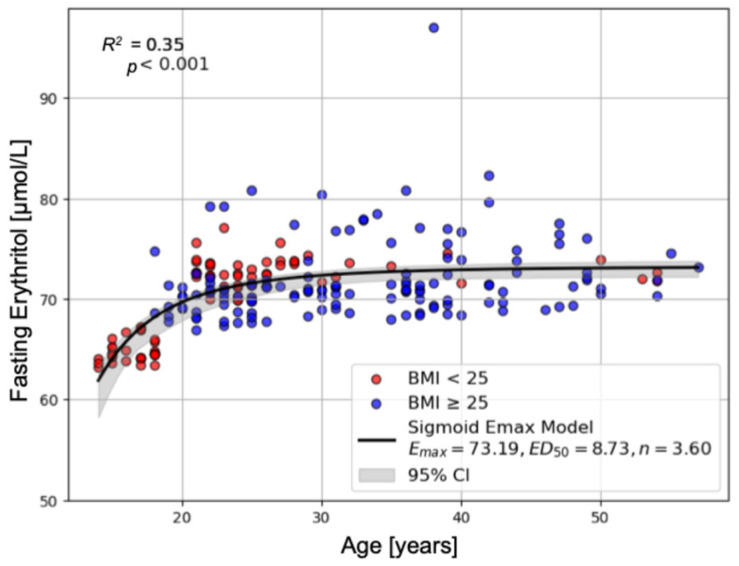 Figure 1
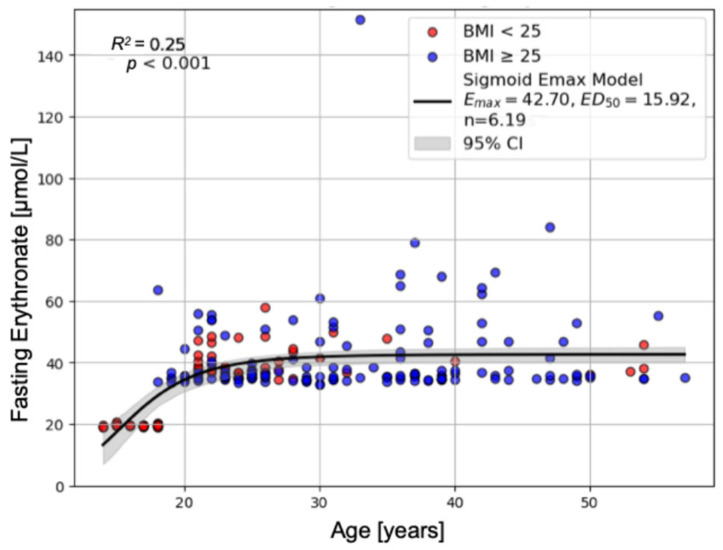 Figure 2
Peer Reviews
No public reviews on file for this paper yet. If you reviewed it on a platform where reviews are public (OpenReview, ICLR, NeurIPS, ICML), you can paste yours below so the community can read it here.
Videos
No videos yet. Explain this paper in a talk, walkthrough, or lecture? Add one.
Taxonomy
TopicsDiet and metabolism studies · Diet, Metabolism, and Disease · Biochemical Analysis and Sensing Techniques