A Novel Serum-Free Triculture Model of Glioblastoma, Astrocytes, and Macrophages
Hasan Alrefai, Lauren C. Nassour-Caswell, Manoj Kumar, Benjamin Lin, Taylor L. Schanel, Nicholas J. Eustace, Jianqing Zhang, Christian T. Stackhouse, Nayonika Mukherjee, Patricia H. Hicks, Joshua C. Anderson, Christopher Ryan Miller, Christopher D. Willey

TL;DR
This study introduces a new serum-free lab model that includes glioblastoma cells, astrocytes, and macrophages to better mimic the tumor environment.
Contribution
A serum-free triculture model that preserves GBM stemness while incorporating astrocytes and macrophages.
Findings
PSX media maintained astrocyte and macrophage function while preserving GBM stem-like properties.
Triculture increased stemness and hypoxia-related gene expression in GBM cells.
Direct contact with astrocytes and macrophages enhanced stemness markers in GBM PDX cells.
Abstract
Glioblastoma (GBM) is the most common and deadly primary brain tumor in adults. While in vitro patient-derived xenografts (PDX) lines are useful for studying GBM, they often exclude astrocytes and macrophages, which contribute significantly to tumor growth, invasion, and chemoradioresistance. Integrating these cells into tumor models is difficult due to their need for serum, which triggers GBM-PDX lines to lose their stem-like properties. The aim of this study was to develop a serum-free triculture model of GBM-PDX lines, normal human astrocytes (NHAs), and macrophages. Serum-free media alternatives were formulated for NHAs and identified for THP-1 macrophages, then combined with GBM PDX media to establish “PSX,” an experimental maintenance media. Cells were transitioned to serum-free media alternatives and functionally assessed through several parameters unique to each cell type. In…
Genes, proteins, chemicals, diseases, species, mutations and cell lines named across the full text — each resolved to its canonical identifier and authoritative record.
Click any figure to enlarge with its caption.
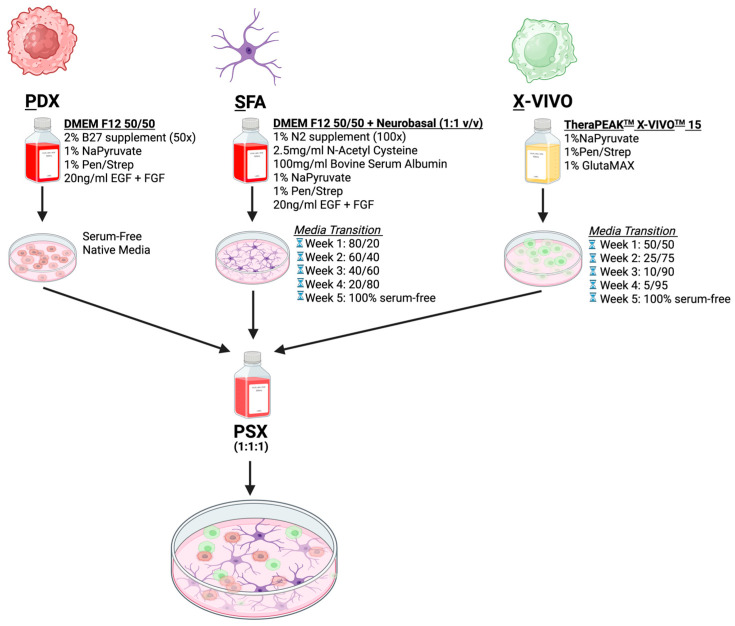 Figure 1
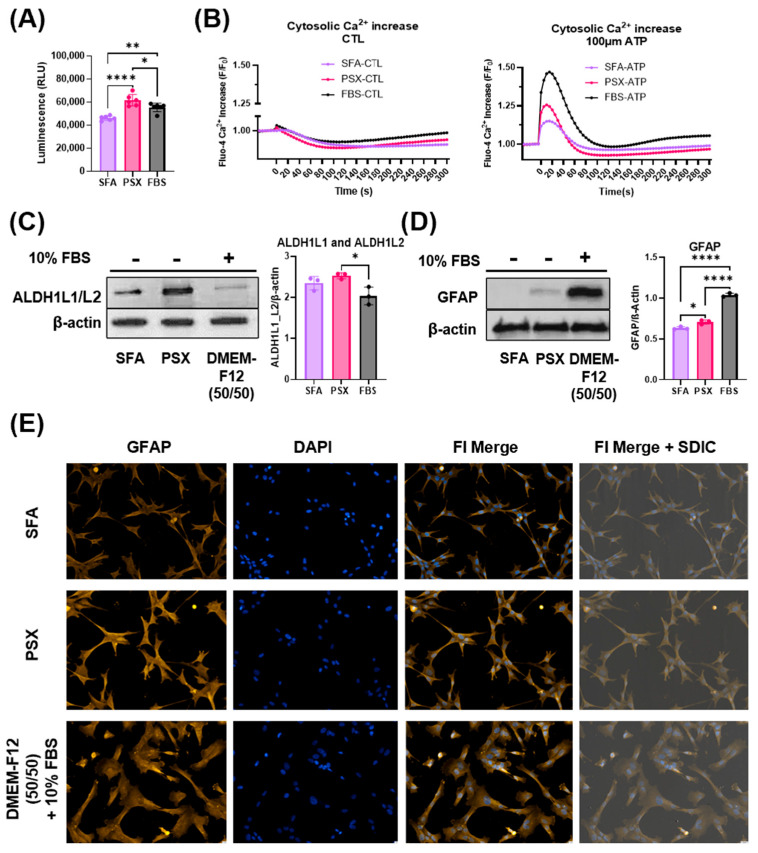 Figure 2
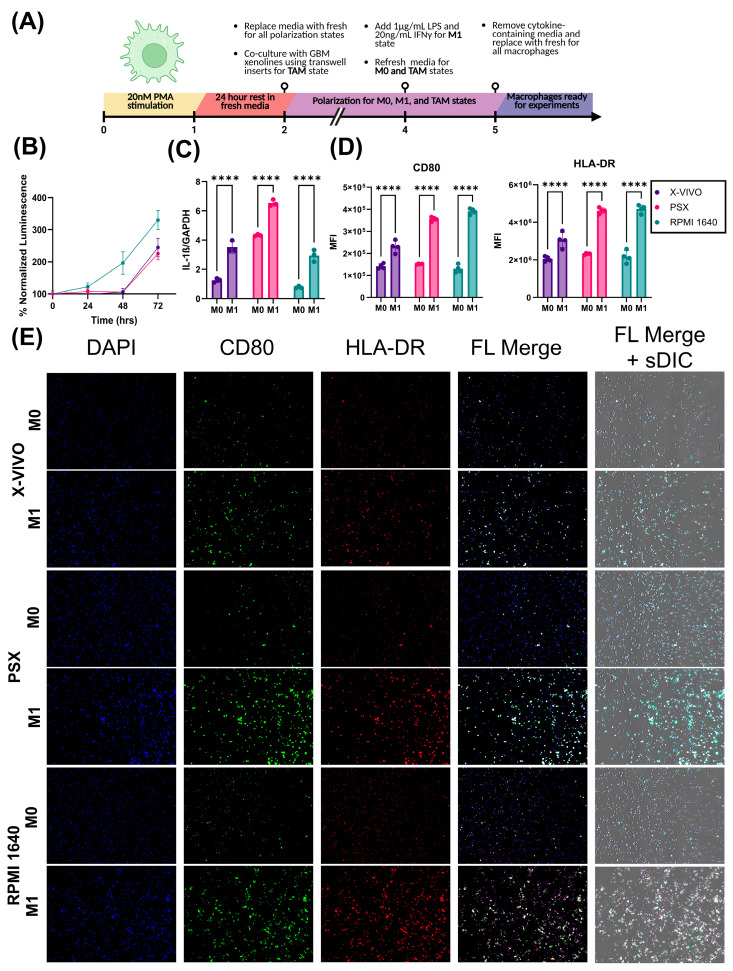 Figure 3
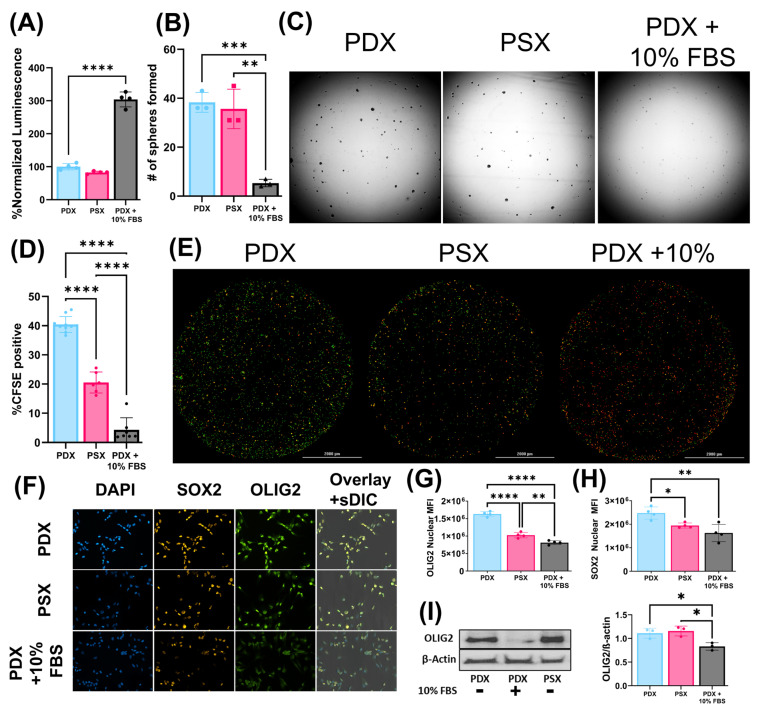 Figure 4
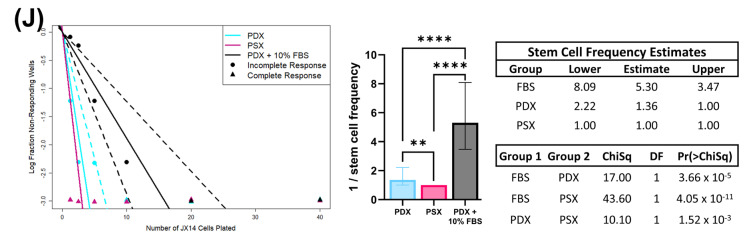 Figure 5
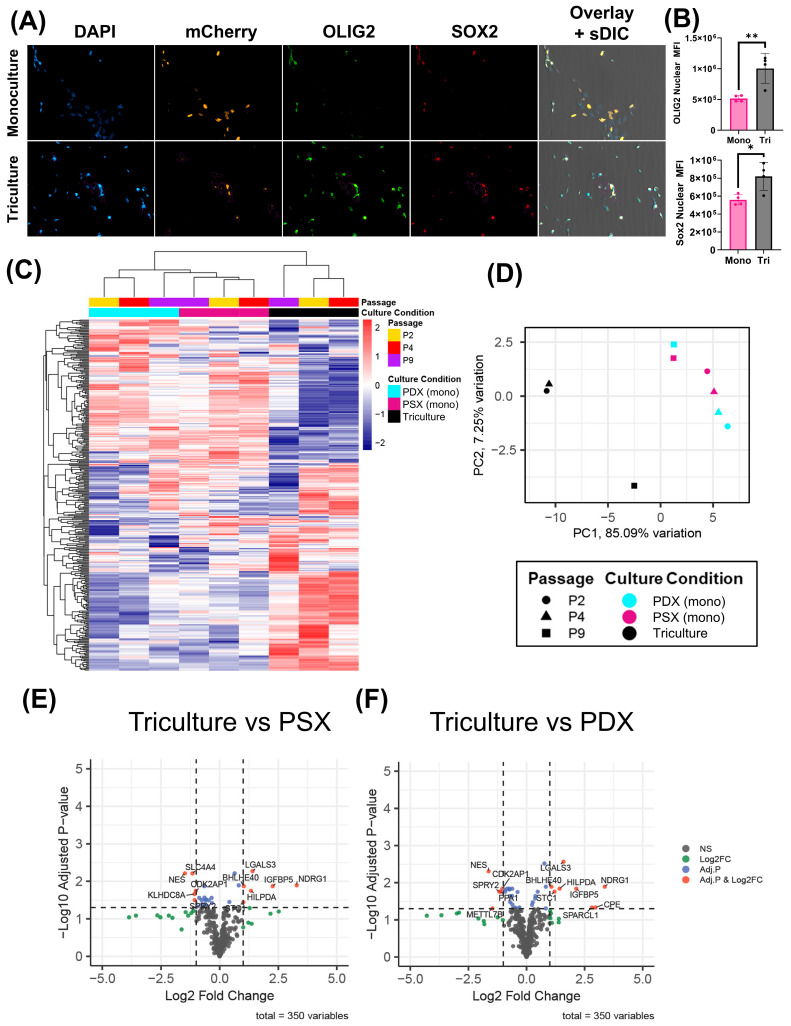 Figure 6
Peer Reviews
No public reviews on file for this paper yet. If you reviewed it on a platform where reviews are public (OpenReview, ICLR, NeurIPS, ICML), you can paste yours below so the community can read it here.
Videos
No videos yet. Explain this paper in a talk, walkthrough, or lecture? Add one.
Taxonomy
TopicsImmune cells in cancer · Glioma Diagnosis and Treatment · MicroRNA in disease regulation