Comparative Analysis of Crystal Violet-Binding Aptamers as Potential Cores for Binary Sensors
Gleb A. Bobkov, Gleb S. Yushkov, Andrei D. Kuzmin, Tatiana D. Popysheva, Elena I. Stepchenkova, Maria S. Rubel

TL;DR
This study compares three aptamers for their ability to enhance crystal violet fluorescence, identifying the most effective ones for use in nucleic acid detection sensors.
Contribution
The study introduces a comparative evaluation of three CV-binding aptamers for their performance in binary sensor applications.
Findings
The antiparallel G4 aptamer showed the highest fluorescence intensity and best signal-to-background ratio.
The CV30S aptamer achieved the lowest detection limit of 6 nM in binary sensor configurations.
The parallel G4 aptamer performed poorly due to its less favorable structural topology for CV interaction.
Abstract
‘Light-up’ aptamers are short oligonucleotides that can induce fluorescence of certain organic compounds upon binding. In this study, we compared three crystal violet (CV) aptamers—CV30S, parallel G-quadruplex (G4), and antiparallel G4—regarding their absolute fluorescence intensity, signal-to-background ratio (S/B), and potential as a core component in binary sensors for nucleic acid detection. The G4 antiparallel aptamer exhibited the highest fluorescence intensity and a robust S/B ratio, indicating its effectiveness in stabilizing the CV binding and enhancing fluorescence. In contrast, the G4 parallel aptamer demonstrated poorer performance, suggesting that its structural topology is less suitable for interactions with CV. The CV30S aptamer showed distinct advantages in binary sensor configurations, achieving the best limit of detection at 6 nM.
Genes, proteins, chemicals, diseases, species, mutations and cell lines named across the full text — each resolved to its canonical identifier and authoritative record.
Click any figure to enlarge with its caption.
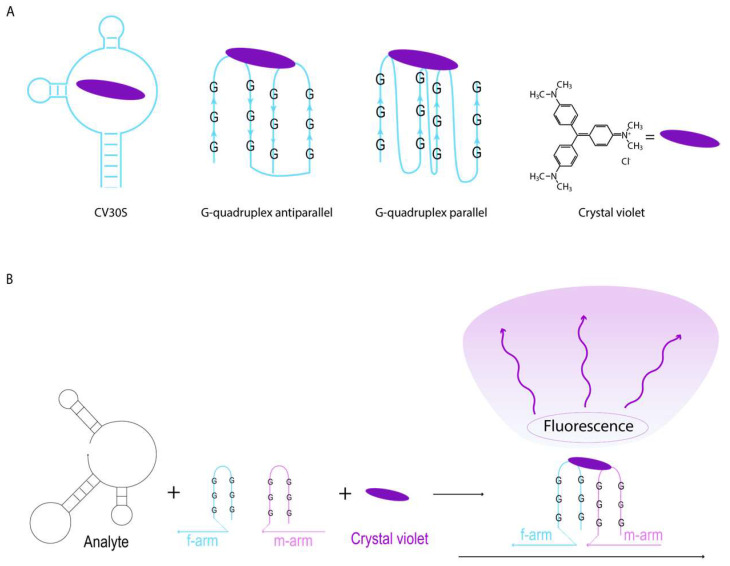 Figure 1
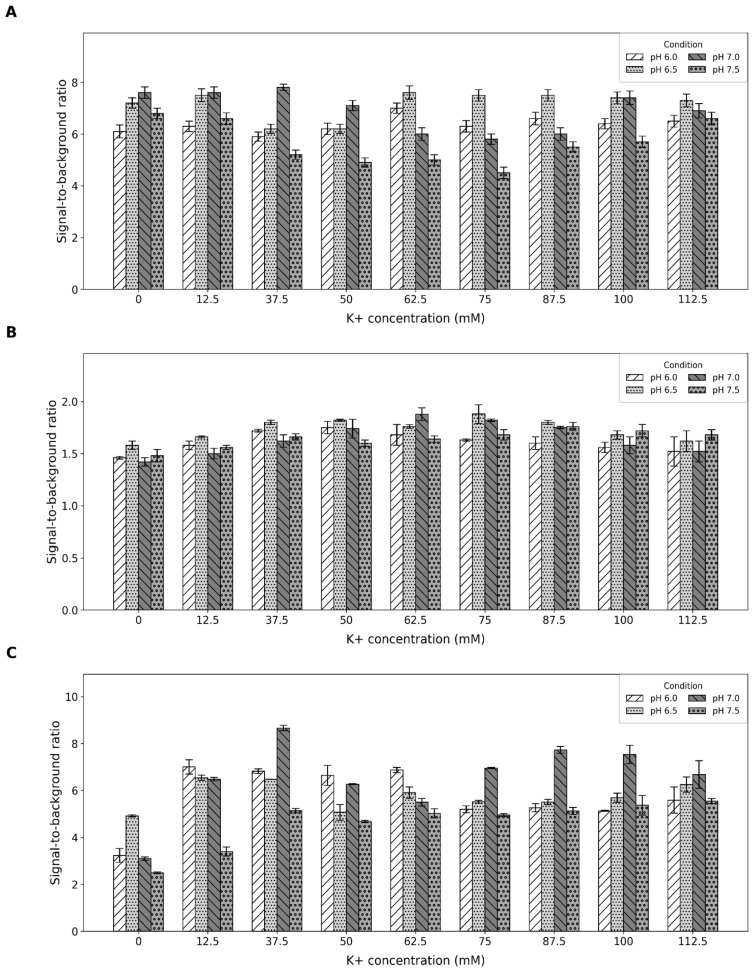 Figure 2
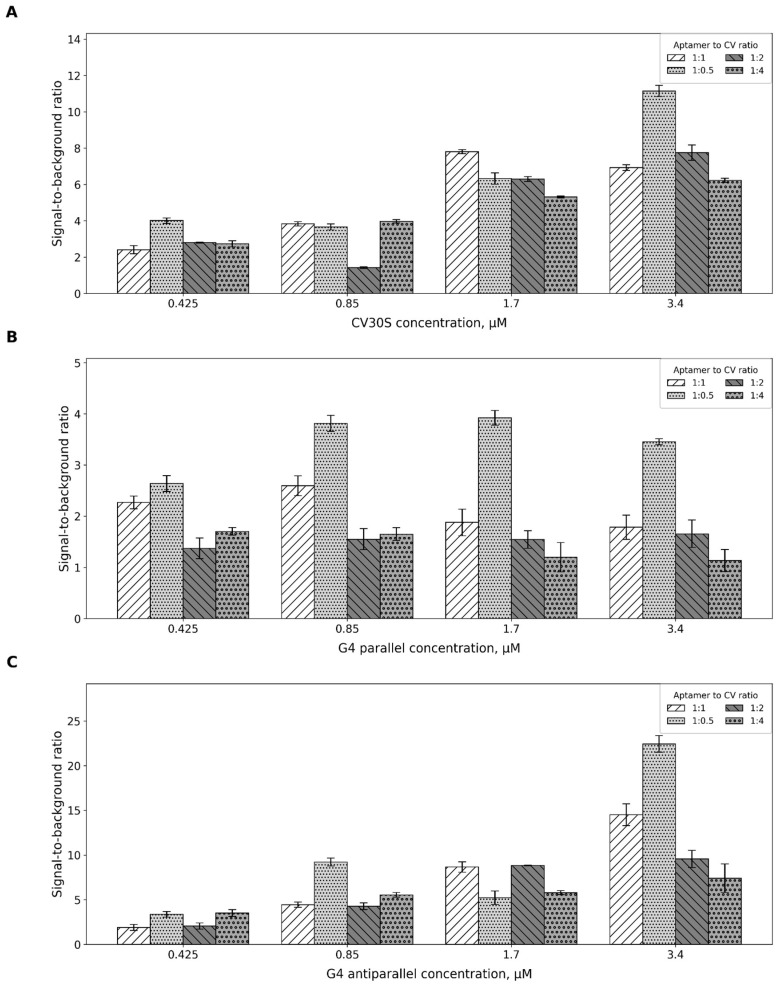 Figure 3
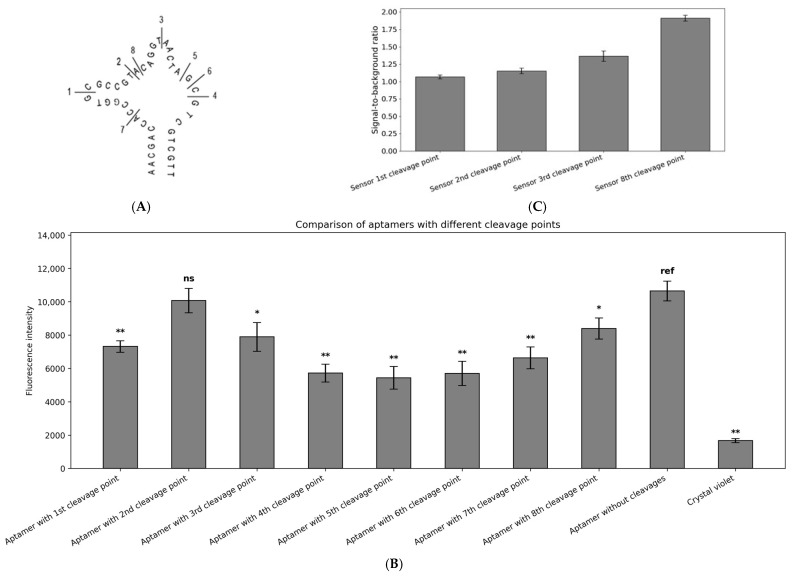 Figure 4
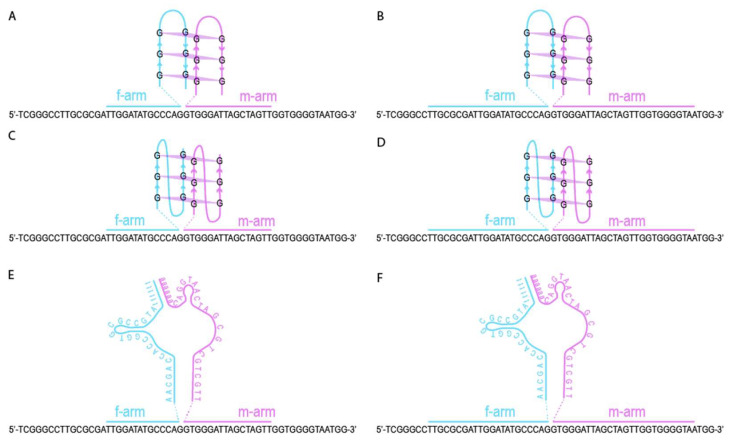 Figure 5
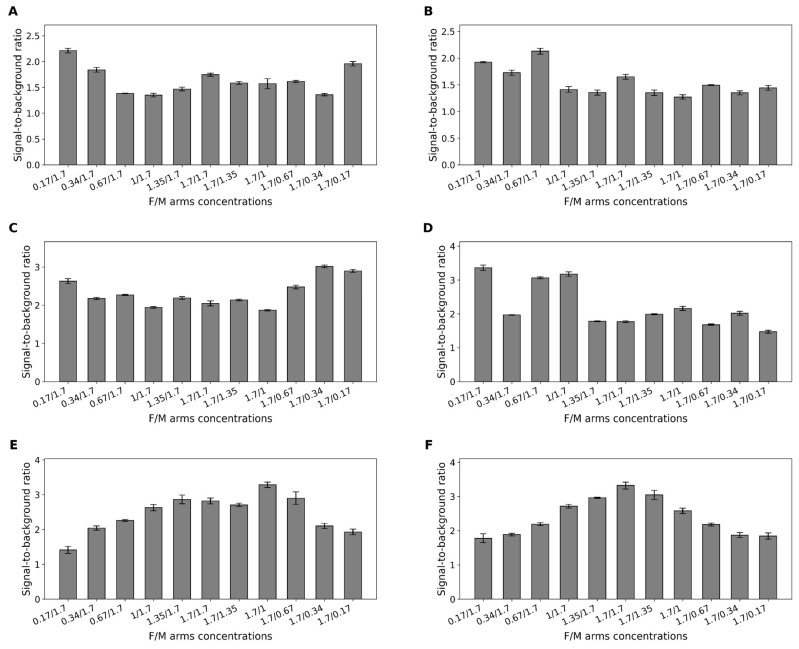 Figure 6
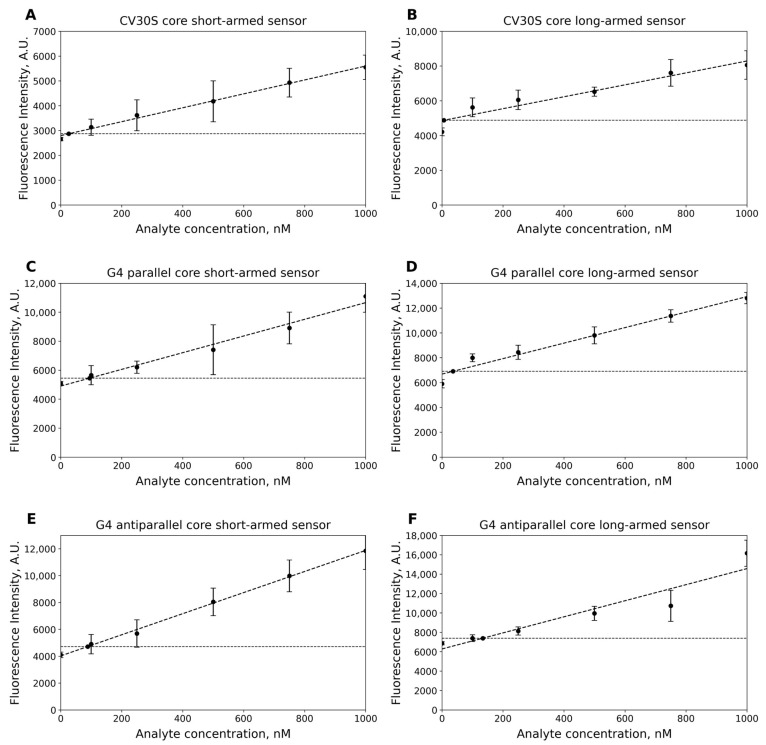 Figure 7
Peer Reviews
No public reviews on file for this paper yet. If you reviewed it on a platform where reviews are public (OpenReview, ICLR, NeurIPS, ICML), you can paste yours below so the community can read it here.
Videos
No videos yet. Explain this paper in a talk, walkthrough, or lecture? Add one.
Taxonomy
TopicsAdvanced biosensing and bioanalysis techniques · DNA and Nucleic Acid Chemistry · RNA and protein synthesis mechanisms