Down-regulation of HSPA9 reduces tyrosine hydroxylase-positive neurons in mouse substantia nigra and induces Parkinson’s disease-like motor impairments
Hyejin Hyung, Soyoung Jang, Si-Yong Kim, Ji-Eun Bae, Ji Yeong Park, Su-Geun Lim, Jiwon Ko, Soyeon Jang, Joon Bum Kim, Hee Young Chae, Song Park, Junkoo Yi, Dong Kyu Choi, Myoung Ok Kim, Hyun-Shik Lee, Dong-Hyung Cho, Zae Young Ryoo

TL;DR
Reducing HSPA9 in mice leads to loss of dopamine-producing neurons and Parkinson's-like symptoms, suggesting HSPA9 may play a role in Parkinson's disease.
Contribution
This study demonstrates that HSPA9 haploinsufficiency causes PD-like neuronal loss and motor impairments in mice.
Findings
Hspa9 haploinsufficiency leads to loss of tyrosine hydroxylase-positive neurons in the substantia nigra and striatum.
Hspa9 deficiency causes mitochondrial fission, increased apoptosis, and worsened motor performance in mice.
MPTP treatment in Hspa9+/− mice worsens dopaminergic neuron loss and activates caspase-3.
Abstract
Parkinson’s disease (PD) is a progressive neurological disorder characterized by the degeneration of midbrain dopaminergic neurons and disabling motor impairments. Heat shock protein family A member 9 (HSPA9) play a crucial role in neuronal homeostasis by regulating the import of various mitochondrial proteins. HSPA9 is down-regulated in neurodegenerative diseases such as Alzheimer’s disease and PD, and its loss leads to excessive mitochondrial fragmentation with oxidative stress, which subsequently causes damage to dopaminergic neurons. Moreover, HSPA9 interacts with multiple PD-associated proteins, including Pink1, DJ-1, and α-synuclein, however precise roles of HSPA9 in PD pathophysiology remain unclear. To further explore the contributions of HSPA9 in PD pathogenesis, we developed an HSPA9 knockout mouse. Haploinsufficiency of Hspa9 (Hspa9+/−) was associated with the loss of…
Genes, proteins, chemicals, diseases, species, mutations and cell lines named across the full text — each resolved to its canonical identifier and authoritative record.
Click any figure to enlarge with its caption.
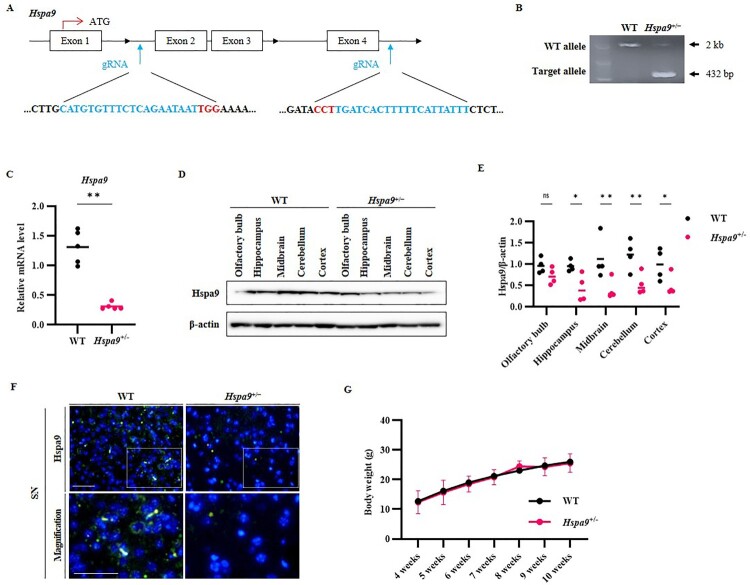 Figure 1
 Figure 2
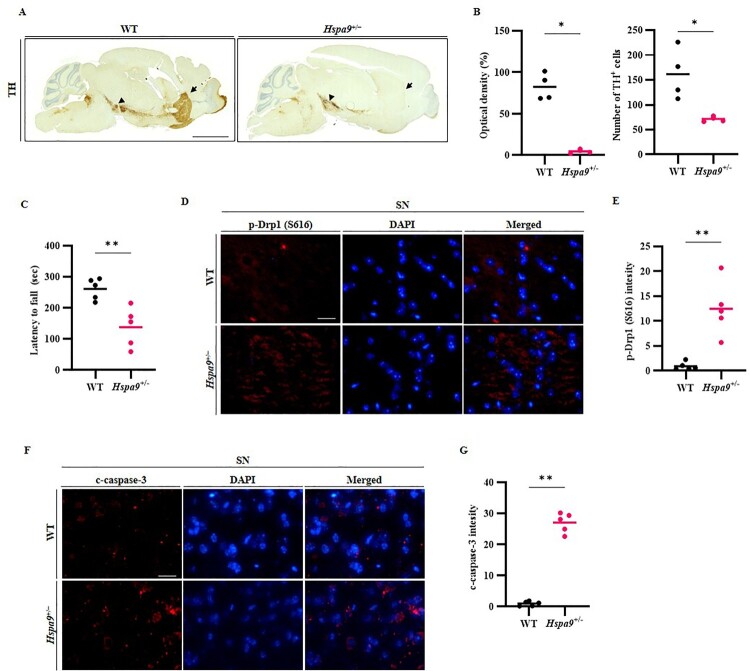 Figure 3
 Figure 4
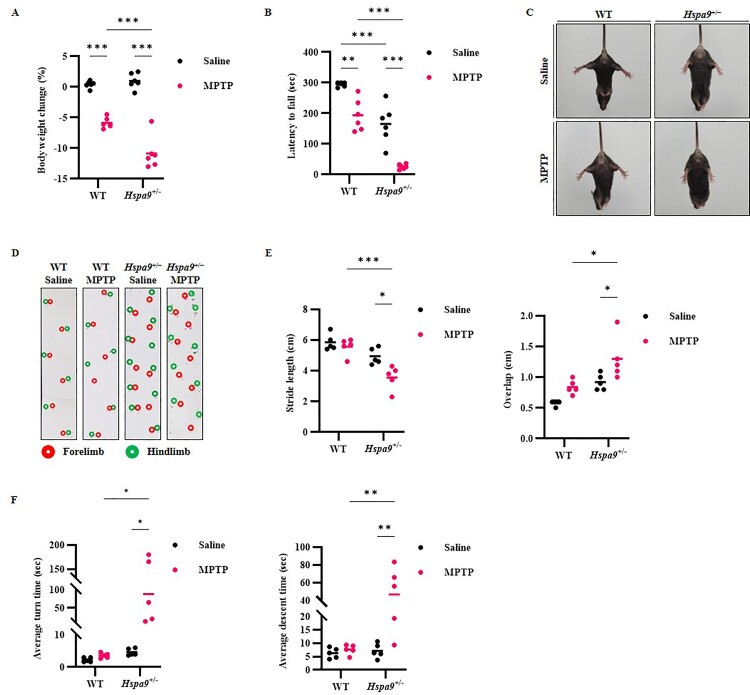 Figure 5
 Figure 6
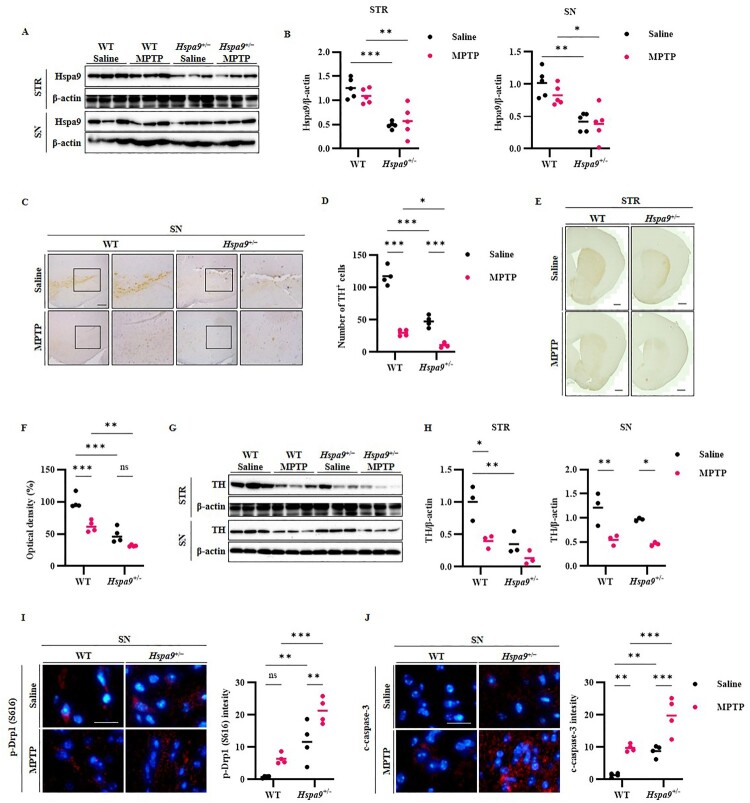 Figure 7
 Figure 8
 Figure 9
Peer Reviews
No public reviews on file for this paper yet. If you reviewed it on a platform where reviews are public (OpenReview, ICLR, NeurIPS, ICML), you can paste yours below so the community can read it here.
Videos
No videos yet. Explain this paper in a talk, walkthrough, or lecture? Add one.
Taxonomy
TopicsAdvanced Glycation End Products research · Nuclear Receptors and Signaling · Coenzyme Q10 studies and effects