Effects of Dietary Protease Levels on Growth Performance, Feeding Regulation, Glucose and Lipid Metabolism, and Endogenous Protease Secretion in Chinese Perch (Siniperca chuatsi)
Shizhen Liu, Yi Yi, Qingda Tian, Jianmei Su, Liwei Liu

TL;DR
Adding 1.6 g/kg protease to Chinese perch feed improves growth, digestion, and energy use by regulating genes related to appetite, glucose, and lipid metabolism.
Contribution
Identifies optimal protease dosage (1.6 g/kg) and its molecular mechanisms in enhancing growth and feed efficiency in Chinese perch.
Findings
1.6 g/kg protease significantly improves weight gain, feed intake, and protein retention in Chinese perch.
Protease suppresses appetite-inhibiting genes (pomc and cart) and up-regulates genes for glucose and lipid metabolism.
Endogenous pepsinogen genes (pga1 and pgc) are maximally up-regulated with 1.6 g/kg protease, enhancing protein digestion.
Abstract
Chinese perch (Siniperca chuatsi) aquaculture is constrained by poor artificial feed acceptance and high protein demands. While exogenous proteases enhance nutrient utilization, their optimal dosage and mechanism in this species were unknown. This study systematically investigated graded neutral protease levels (0–1.6 g/kg) over 8 weeks on growth, feed utilization, and key gene expression. Our results illustrated that 1.6 g/kg protease significantly improved weight gain, specific growth rate, feed intake, and protein retention while reducing the feed conversion ratio of Chinese perch (p < 0.05). Crucially, this dose stimulated appetite by suppressing anorexigenic genes (pomc and cart), enhanced glycolytic (gk and pk) and lipid metabolic gene (pparα) expression leading to more efficient energy utilization, and maximally up-regulated endogenous pepsinogen genes (pga1 and pgc), indicating…
Genes, proteins, chemicals, diseases, species, mutations and cell lines named across the full text — each resolved to its canonical identifier and authoritative record.
Click any figure to enlarge with its caption.
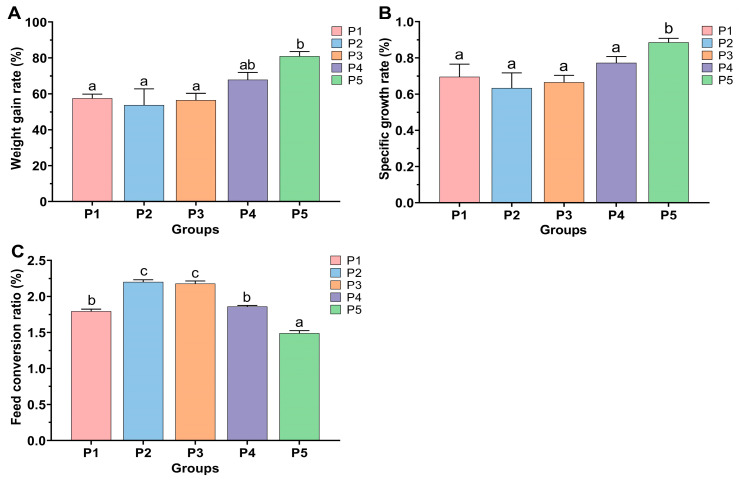 Figure 1
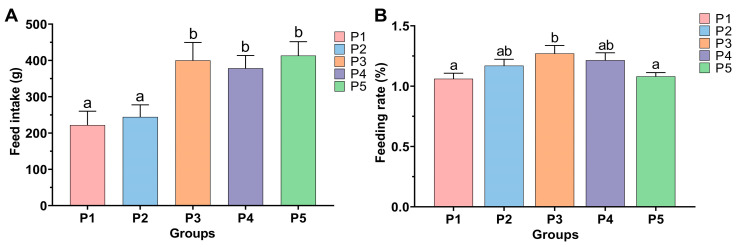 Figure 2
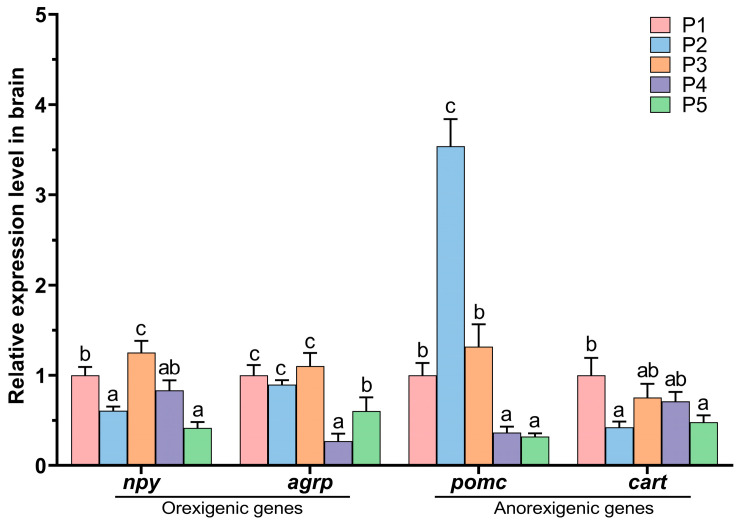 Figure 3
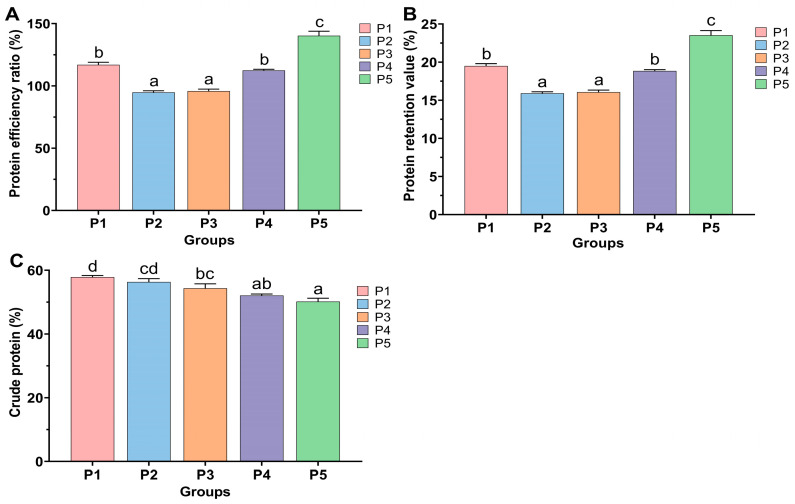 Figure 4
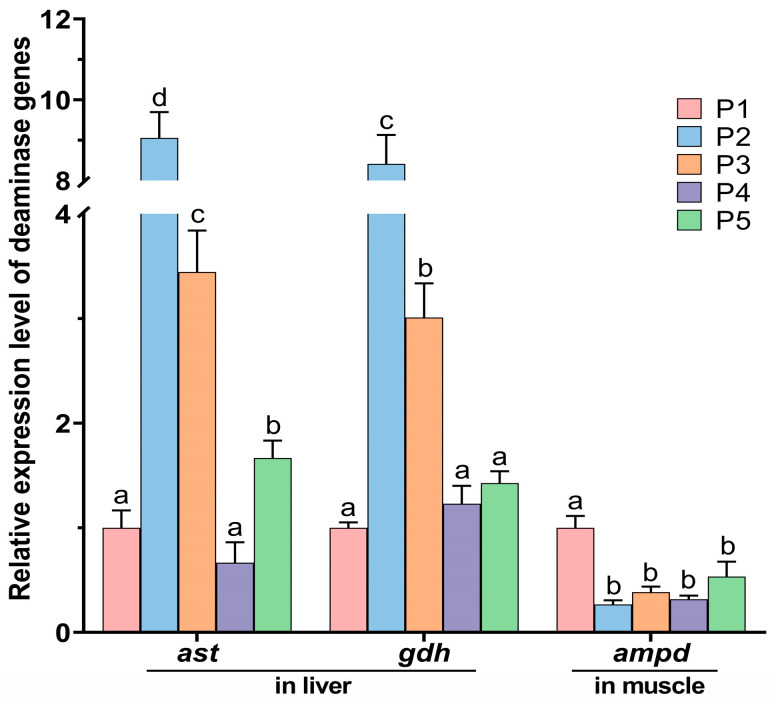 Figure 5
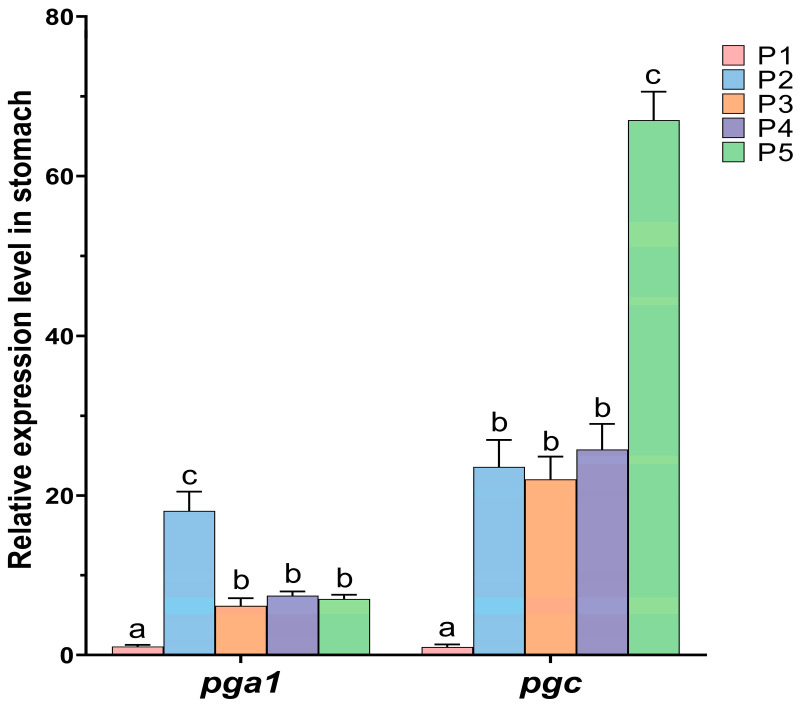 Figure 6
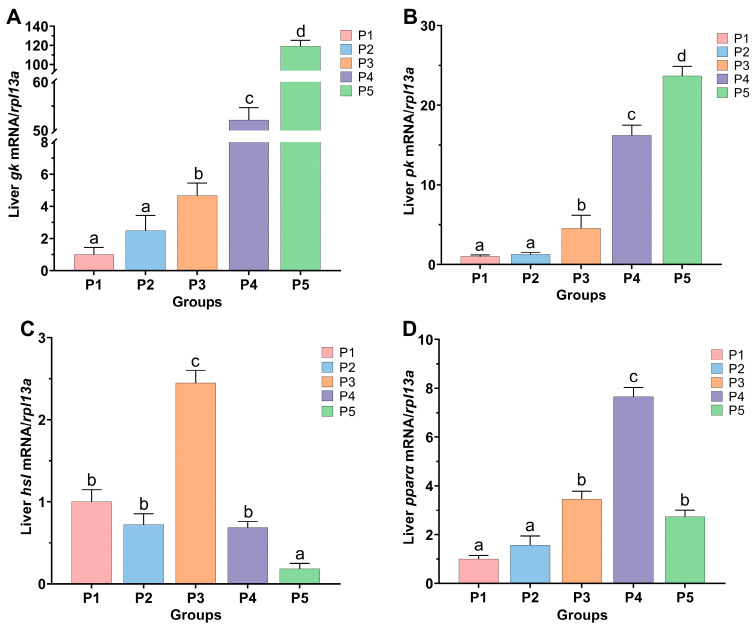 Figure 7
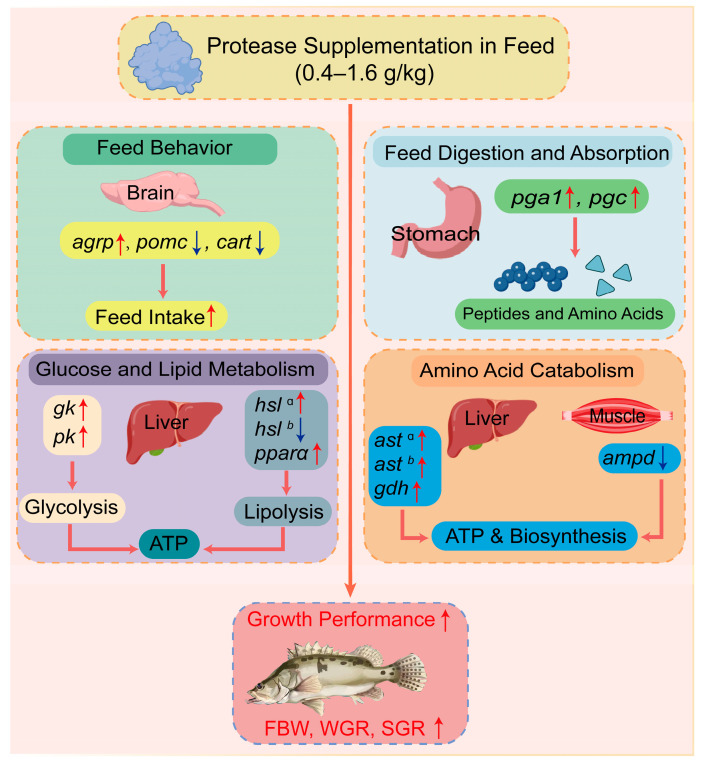 Figure 8
Peer Reviews
No public reviews on file for this paper yet. If you reviewed it on a platform where reviews are public (OpenReview, ICLR, NeurIPS, ICML), you can paste yours below so the community can read it here.
Videos
No videos yet. Explain this paper in a talk, walkthrough, or lecture? Add one.
Taxonomy
TopicsAquaculture Nutrition and Growth · Aquaculture disease management and microbiota · Insect Utilization and Effects