Fyn-T Kinase Regulates DHA-Induced Pyroptosis in Immortalized Normal Human Astrocytes
Ai Ling Cheng, Yuek Ling Chai, Jasinda H. Lee, Clara Y. B. Low, Helen L. Ong, Gavin S. Dawe, Thiruma V. Arumugam, Deron R. Herr, Michelle G. K. Tan, Mitchell K. P. Lai

TL;DR
This study shows that FynT kinase reduces DHA-induced pyroptosis in human astrocytes, offering new insights into neuroinflammation and potential treatments for neurodegenerative diseases.
Contribution
The study identifies FynT kinase as a negative regulator of DHA-induced pyroptosis in astrocytes.
Findings
DHA-treated FynT-WT cells showed reduced pyroptosis markers compared to EV or FynT-KD cells.
No significant differences in pyroptosis were observed between EV and FynT-KD cells.
FynT kinase negatively regulates DHA-induced pyroptosis in astrocytes.
Abstract
Dysregulation of astroglia-mediated neuroinflammation is known to be involved in neurodegenerative diseases. Amongst multiple inflammatory pathways, pyroptosis is characterized by inflammatory cell death following inflammasome activation. Recently, the omega-3 poly-unsaturated fatty acid, DHA, has been identified as a pyroptosis inducer, although the underlying mechanisms remain unclear. In this study, we investigated the role of the alternatively spliced T-isoform of Fyn kinase (FynT) in DHA-induced astroglial pyroptosis. Immortalized normal human astrocytes (iNHA) expressing wild-type FynT (FynT-WT), kinase-dead mutant FynT (FynT-KD), or empty vector (EV) controls were treated with DHA and assessed for pyroptotic activation. We found that DHA-treated FynT-WT cells exhibited significantly reduced cytosolic lactate dehydrogenase release, pyroptotic morphology and markers (cleaved…
Genes, proteins, chemicals, diseases, species, mutations and cell lines named across the full text — each resolved to its canonical identifier and authoritative record.
Click any figure to enlarge with its caption.
 Figure 1
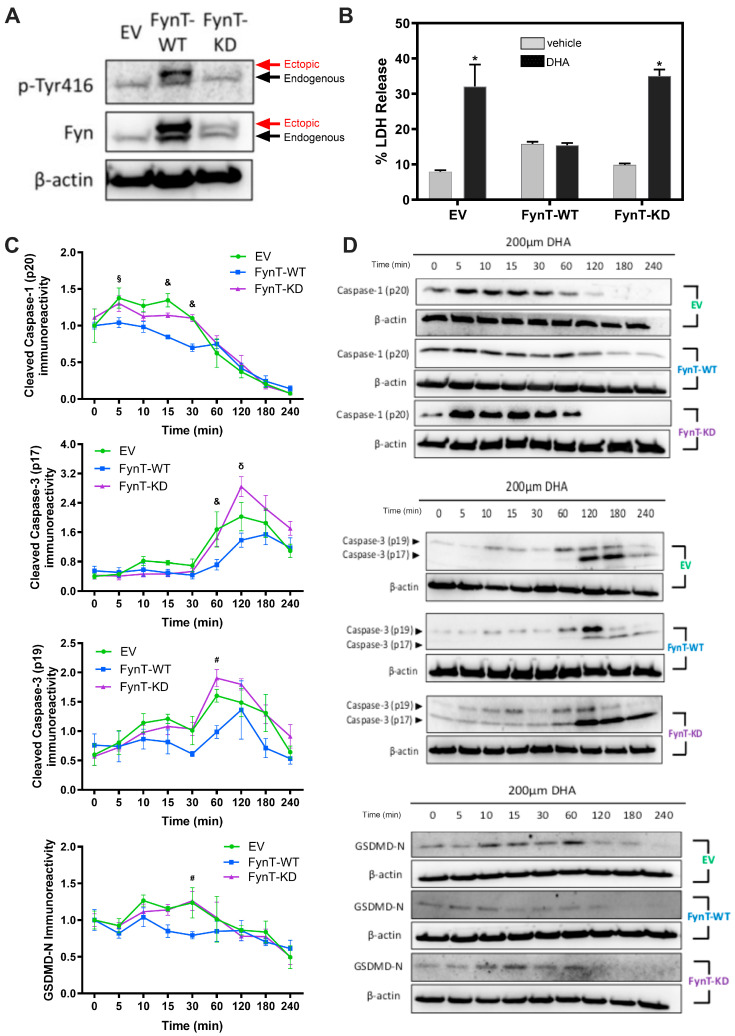 Figure 2
 Figure 3
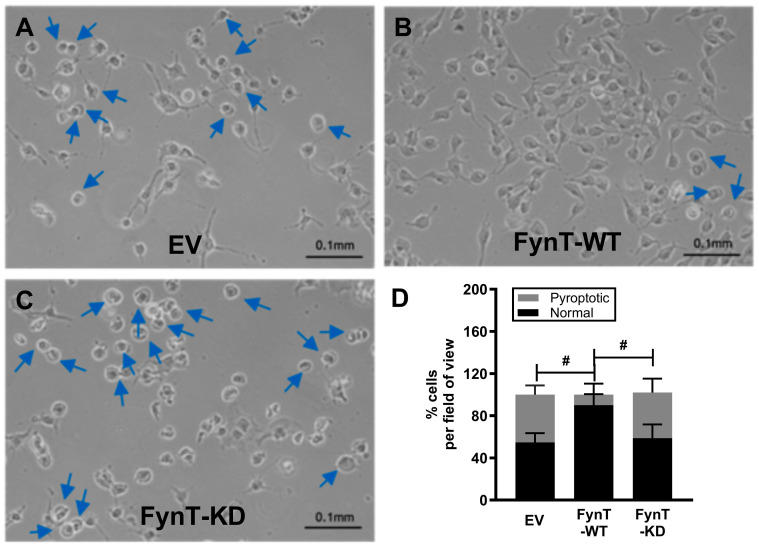 Figure 4
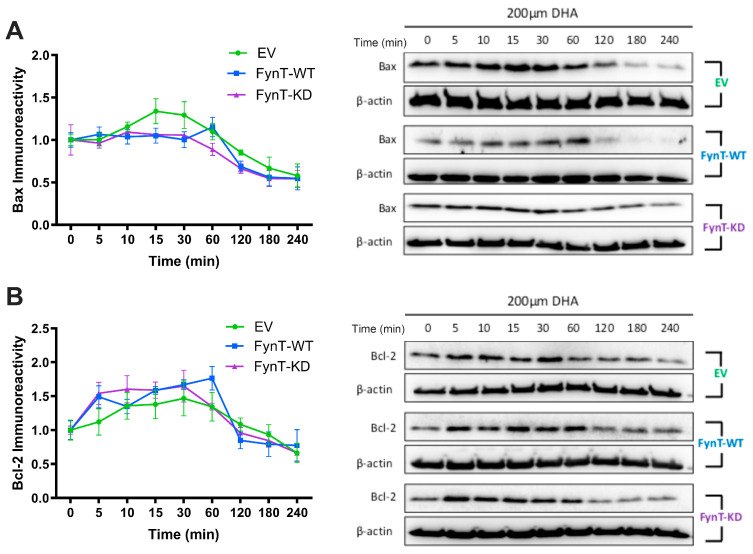 Figure 5
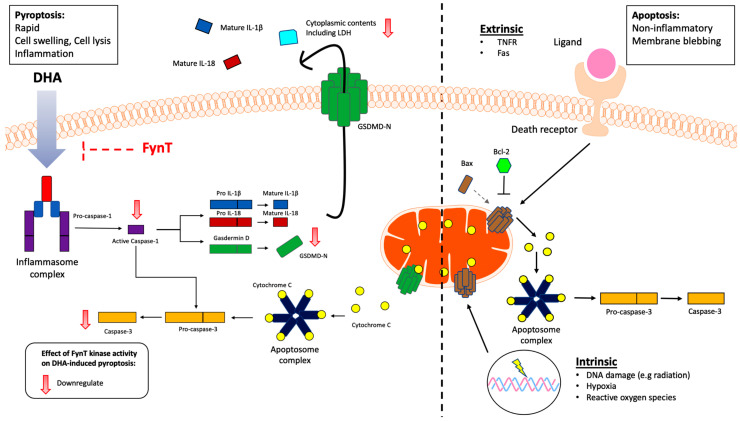 Figure 6
Peer Reviews
No public reviews on file for this paper yet. If you reviewed it on a platform where reviews are public (OpenReview, ICLR, NeurIPS, ICML), you can paste yours below so the community can read it here.
Videos
No videos yet. Explain this paper in a talk, walkthrough, or lecture? Add one.
Taxonomy
TopicsInflammasome and immune disorders · interferon and immune responses · IL-33, ST2, and ILC Pathways