The Value of Baseline [18F]FDG-PET in Predicting the Progression-Free Survival in Patients with Thymic Epithelial Tumours: A Systematic Review and Meta-Analysis
Alberto Miceli, Maria Librando, Francesco Dondi, Lorenzo Jonghi-Lavarini, Adriana D’Antonio, Antonio Mura, Anna Giulia Nappi, Guido Rovera, Maria Silvia De Feo, Giulia Santo, Francesco Lanfranchi

TL;DR
This study finds that baseline [18F]FDG-PET parameters like SUVmax and SUVmean may predict survival outcomes in thymic epithelial tumor patients, but more research is needed.
Contribution
The study systematically evaluates and quantifies the prognostic value of [18F]FDG-PET parameters for progression-free survival in thymic epithelial tumors.
Findings
SUVmax as a continuous variable significantly predicts worse progression-free survival (HR: 1.18).
SUVmean also shows a significant association with impaired progression-free survival (HR: 1.41).
MTV and TLG do not show significant prognostic value due to limited data precision.
Abstract
Background/Objectives: [18F]FDG-PET is often used for staging thymic epithelial tumours (TETs). However, its prognostic role remains uncertain. The aim of this present systematic review and meta-analysis is to assess the prognostic value of baseline [18F]FDG-PET-derived semiquantitative parameters in predicting progression-free survival (PFS) in patients with TETs. Methods: A systematic review and meta-analysis were conducted according to PRISMA guidelines. PubMed, Embase, and Scopus databases were searched up to 30 May 2025. Studies evaluating the prognostic impact of [18F]FDG-PET parameters on PFS in TETs were included. Pooled hazard ratios (HRs) with 95% confidence intervals (CIs) were calculated. Results: Six retrospective studies involving 593 patients were included. Maximum standardized uptake value (SUVmax), analysed as a continuous variable in four studies, significantly…
Genes, proteins, chemicals, diseases, species, mutations and cell lines named across the full text — each resolved to its canonical identifier and authoritative record.
Click any figure to enlarge with its caption.
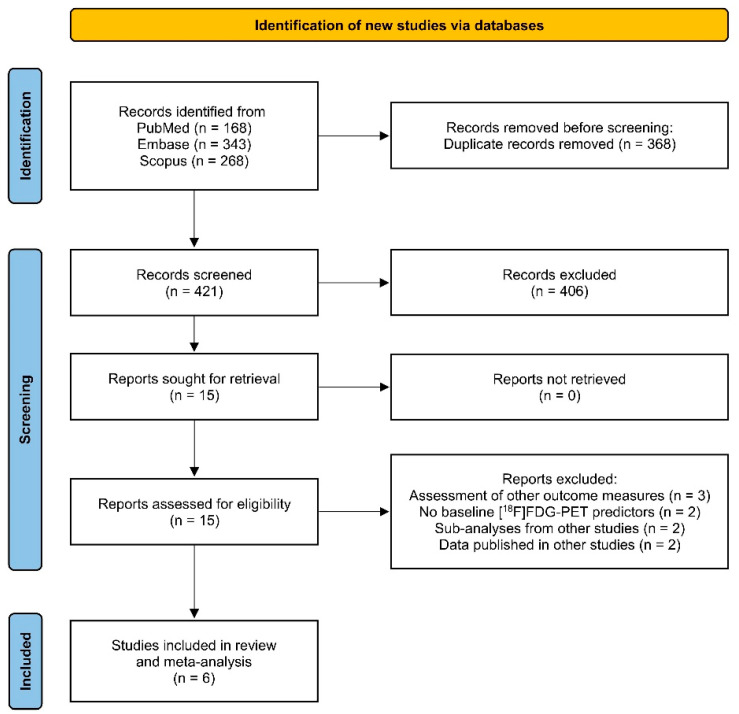 Figure 1
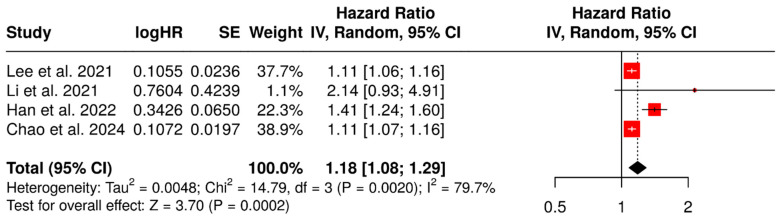 Figure 2
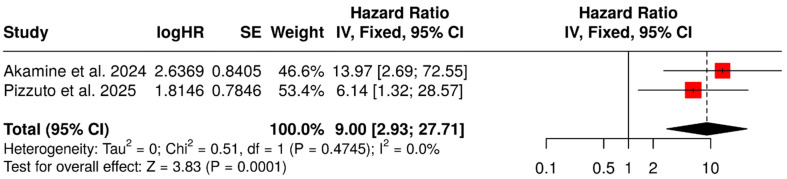 Figure 3
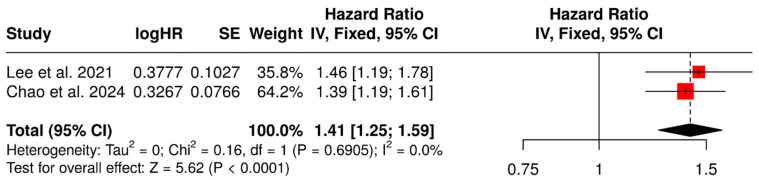 Figure 4
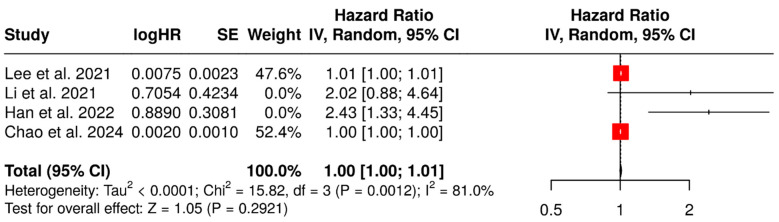 Figure 5
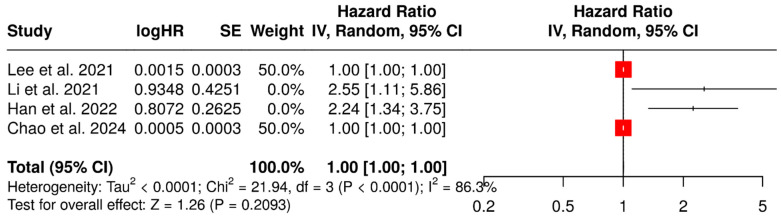 Figure 6
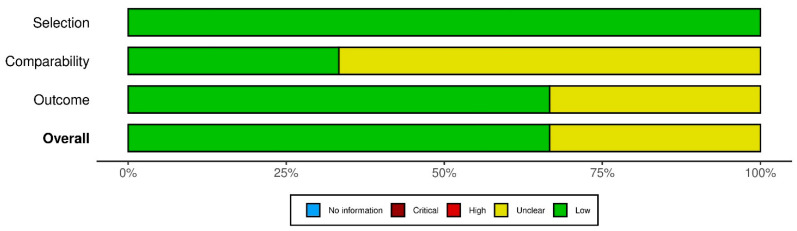 Figure 7
Peer Reviews
No public reviews on file for this paper yet. If you reviewed it on a platform where reviews are public (OpenReview, ICLR, NeurIPS, ICML), you can paste yours below so the community can read it here.
Videos
No videos yet. Explain this paper in a talk, walkthrough, or lecture? Add one.
Taxonomy
TopicsMyasthenia Gravis and Thymoma · Pituitary Gland Disorders and Treatments · Glioma Diagnosis and Treatment