Familial Non-Hereditary Gastric Cancer: Diagnosis, Management, Molecular Characteristics and Future Perspective
Carlos Pardo, Irina Luzko, Joaquín Castillo-Iturra, Elisa Cantú-Germano, Leticia Moreira

TL;DR
This paper reviews what is known about gastric cancer in families without inherited genetic mutations, aiming to improve diagnosis and treatment for these families.
Contribution
The paper provides a comprehensive review of the multifactorial causes and management of familial non-hereditary gastric cancer.
Findings
Familial non-hereditary gastric cancer is likely caused by a combination of H. pylori infection, genetic polymorphisms, and shared environmental factors.
Molecular features include microsatellite instability, CDH1 promoter hypermethylation, and mutations in TP53, RHOA, and DNA repair genes.
Current management includes H. pylori eradication, genetic testing, and endoscopic surveillance.
Abstract
Gastric cancer is one of the most common and deadly cancers worldwide. While some families carry genetic germline mutations that clearly increase their risk, there are also families with several members affected by stomach cancer but without any known inherited genetic cause. These cases are called familial non-hereditary gastric cancer. This condition is still poorly understood, and there is little guidance on how to identify, follow up, or treat people at risk. Our review aims to describe what is currently known about this gastric cancer risk condition, including possible risk factors, and clinical and molecular features. By gathering and analyzing the available evidence, we hope to help doctors recognize this condition earlier and guide future research. Ultimately, improving our understanding could lead to better prevention, monitoring and treatment strategies for families affected…
Genes, proteins, chemicals, diseases, species, mutations and cell lines named across the full text — each resolved to its canonical identifier and authoritative record.
Click any figure to enlarge with its caption.
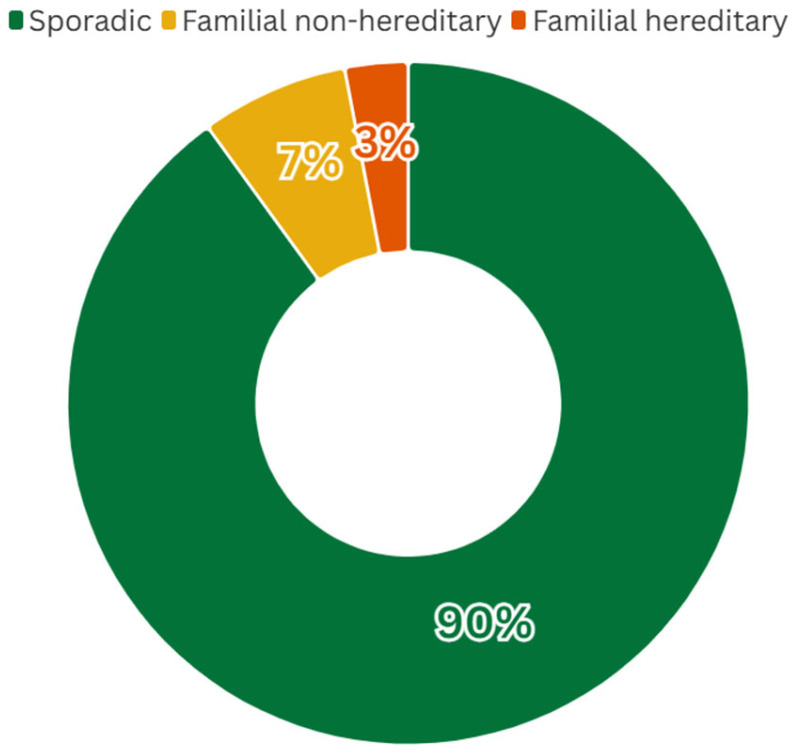 Figure 1
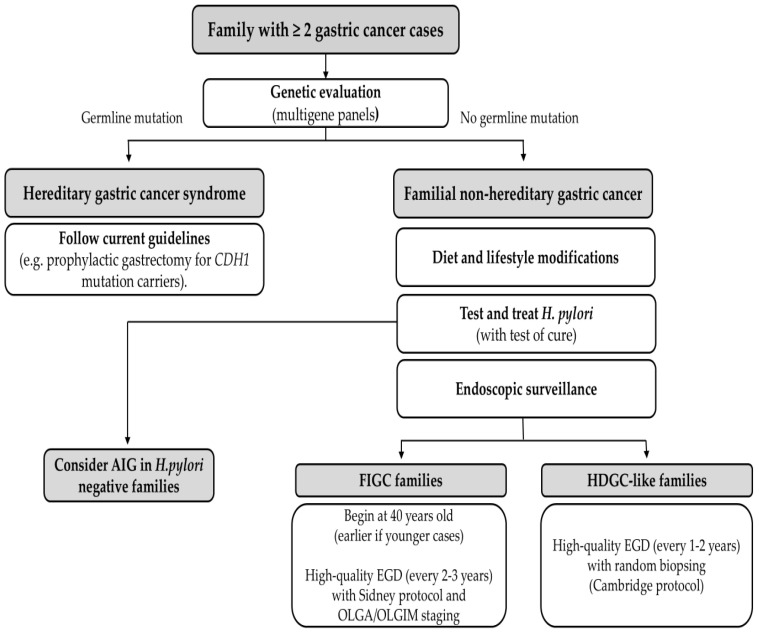 Figure 2
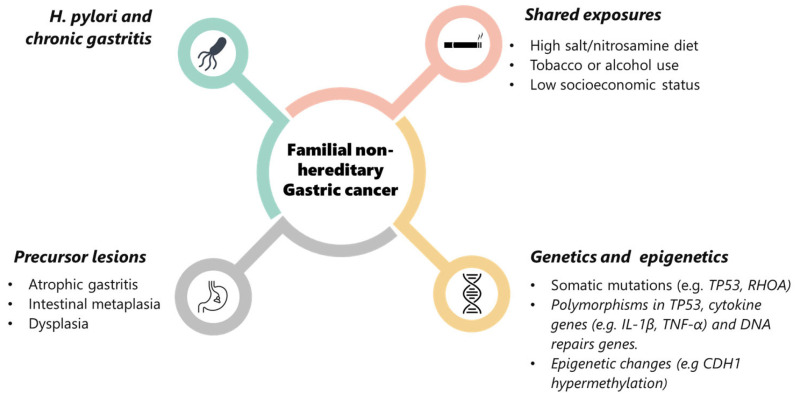 Figure 3
Peer Reviews
No public reviews on file for this paper yet. If you reviewed it on a platform where reviews are public (OpenReview, ICLR, NeurIPS, ICML), you can paste yours below so the community can read it here.
Videos
No videos yet. Explain this paper in a talk, walkthrough, or lecture? Add one.
Taxonomy
TopicsHelicobacter pylori-related gastroenterology studies · Genetic factors in colorectal cancer · Gastric Cancer Management and Outcomes