Utilization of Urinary Neopterin Levels for Pregnancy Diagnosis in Mated Giant Pandas
He Huang, Yuliang Liu, David C. Kersey, Zongjin Ye, Rong Hou, Xianbiao Hu, Mingxi Li

TL;DR
This study shows that measuring urinary neopterin levels can help determine if a giant panda is pregnant, especially after progesterone levels peak.
Contribution
The study introduces a novel pregnancy diagnostic method using the neopterin ratio in giant pandas during the post-progesterone peak phase.
Findings
Neopterin levels in pregnant pandas significantly increased during the post-progesterone peak phase compared to nonpregnant pandas.
The neopterin ratio (S3/S2) of 1.71 ± 0.12 in parturient pandas reliably indicates successful pregnancy.
The neopterin ratio can be used for on-site pregnancy diagnosis in giant pandas using commercially available assays.
Abstract
This novel study aimed to investigate one of the most challenging aspects of giant panda pregnancy detection. We assessed urinary neopterin, a biomarker of cell-mediated immunity, in females that did and did not become pregnant following breeding. We found a significant difference in neopterin levels between pregnant and nonpregnant females during the last several weeks of the luteal phase, after the progesterone peak. To enable the research results to have practical predictive value for pregnancy diagnosis in mated giant pandas, we detected a significant difference in the neopterin ratio, calculated as the ratio of the mean neopterin level in the post-progesterone peak phase (progesterone decreases from its peak [inclusive] to approximately 200 ng/mg Cr) to that in the pre-progesterone peak phase (progesterone levels rise from 100 ng/mg Cr [inclusive] to its peak value) between the…
Genes, proteins, chemicals, diseases, species, mutations and cell lines named across the full text — each resolved to its canonical identifier and authoritative record.
Click any figure to enlarge with its caption.
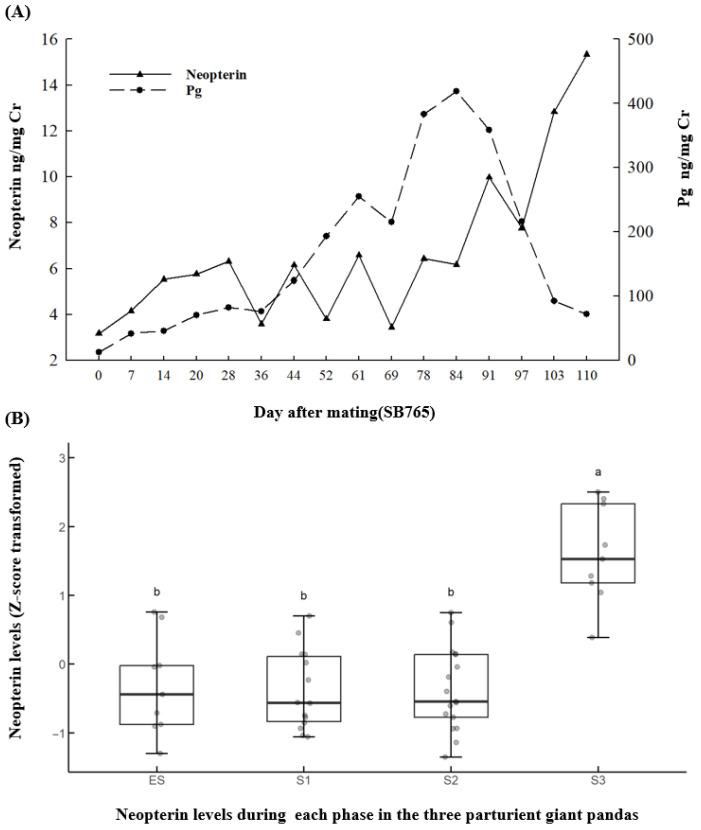 Figure 1
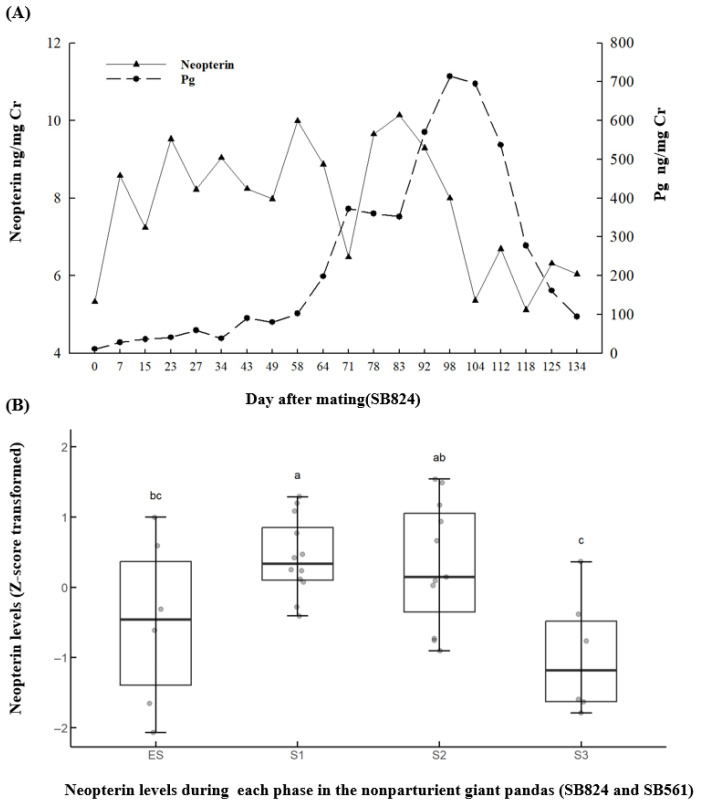 Figure 2
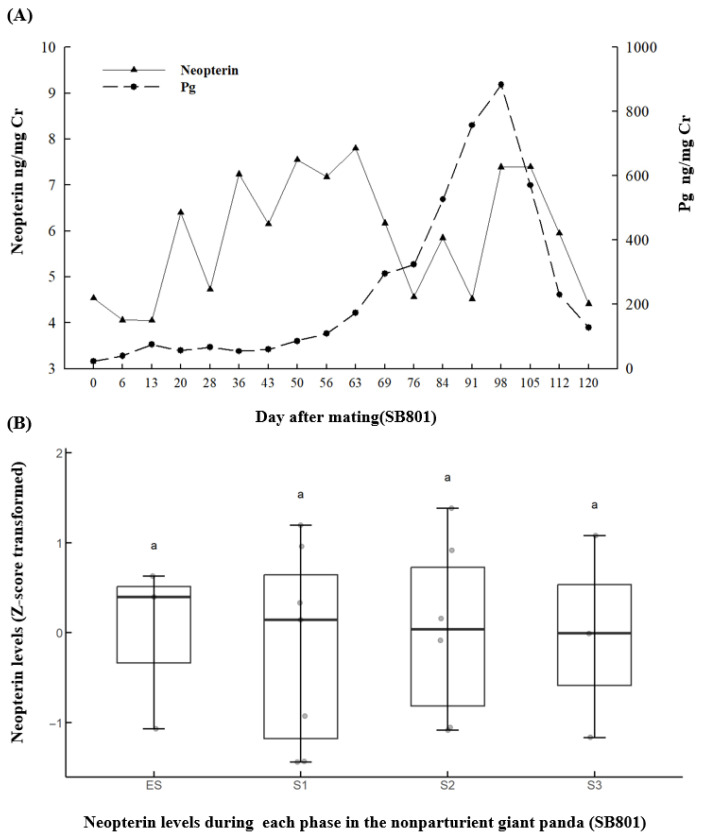 Figure 3
Peer Reviews
No public reviews on file for this paper yet. If you reviewed it on a platform where reviews are public (OpenReview, ICLR, NeurIPS, ICML), you can paste yours below so the community can read it here.
Videos
No videos yet. Explain this paper in a talk, walkthrough, or lecture? Add one.
Taxonomy
TopicsReproductive System and Pregnancy · Reproductive Physiology in Livestock · Cancer-related molecular mechanisms research