Cryptorchidism in Equid: A Retrospective Study on Diagnostic Approach, Anaesthesia Management, Surgical Treatment and Outcomes
Irene Nocera, Rebecca Moroni, Diana Fanelli, Alessandra Rota, Chiara Di Franco, Camilla Ungari, Caterina Puccinelli, Marco Gandini, Gessica Giusto, Iacopo Vannozzi

TL;DR
This study examines the diagnosis, treatment, and outcomes of cryptorchidism in equids, focusing on surgical techniques and breed patterns.
Contribution
The study provides new insights into the surgical management and genetic factors of cryptorchidism in equids.
Findings
Ultrasound correctly identified retained testis location in 87% of cases.
Standing flank laparoscopy was the most common surgical approach, used in 82% of cases.
Quarter Horse-type horses were overrepresented, suggesting a possible genetic component.
Abstract
Cryptorchidism is a sexual development commonly encountered in equid males. This study retrospectively analyses cases of cryptorchidism in equid referred to specialised centres, including horses, a donkey and a female intersex horse. This study provides specific information on breed, diagnostic approach, surgical treatment, anaesthesia plan, surgical complications and follow-up. The findings add information on this condition, widely spread among equid, and the possible surgical approaches. Over the years, various diagnostic and surgical techniques have been developed to recognise and treat cryptorchidism in equid. This study retrospectively analysed cases of cryptorchidism referred to two centres between 2012 and 2025. Clinical data collected included species, breed, age, gender, location of retained testis, diagnostic approach, anaesthesia plan and surgical treatment, perioperative…
Genes, proteins, chemicals, diseases, species, mutations and cell lines named across the full text — each resolved to its canonical identifier and authoritative record.
Click any figure to enlarge with its caption.
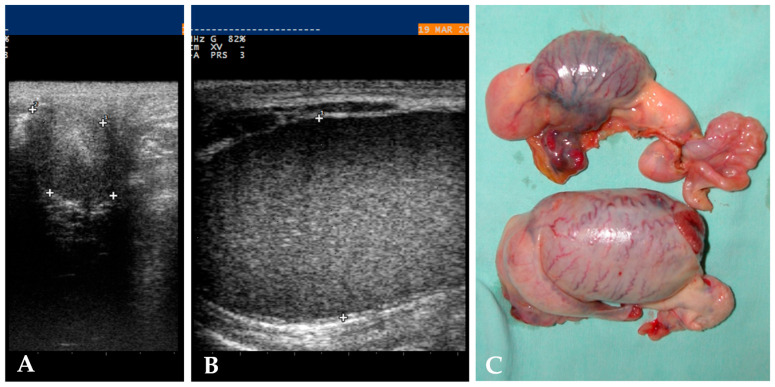 Figure 1
Peer Reviews
No public reviews on file for this paper yet. If you reviewed it on a platform where reviews are public (OpenReview, ICLR, NeurIPS, ICML), you can paste yours below so the community can read it here.
Videos
No videos yet. Explain this paper in a talk, walkthrough, or lecture? Add one.
Taxonomy
TopicsVeterinary Equine Medical Research · Reproductive Physiology in Livestock · Plant Toxicity and Pharmacological Properties