Anti-Protozoal Activity of Hops Essential Oil and Myrcene Against Cryptosporidium Parvum in Cell Culture
Danielle F. Aycart, Astrid Domínguez-Uscanga, William H. Witola, Juan E. Andrade Laborde

TL;DR
This study shows that hops essential oil and myrcene can reduce Cryptosporidium parvum infection in intestinal cells, suggesting they may be useful as new treatments for cryptosporidiosis.
Contribution
The novel contribution is the discovery of hops essential oil and myrcene's anti-Cryptosporidium activity in cell culture.
Findings
Hops essential oil reduced Cryptosporidium parvum growth with IC50 values of 45.8 and 58.7 µg/mL.
Myrcene showed stronger anti-Cryptosporidium activity with IC50 values of 17.7 and 28.1 µg/mL.
Both compounds exhibited low cytotoxicity in intestinal cells.
Abstract
Hops essential oil (HEO), a by-product of the brewing industry, has known antibacterial and antifungal properties, but its antiparasitic effects remain underexplored. This study evaluated the cytotoxicity of HEO and its predominant monoterpene, myrcene, in intestinal cells and assessed their ability to reduce Cryptosporidium parvum infection in vitro. The cytotoxicity (IC50) of HEO and myrcene was determined in HCT-8 intestinal cells using flow cytometry and propidium iodide staining after 24 and 48 h of exposure. The anti-Cryptosporidium activity of HEO and myrcene was assessed by infecting confluent HCT-8 cells with C. parvum sporozoites (1 × 10⁴ sporozoites/mL) and treating them with bioactives below their IC50 values. Two treatment modalities were tested: (1) immediate treatment during infection (invasion) and (2) treatment initiated 2 h after infection (growth). Parasite growth was…
Genes, proteins, chemicals, diseases, species, mutations and cell lines named across the full text — each resolved to its canonical identifier and authoritative record.
Click any figure to enlarge with its caption.
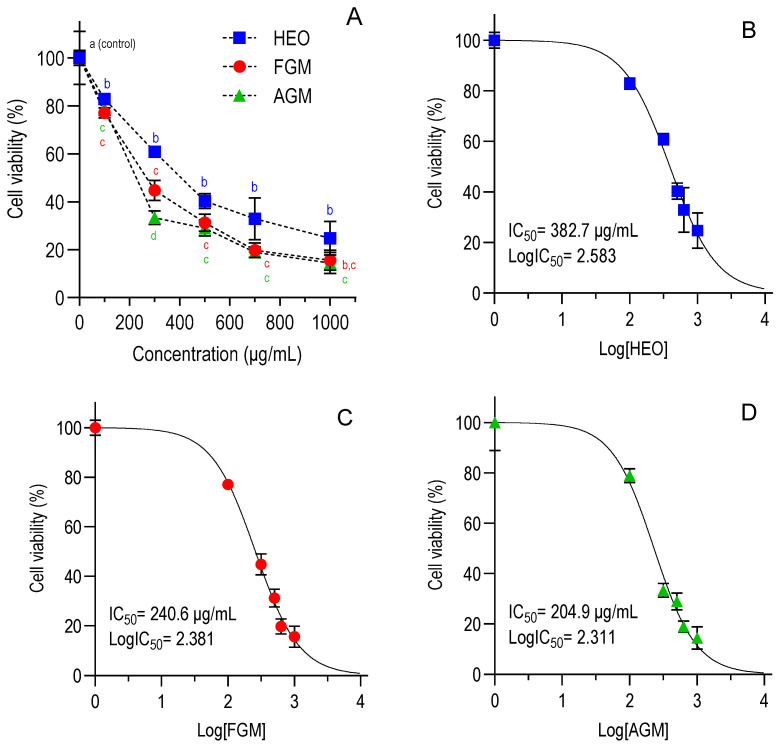 Figure 1
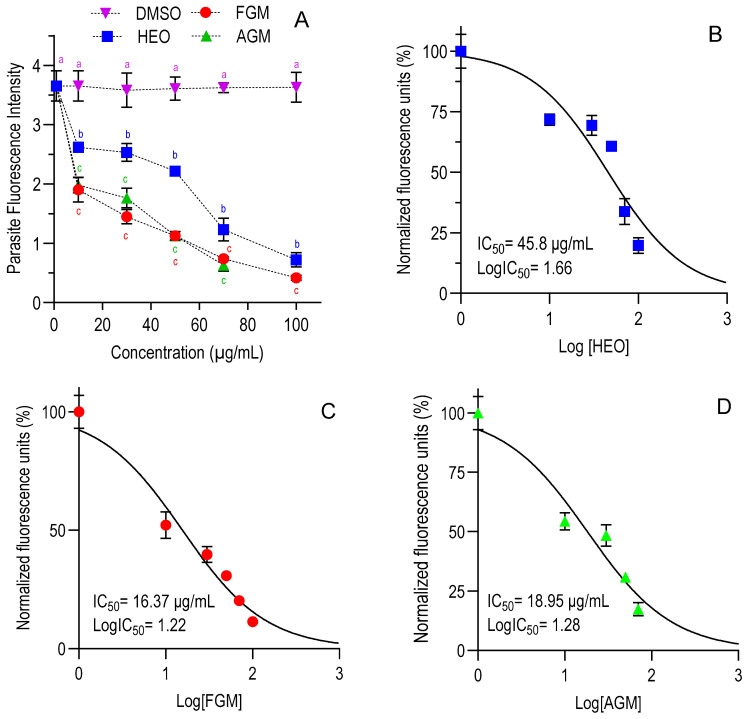 Figure 2
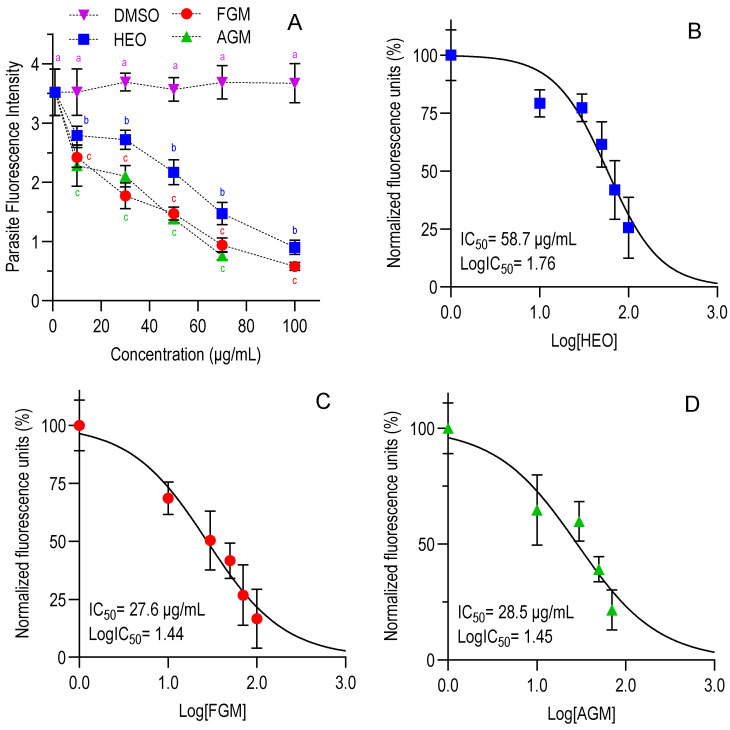 Figure 3
Peer Reviews
No public reviews on file for this paper yet. If you reviewed it on a platform where reviews are public (OpenReview, ICLR, NeurIPS, ICML), you can paste yours below so the community can read it here.
Videos
No videos yet. Explain this paper in a talk, walkthrough, or lecture? Add one.
Taxonomy
TopicsToxoplasma gondii Research Studies