New 5,6-diphenyl-1,2,4-triazine-hydrazineylidene-phenoxy-1,2,3-triazole-acetamide derivatives as potent synthetic α-glucosidase inhibitors
Nafise Asemanipoor, Shahram Moradi, Mohammad Ali Faramarzi, Maryam Mohammadi-Khanaposhtani, Mohammad Mahdavi

TL;DR
Researchers developed new chemical compounds that strongly inhibit α-glucosidase, an enzyme linked to diabetes, and found one compound to be much more effective than a standard drug.
Contribution
A new class of α-glucosidase inhibitors with significantly higher potency than acarbose is introduced.
Findings
Compounds 13j and 13h showed 6250- and 3947-fold higher α-glucosidase inhibition than acarbose.
Compound 13j acts as an uncompetitive α-glucosidase inhibitor.
Molecular docking and in silico studies confirmed strong drug-likeness and favorable toxicity profiles for 13j.
Abstract
The current work aims to introduce 5,6-diphenyl-1,2,4-triazine-hydrazineylidene-phenoxy-1,2,3-triazole-acetamide derivatives 13a–n as a new class of potent α-glucosidase inhibitors. These compounds were synthesized through well-known and effective chemical reactions in good yields. All title derivatives 13a–n showed high α-glucosidase inhibition in comparison to the standard inhibitor (acarbose). In this regard, the most potent compounds, compounds 13j and 13h, were approximately 6250- and 3947-fold more potent than acarbose, respectively. An in vitro kinetics study revealed that compound 13j is an uncompetitive α-glucosidase inhibitor. Molecular docking and molecular dynamics studies on compound 13j revealed highly favorable results, confirming stable binding interactions and robust complex formation of this compound with the enzyme's active site. Furthermore, in silico studies…
Genes, proteins, chemicals, diseases, species, mutations and cell lines named across the full text — each resolved to its canonical identifier and authoritative record.
Click any figure to enlarge with its caption.
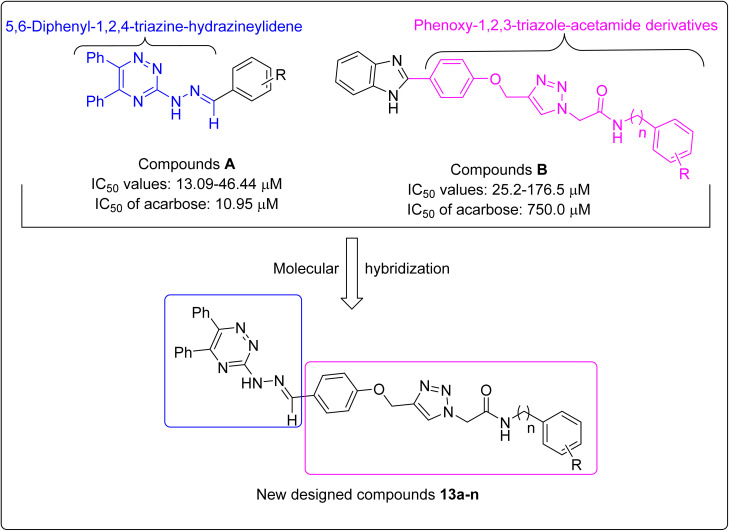 Figure 1
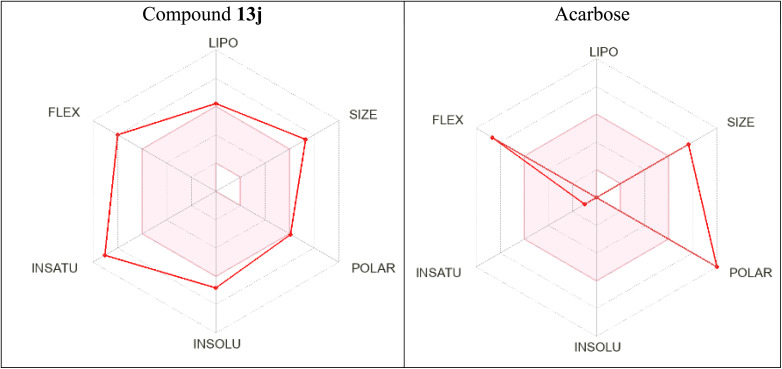 Figure 2
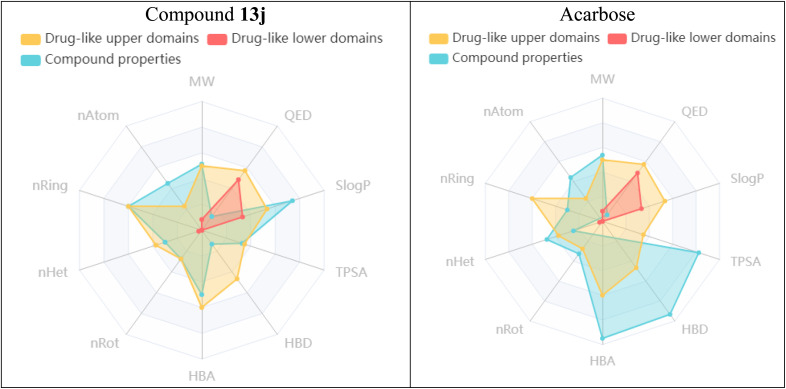 Figure 3
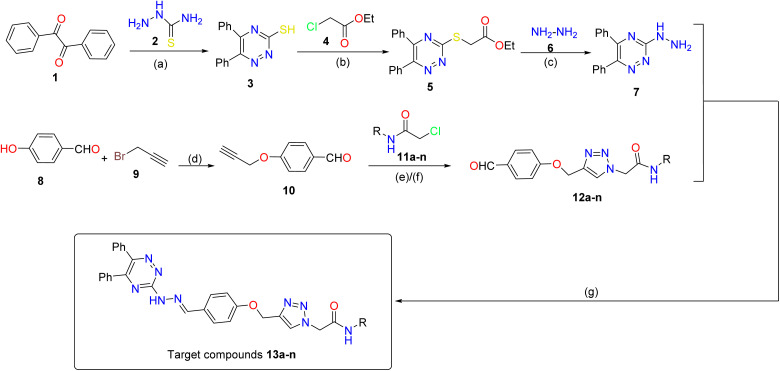 Figure 4
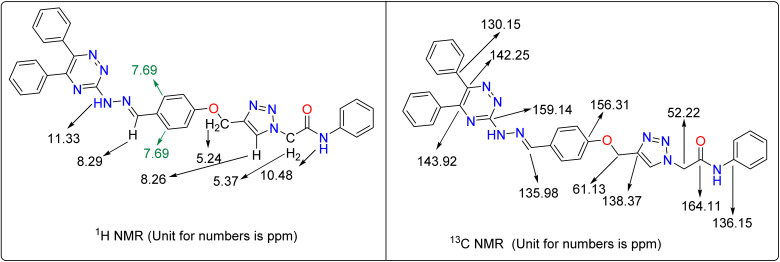 Figure 5
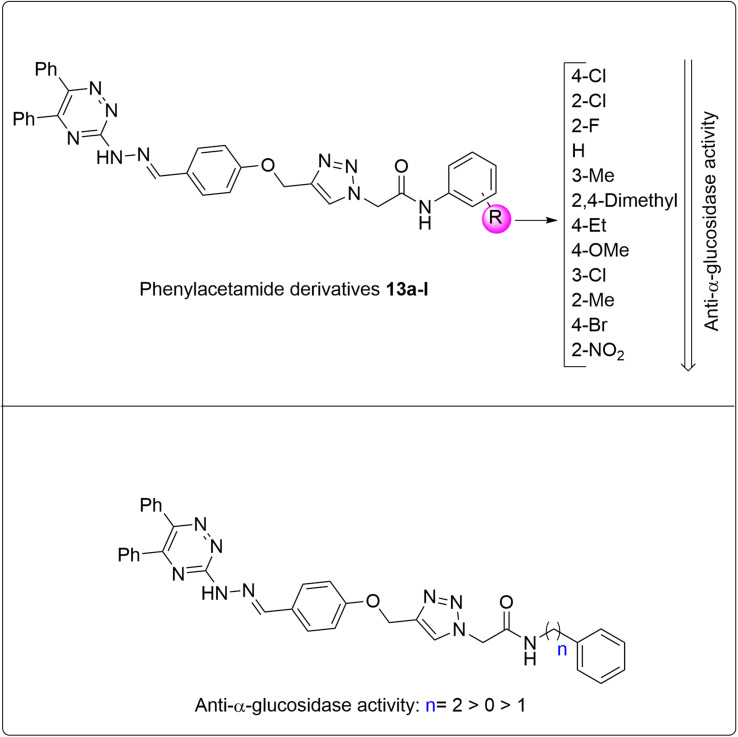 Figure 6
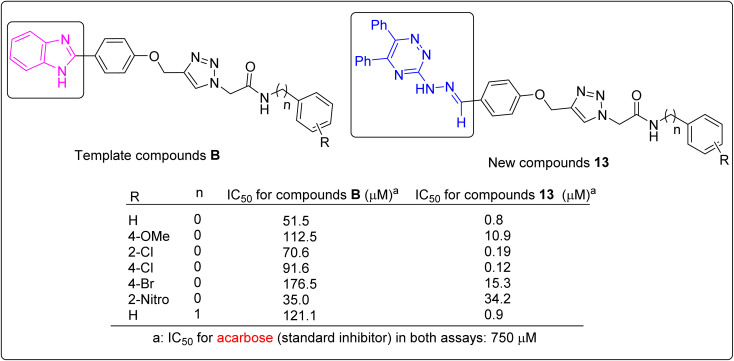 Figure 7
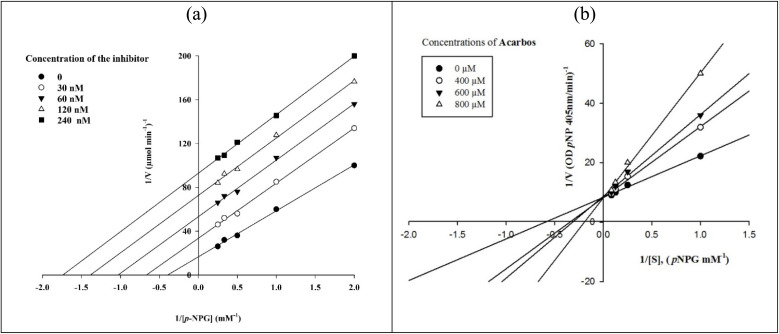 Figure 8
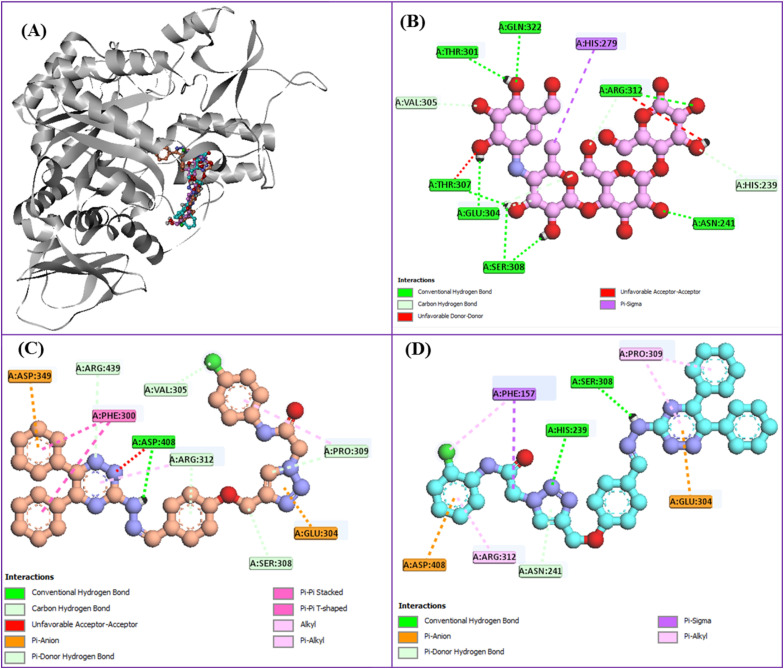 Figure 9
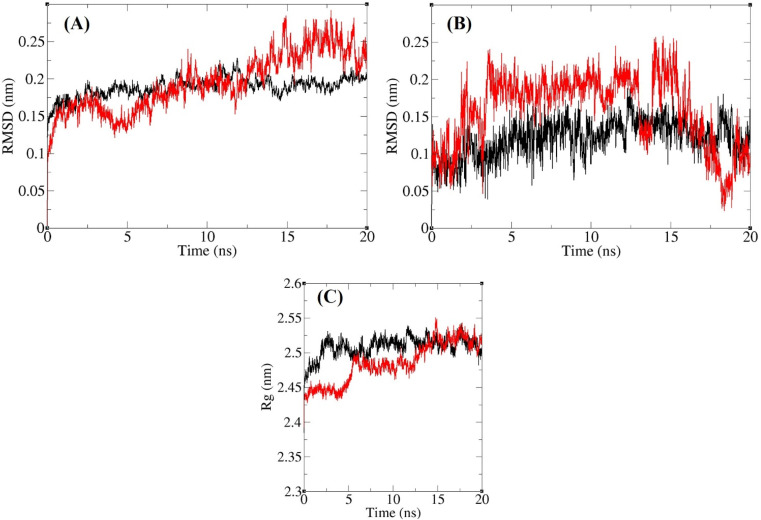 Figure 10
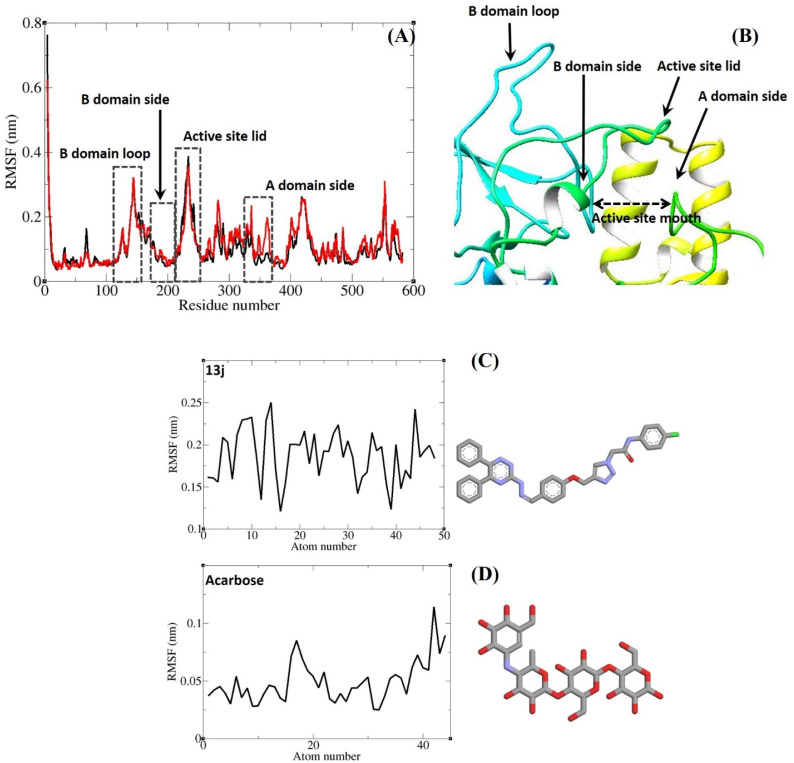 Figure 11
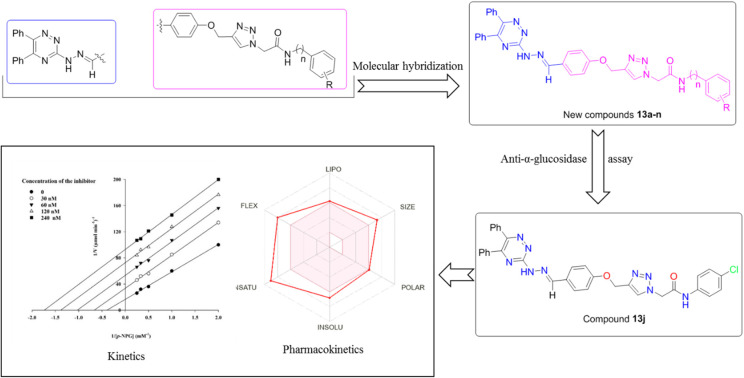 Figure 12
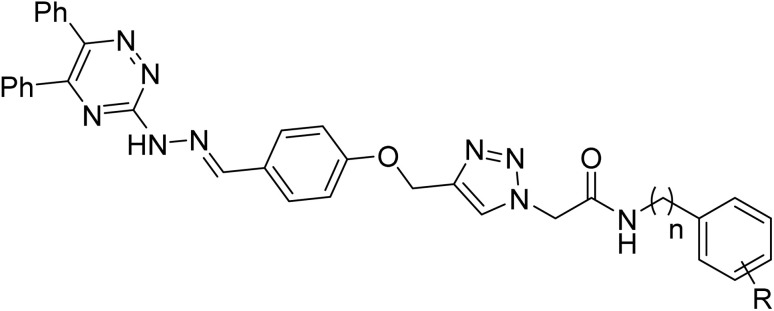 Figure 13
Peer Reviews
No public reviews on file for this paper yet. If you reviewed it on a platform where reviews are public (OpenReview, ICLR, NeurIPS, ICML), you can paste yours below so the community can read it here.
Videos
No videos yet. Explain this paper in a talk, walkthrough, or lecture? Add one.
Taxonomy
TopicsSynthesis and Characterization of Heterocyclic Compounds · Click Chemistry and Applications · Synthesis and biological activity