Transarterial Embolization for Refractory Non-Cervical-Origin Interscapular Pain Following Ultrasound-Guided Injection: A Retrospective Feasibility Study
Yu-Han Huang, Chia-Wei Chang, Jui-Yuan Chen, Chia-Shiang Lin, Chun-Wei Lin, Ping-Sheng Lu, Neng-Yu Chiu, Keng-Wei Liang

TL;DR
This study explores transarterial embolization as a potential treatment for chronic interscapular pain that doesn't respond to injections.
Contribution
The study evaluates the feasibility and safety of transarterial embolization as a salvage therapy for refractory interscapular pain.
Findings
TAE showed significant pain reduction at 1, 3, and 6 months with high clinical success rates.
Pain reduction in the TAE group was initially less than in the injection-only group but became comparable at 6 months.
No severe adverse events were observed, indicating the safety of the procedure.
Abstract
Objective: Chronic non-cervical-origin interscapular pain remains challenging to treat when refractory to conservative management and ultrasound-guided injections. This retrospective feasibility study aimed to assess the feasibility, procedural practicality, safety, and preliminary clinical outcomes of transarterial embolization (TAE) as a salvage therapy in this patient population. Methods: This single-center retrospective study included 20 patients with chronic interscapular pain (Numeric Rating Scale [NRS] score ≥5 for >3 months) who initially underwent ultrasound-guided injection therapy. Patients who experienced inadequate pain relief after 3 months (n = 10) proceeded to TAE, while the remaining 10 patients with sufficient relief formed the comparison group. TAE primarily targeted the transverse cervical artery using imipenem/cilastatin sodium as the embolic agent. Pain outcomes…
Genes, proteins, chemicals, diseases, species, mutations and cell lines named across the full text — each resolved to its canonical identifier and authoritative record.
Click any figure to enlarge with its caption.
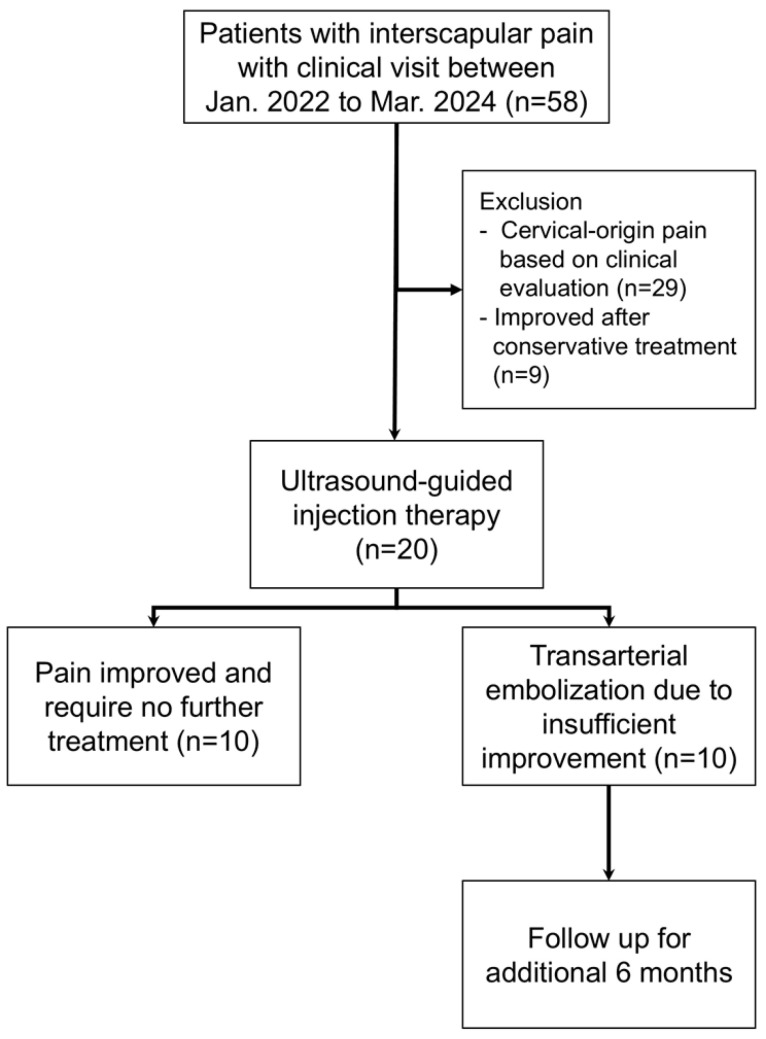 Figure 1
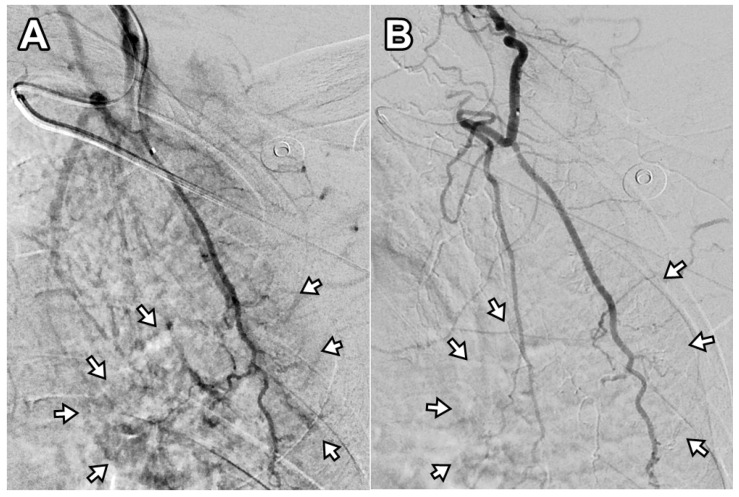 Figure 2
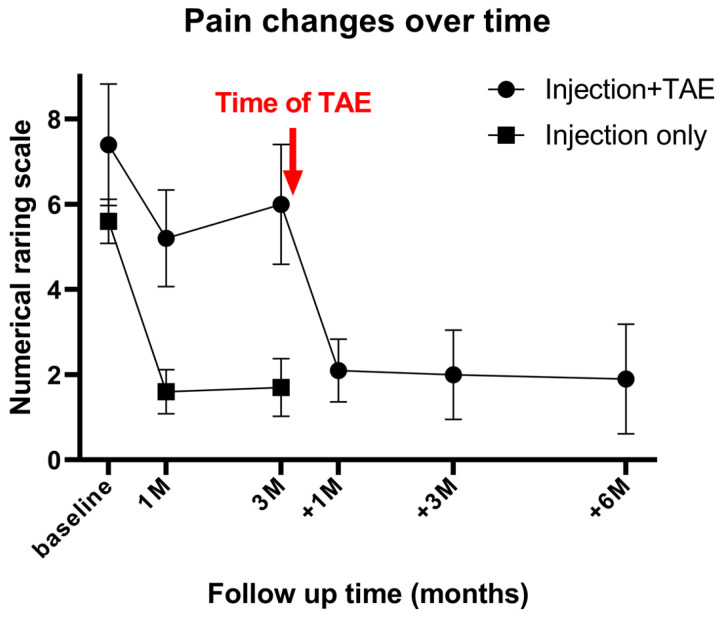 Figure 3
Peer Reviews
No public reviews on file for this paper yet. If you reviewed it on a platform where reviews are public (OpenReview, ICLR, NeurIPS, ICML), you can paste yours below so the community can read it here.
Videos
No videos yet. Explain this paper in a talk, walkthrough, or lecture? Add one.
Taxonomy
TopicsShoulder Injury and Treatment · Orthopedic Surgery and Rehabilitation · Tendon Structure and Treatment