Detection of Rice Prolamin and Glutelin Content Using Hyperspectral Imaging Combined with Feature Selection Algorithms and Multivariate Regression Models
Chu Zhang, Zhongjie Tang, Xiaojing Tan, Hengnian Qi, Xincheng Zhang, Shanlin Ma

TL;DR
This study uses hyperspectral imaging and machine learning to non-destructively detect rice protein content, offering a new method for quality assessment.
Contribution
A novel approach combining hyperspectral imaging with feature selection algorithms and regression models for rice prolamin and glutelin detection.
Findings
BPNN models achieved a correlation coefficient (r) greater than 0.8 for predicting rice prolamin and glutelin content.
Feature wavelength selection methods like GradCAM++ improved model performance compared to full spectra analysis.
Hyperspectral imaging combined with multivariate analysis is feasible for non-destructive rice protein detection.
Abstract
Prolamin and glutelin are the major constituents of rice protein. The rapid and non-destructive detection of prolamin and glutelin content is conducive to the accurate assessment of rice quality. In this study, hyperspectral imaging combined with regression models and feature wavelength selection was employed to detect the rice prolamin and glutelin content. Feature wavelength selection was achieved using the successive projections algorithm (SPA), competitive adaptive reweighted sampling (CARS), and convolutional neural network (CNN)-based Gradient-weighted Class Activation Mapping++ (GradCAM++). Partial least squares regression (PLSR), support vector regression (SVR), back-propagation neural network (BPNN), and CNN models were established using the full spectra and the feature wavelengths. The BPNN models showed the best prediction performance for prolamin and glutelin. The optimal…
Genes, proteins, chemicals, diseases, species, mutations and cell lines named across the full text — each resolved to its canonical identifier and authoritative record.
Click any figure to enlarge with its caption.
 Figure 1
 Figure 2
 Figure 3
 Figure 4
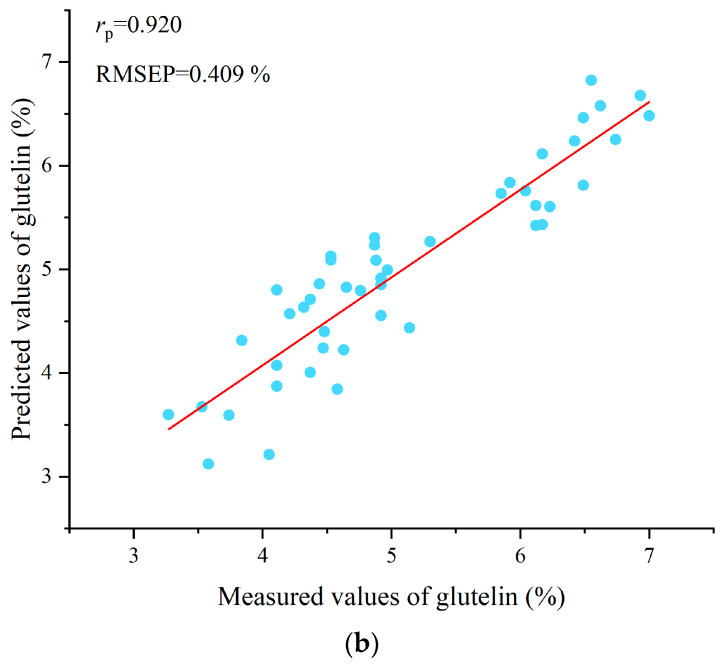 Figure 5
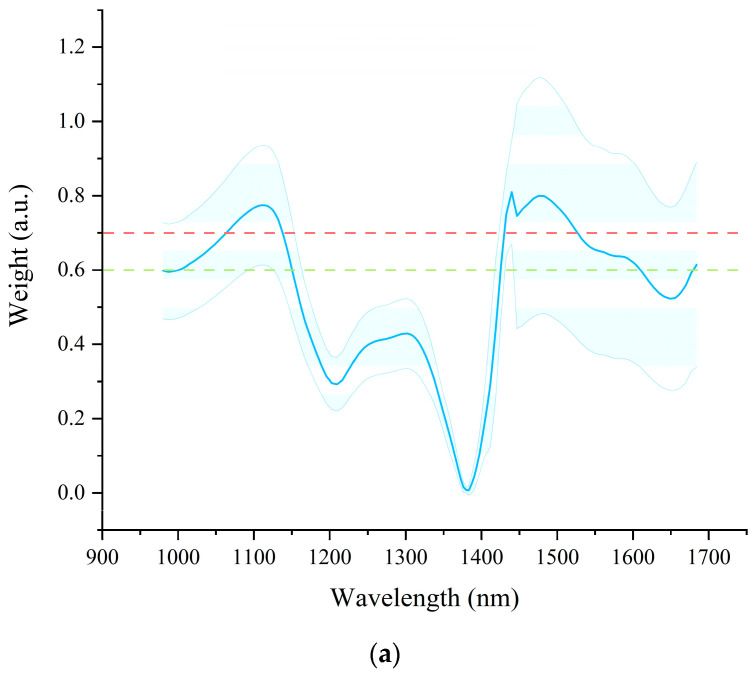 Figure 6
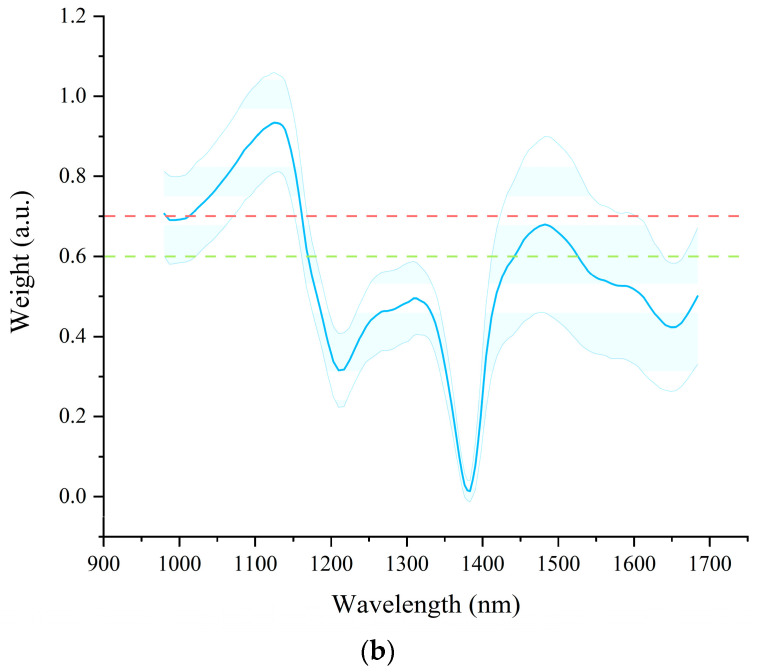 Figure 7
Peer Reviews
No public reviews on file for this paper yet. If you reviewed it on a platform where reviews are public (OpenReview, ICLR, NeurIPS, ICML), you can paste yours below so the community can read it here.
Videos
No videos yet. Explain this paper in a talk, walkthrough, or lecture? Add one.
Taxonomy
TopicsSpectroscopy and Chemometric Analyses · Advanced Chemical Sensor Technologies · Spectroscopy Techniques in Biomedical and Chemical Research