Elucidating Sugar–Acid Metabolic Diversity and Screening Breeding Materials in Xinjiang Pear (Pyrus) Germplasm Resources
Shikui Zhang, Shaopeng Wang, Shangdong Wang, Jinchao Xie, Amanguli Wusiman, Weiquan Zhou

TL;DR
This study analyzes sugar and acid content in Xinjiang pears to identify breeding materials for better flavor.
Contribution
The study provides precise metabolic profiles of sugars and acids in 29 pear cultivars, revealing new insights into flavor diversity.
Findings
Fructose and glucose are the dominant sugars, making up 64.0% of total sugar content.
Malic acid is the main organic acid, accounting for 85.8% of total acid content.
Late-ripening cultivars have the highest total acid content, while early-ripening ones have higher sucrose.
Abstract
To elucidate the flavor substance basis of the pear germplasm resources in Xinjiang, this study conducted precise qualitative and quantitative analysis of sugars and organic acids in the fruits of 29 pear cultivars. Fructose and glucose are the dominant sugars, accounting for 64.0% of the total sugar content. Malic acid is the dominant organic acid, accounting for 85.8% of the total acid content. The cultivar LL exhibited the highest total sugar content at 633.6 mg·g−1, while cultivar JJL-1 showed the highest total acid content at 1441.3 μg·g−1. Early-ripening (ER) cultivars demonstrated significantly higher sucrose content compared to mid-ripening (MR) and late-ripening (LR) cultivars, while late-ripening cultivars contained the highest total acid content. These findings provide essential phenotypic data for understanding the genetic basis of sugar and acid metabolism in pear fruits…
Genes, proteins, chemicals, diseases, species, mutations and cell lines named across the full text — each resolved to its canonical identifier and authoritative record.
Click any figure to enlarge with its caption.
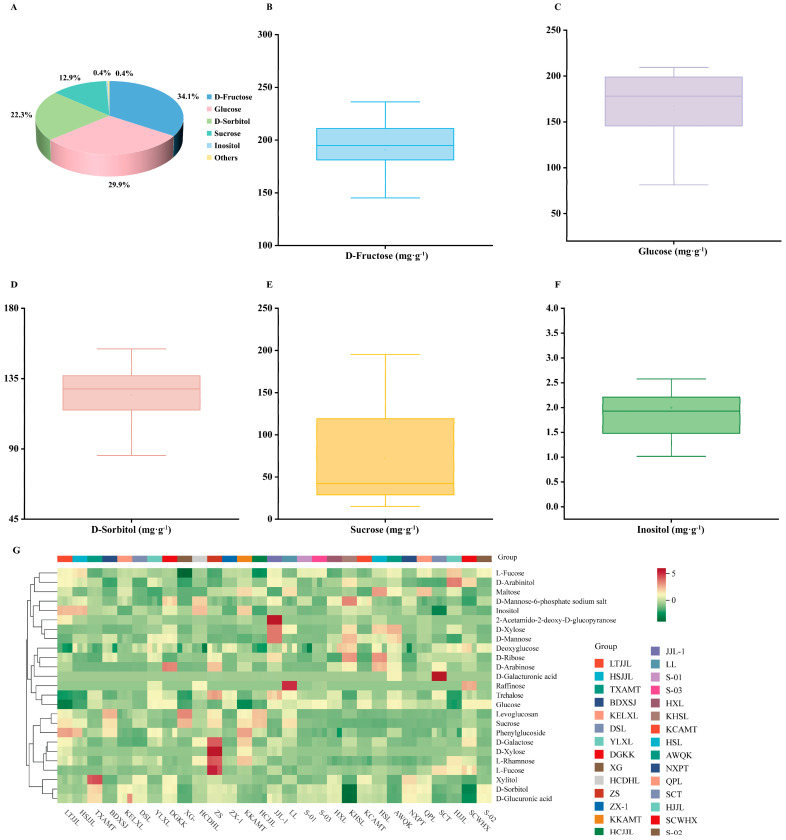 Figure 1
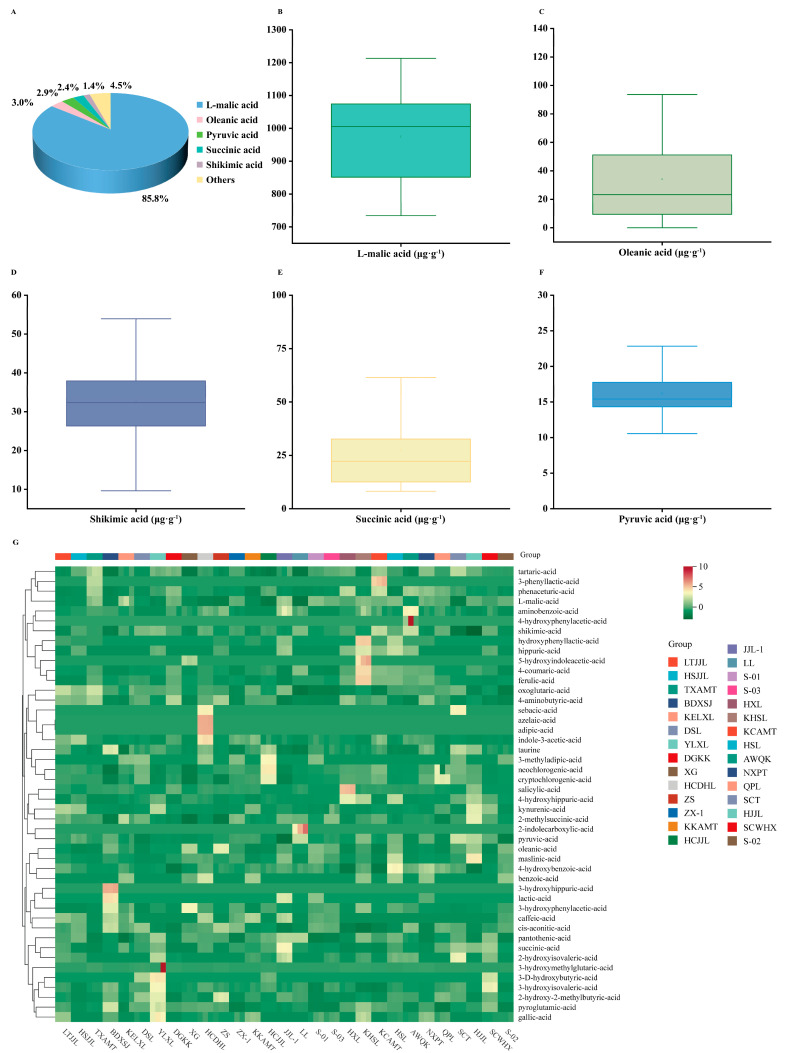 Figure 2
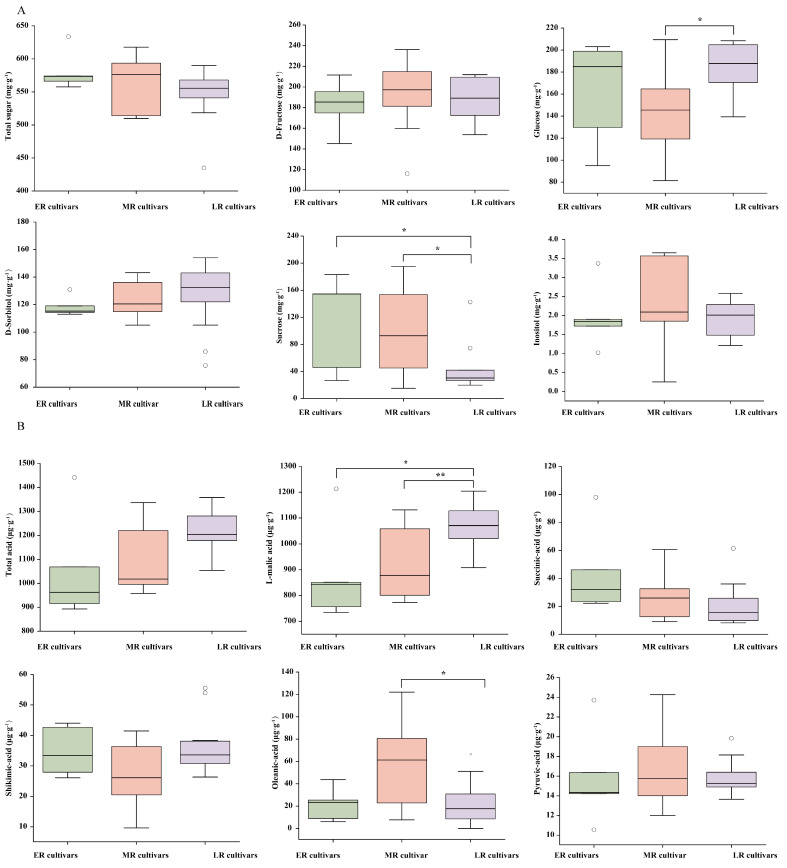 Figure 3
 Figure 4
Peer Reviews
No public reviews on file for this paper yet. If you reviewed it on a platform where reviews are public (OpenReview, ICLR, NeurIPS, ICML), you can paste yours below so the community can read it here.
Videos
No videos yet. Explain this paper in a talk, walkthrough, or lecture? Add one.
Taxonomy
TopicsPlant Physiology and Cultivation Studies · Postharvest Quality and Shelf Life Management · Horticultural and Viticultural Research