Identification of the lymph node metastasis atlas and optimal lymph node dissection strategy in patients with resectable lung invasive mucinous adenocarcinoma: a real-world multicenter study
Chao Zheng, Guo-Chao Zhang, Long Zhang, Yu-Zhuo Zhang, Jia Jia, Shun Xu, Wen-Yue Zhao, Yang Liu, Meng Yue, Yue-Ping Liu, Shuang-Ping Zhang, Yi Shen, Qi-Yue Ge, Yu-Ning Han, Jing Li, Hong-Jiang Yan, Li-Yan Xue, Yu-Shun Gao, Feng-Wei Tan, Shu-Geng Gao, Qi Xue, Jie He

TL;DR
This study identifies lymph node metastasis patterns in lung invasive mucinous adenocarcinoma and proposes optimal surgical strategies for better patient outcomes.
Contribution
The study provides the first detailed lymph node metastasis atlas and risk-stratified dissection strategy for lung invasive mucinous adenocarcinoma.
Findings
LIMA patients have a lower lymph node metastasis rate compared to non-mucinous adenocarcinoma patients.
A U-shaped relationship between lymph node count and prognosis was observed, with 6–20 LNs as the optimal range.
A predictive model identified risk-based minimum lymph node dissection numbers for low, medium, and high-risk patients.
Abstract
Lung invasive mucinous adenocarcinoma (LIMA) is a rare, unique, and heterogeneous subtype of lung cancer whose patterns of lymph node (LN) metastasis are unknown, and a consensus on LN dissection (LND) has not been reached. This study aimed to evaluate LN metastasis patterns in LIMAs and establish optimal LND strategies. Data about 19,596 LNs from 1474 LIMA patients collected between January 2010 and December 2021 at 8 lung cancer research centers and tertiary hospitals across China, and data from 5304 LIMA patients between 2004 and 2021 in the SEER database were analysed. Metastasis probabilities were calculated for each LN station to construct a metastasis atlas. Statistical methods, including LOWESS fitting, restricted cubic spline, Kaplan-Meier, and logistic regression analyses, were employed to identify optimal LND strategies. Compared with non-mucinous adenocarcinoma patients,…
Genes, proteins, chemicals, diseases, species, mutations and cell lines named across the full text — each resolved to its canonical identifier and authoritative record.
Click any figure to enlarge with its caption.
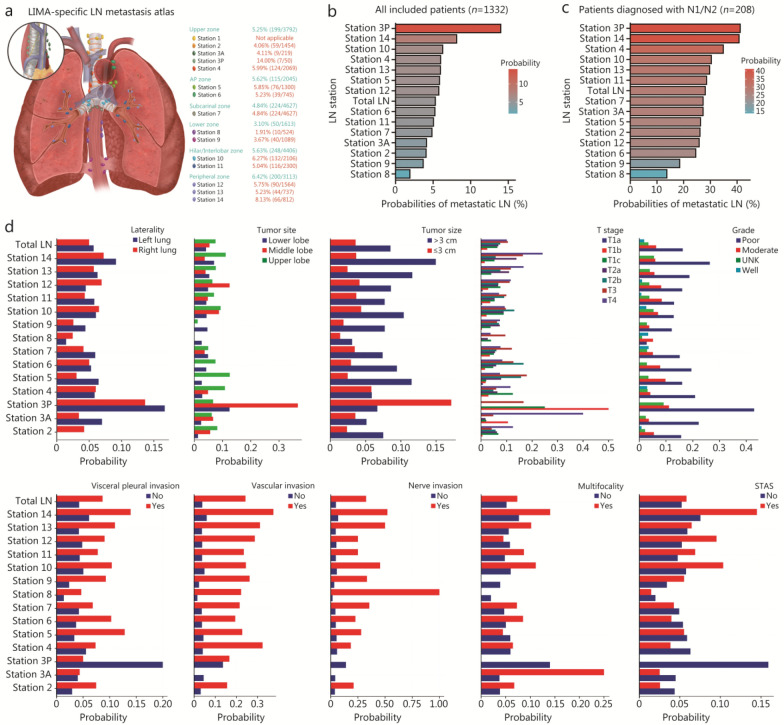 Figure 1
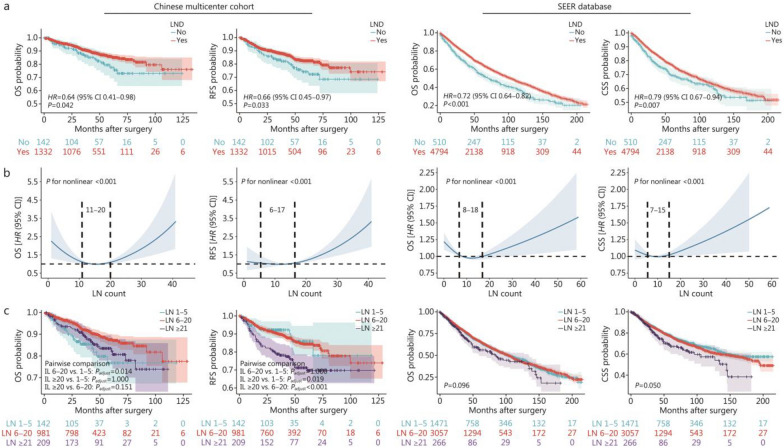 Figure 2
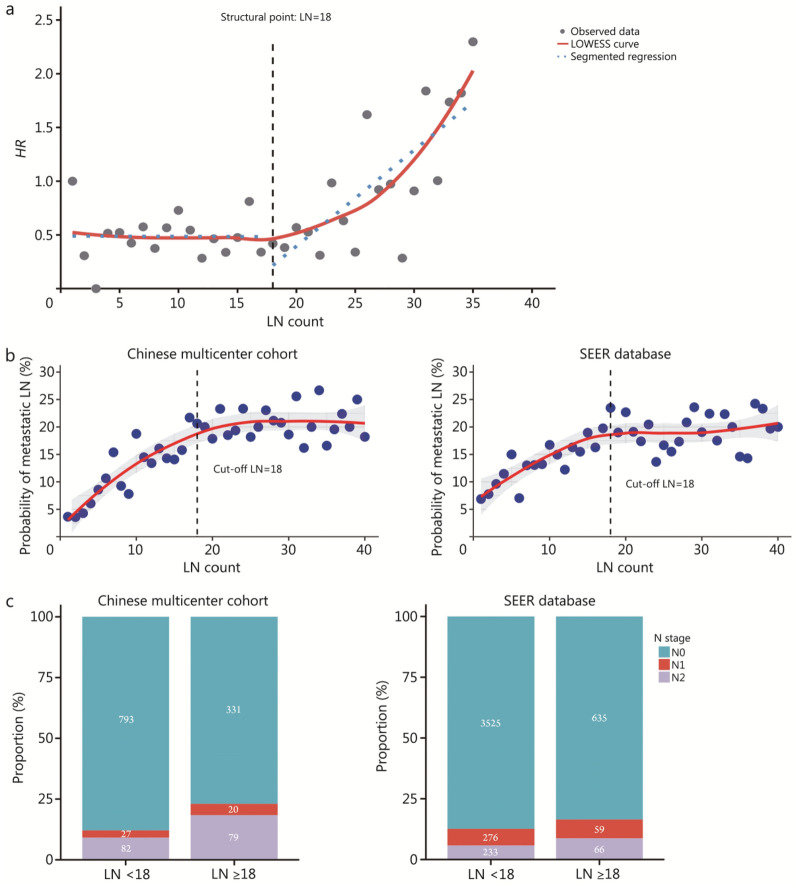 Figure 3
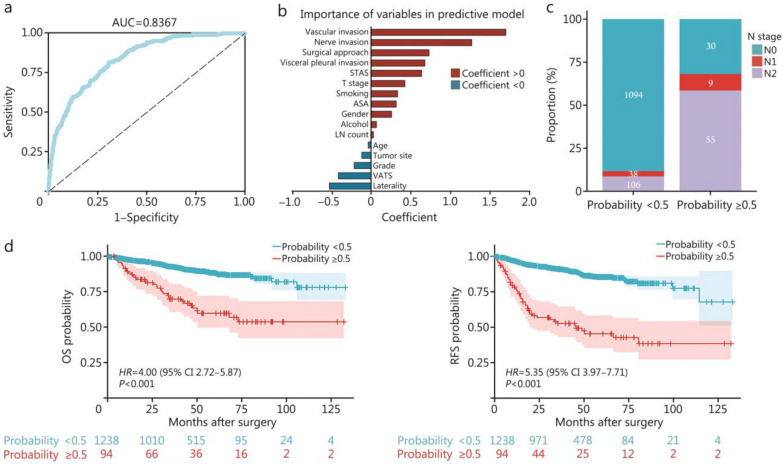 Figure 4
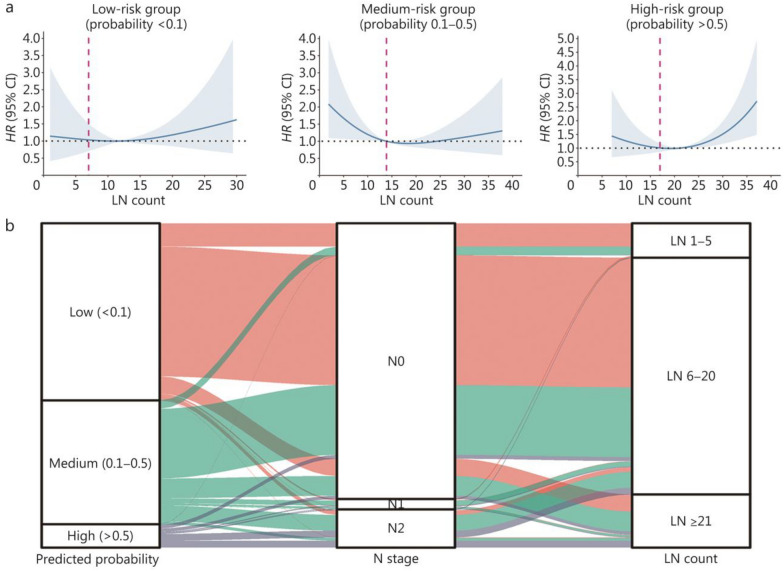 Figure 5
Peer Reviews
No public reviews on file for this paper yet. If you reviewed it on a platform where reviews are public (OpenReview, ICLR, NeurIPS, ICML), you can paste yours below so the community can read it here.
Videos
No videos yet. Explain this paper in a talk, walkthrough, or lecture? Add one.
Taxonomy
TopicsLung Cancer Diagnosis and Treatment · Lung Cancer Treatments and Mutations · Radiomics and Machine Learning in Medical Imaging