Machine learning-based stratification of mild cognitive impairment in Parkinson’s disease: a multicenter cross-sectional analysis
Yanfang Liu, Meiling Chen, Peng Chen, Xiaohui Lin, Sangsang Chen, Chaoning Liu, Donghui Wang, Hongxing Deng, Qinghua Li, Yuan Wu

TL;DR
This study creates a machine learning tool to identify Parkinson’s patients at risk of mild cognitive impairment using routine clinical data, helping doctors prioritize those needing detailed cognitive tests.
Contribution
A clinic-ready, externally validated machine learning model for PD-MCI risk stratification using MoCA-based labels and routinely collected variables.
Findings
Logistic regression showed balanced performance with AUCs of 0.789 (training), 0.778 (internal), and 0.772 (external).
Education and motor severity were the strongest predictors of PD-MCI risk, followed by sex and age at disease onset.
The tool prioritizes MoCA-normal patients for further neuropsychological evaluation and closer monitoring.
Abstract
Cognitive impairment is a prominent non-motor manifestation of Parkinson’s disease (PD) and is associated with reduced quality of life, increased mortality, and higher healthcare utilization. We aimed to develop and externally validate a machine-learning model, trained on Montreal Cognitive Assessment (MoCA)—based Movement Disorder Society (MDS) Level I labels, that estimates the contemporaneous probability of mild cognitive impairment in PD (PD-MCI) from routinely collected clinical variables, enabling clinicians to prioritize MoCA-normal patients with higher model-estimated probability for MDS Level II neuropsychological evaluation and closer follow-up. We analyzed 799 participants with PD from the Parkinson’s Progression Markers Initiative (PPMI), randomly assigning them to training (n = 559) and internal validation (n = 240) cohorts. An independent external cohort comprised 70…
Genes, proteins, chemicals, diseases, species, mutations and cell lines named across the full text — each resolved to its canonical identifier and authoritative record.
Click any figure to enlarge with its caption.
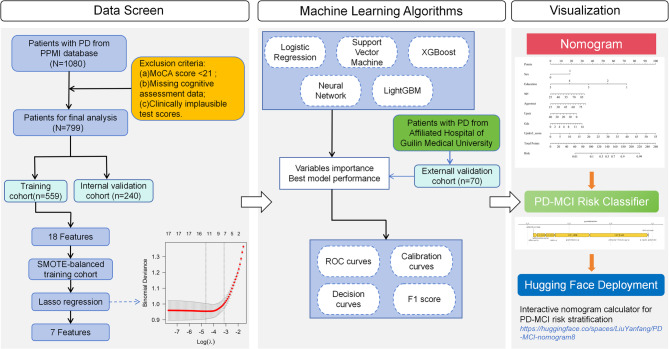 Figure 1
 Figure 2
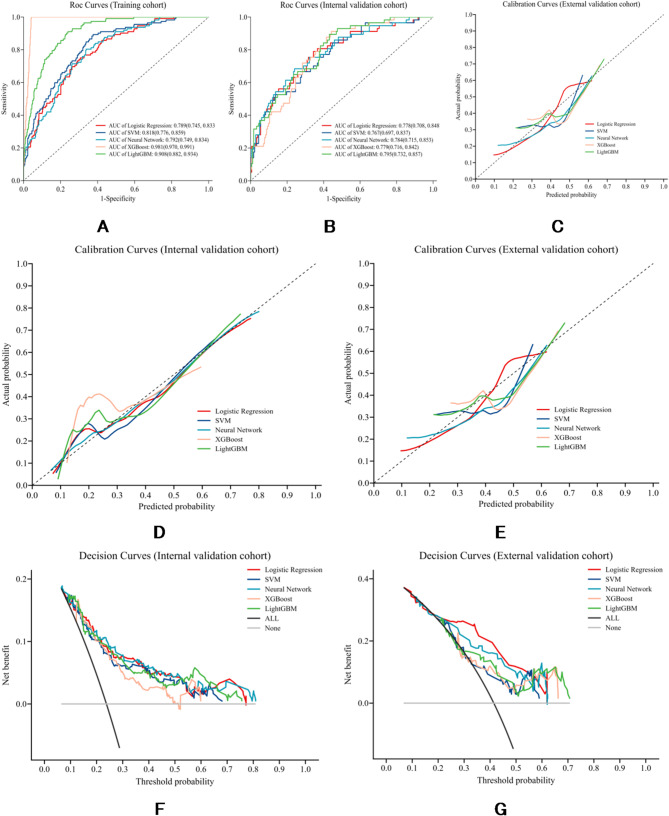 Figure 3
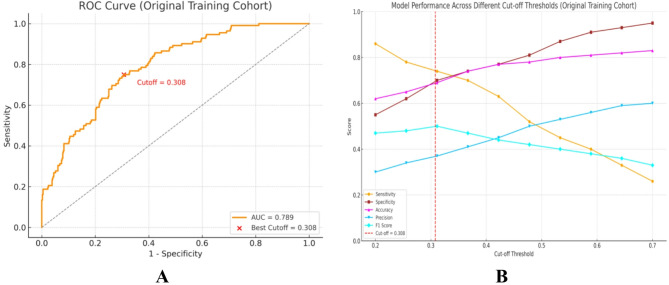 Figure 4
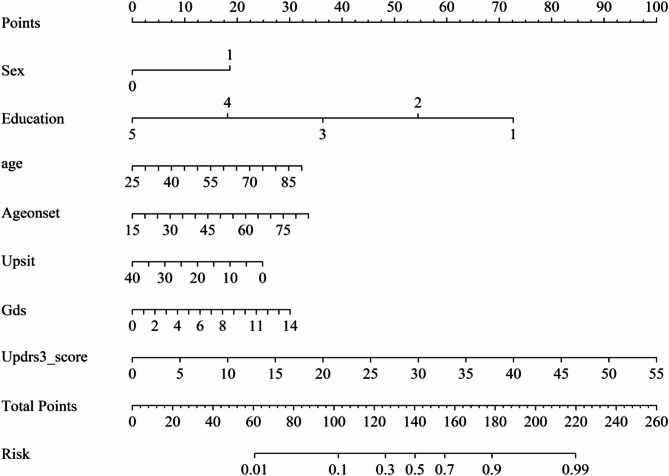 Figure 5
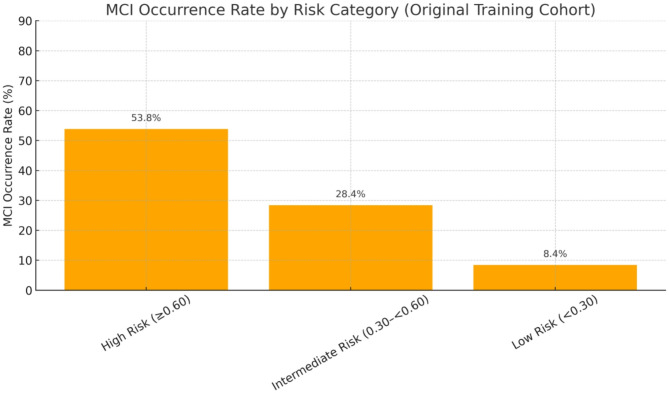 Figure 6
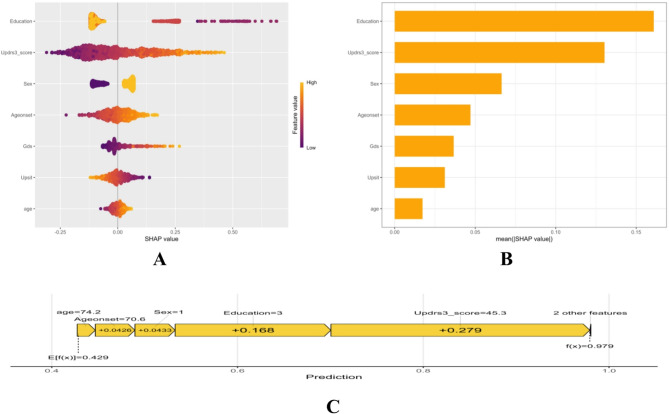 Figure 7
Peer Reviews
No public reviews on file for this paper yet. If you reviewed it on a platform where reviews are public (OpenReview, ICLR, NeurIPS, ICML), you can paste yours below so the community can read it here.
Videos
No videos yet. Explain this paper in a talk, walkthrough, or lecture? Add one.
Taxonomy
TopicsParkinson's Disease Mechanisms and Treatments · Neurobiology of Language and Bilingualism · Neurological disorders and treatments