Pregnancy and obstetric-neonatal outcomes of patients with thin endometrium using three different endometrial preparation protocols in frozen embryo transfer cycles: a historical cohort of 2671 patients
Liu Jiang, Haoming Huang, Jiayin Zhou, Yan Li, Yueping Zhou, Kun Qian

TL;DR
This study compared three endometrial preparation methods in frozen embryo transfers for patients with thin endometrium and found no major differences in pregnancy or birth outcomes.
Contribution
The study is the first to compare three endometrial preparation protocols in patients with thin endometrium undergoing frozen embryo transfer.
Findings
No significant differences in clinical pregnancy or live birth rates were found between the three groups.
The NC group had a significantly lower biochemical pregnancy loss rate compared to the AC group.
Outcomes were consistent across groups for patients with endometrial thickness < 7 mm.
Abstract
Endometrial thickness independently predicts pregnancy outcomes in frozen embryo transfer (FET) cycles. Thin endometrium always results in implantation failure and worse obstetric-neonatal outcomes. However, it has not been reported which endometrial preparation strategy achieved optimal outcomes in patients with thin endometrium undergoing FET cycles. This historical cohort study was conducted on 2671 women with thin endometrium who underwent their first FET cycle at the Reproductive Medicine Center of a university-affiliated hospital between January 2018 and August 2022 (followed up to August 2023). Patients were divided into three groups according to endometrial preparation protocols (NC: natural cycle, AC: artificial cycle, GnRH-a + AC: AC with gonadotropin-releasing hormone agonist pretreatment). Thin endometrium was defined as endometrial thickness < 8 mm on the first day of…
Genes, proteins, chemicals, diseases, species, mutations and cell lines named across the full text — each resolved to its canonical identifier and authoritative record.
Click any figure to enlarge with its caption.
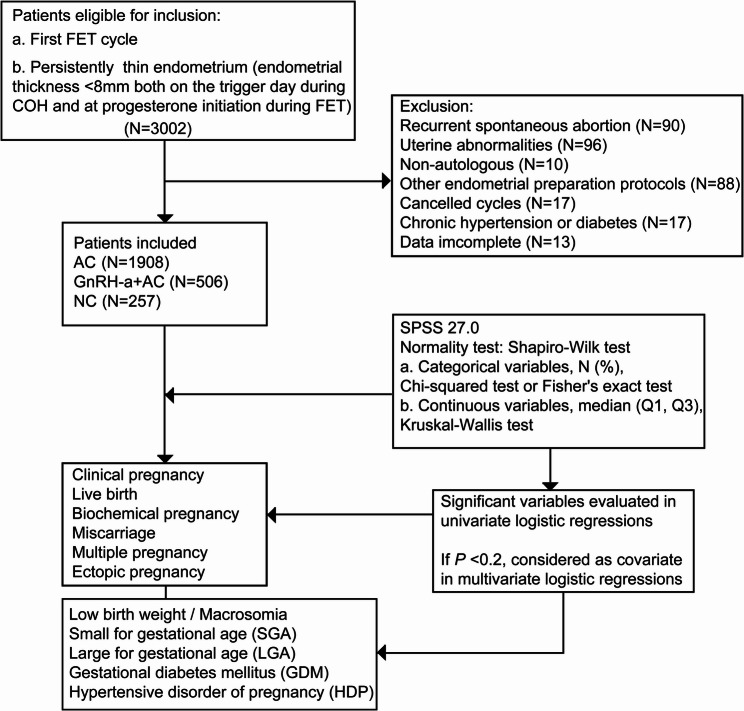 Figure 1
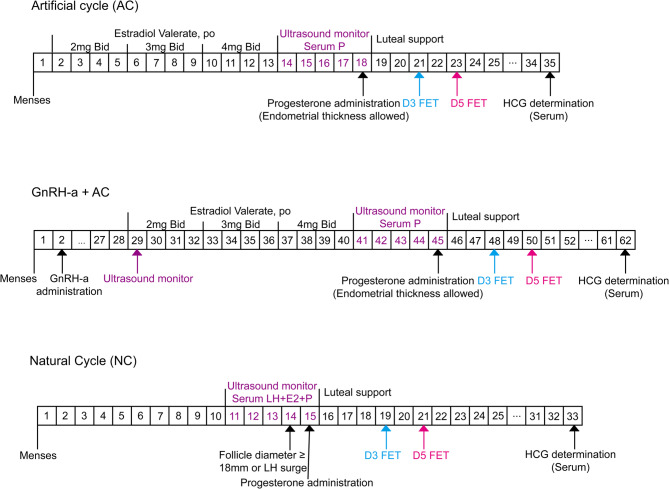 Figure 2
Peer Reviews
No public reviews on file for this paper yet. If you reviewed it on a platform where reviews are public (OpenReview, ICLR, NeurIPS, ICML), you can paste yours below so the community can read it here.
Videos
No videos yet. Explain this paper in a talk, walkthrough, or lecture? Add one.
Taxonomy
TopicsReproductive System and Pregnancy · Ovarian function and disorders · Gynecological conditions and treatments