Do not let your guard down! Prevalence of Dirofilaria immitis and Dirofilaria repens in dogs entering shelters in northern Italy
Marco Genchi, Luigi Venco, Ornella Melideo, Laura Kramer, Marta Fozzer, Alice Vismarra

TL;DR
This study finds that stray dogs in northern Italy still carry heartworm parasites despite decreased overall prevalence.
Contribution
The study provides updated prevalence data for Dirofilaria spp. in shelter dogs from a historically high-risk region.
Findings
33.9% of 510 stray dogs tested positive for Dirofilaria spp., with 15.7% for D. immitis and 6.9% for D. repens.
Mixed infections with both D. immitis and D. repens were found in 11.4% of dogs.
Unowned dogs are identified as a key reservoir for maintaining parasite presence in the region.
Abstract
In Italy, the area of highest prevalence for canine heartworm disease (CHWD) has historically been along the Po River Valley in the northern area of the country, where prevalence in the mid-nineties ranged from 31% to 98%. Currently, increased awareness among practitioners and the availability of preventives have led to a dramatic decrease in prevalence in the area, although cases of CHWD continue to be diagnosed, suggesting the presence of canine reservoirs, including unowned dogs. The aim of the present study was to determine the prevalence of Dirofilaria spp. in stray dogs entering shelters located in the Po River Valley of northern Italy by using the modified Knott’s test and by antigenic testing. Out of the 510 dogs tested, 173 (33.9%) were positive for circulating microfilariae: 15.7% (80/510) with D. immitis, 6.9% (35/510) with D. repens, and 11.4% (58/510) with a mixed…
Genes, proteins, chemicals, diseases, species, mutations and cell lines named across the full text — each resolved to its canonical identifier and authoritative record.
Click any figure to enlarge with its caption.
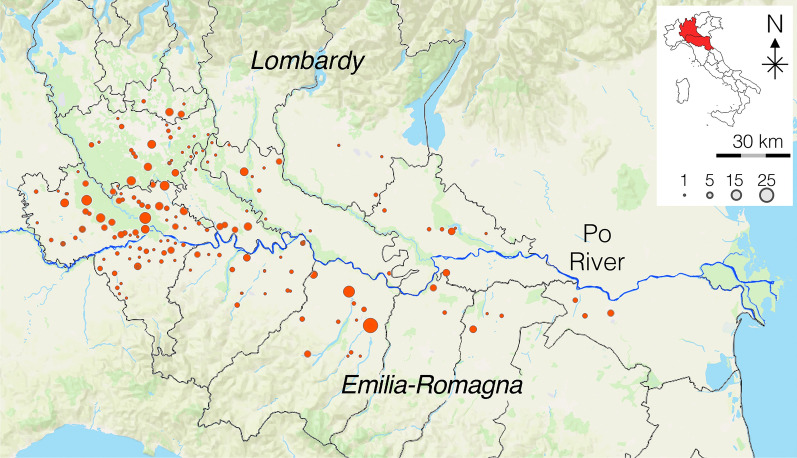 Figure 1
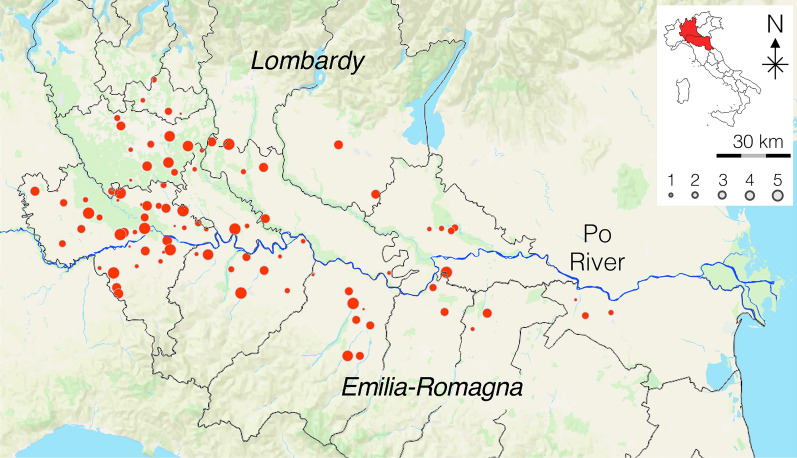 Figure 2
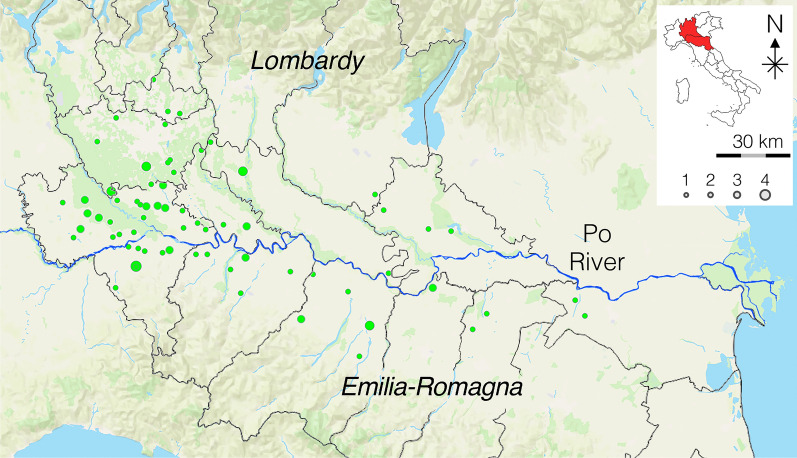 Figure 3
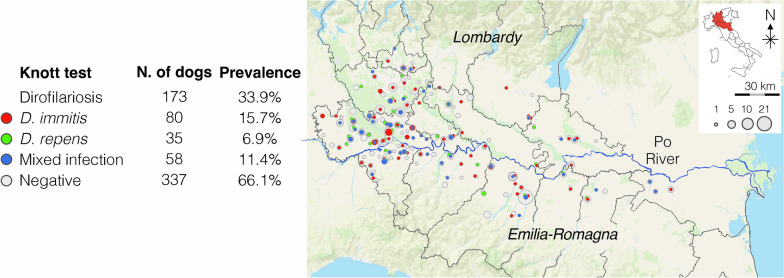 Figure 4
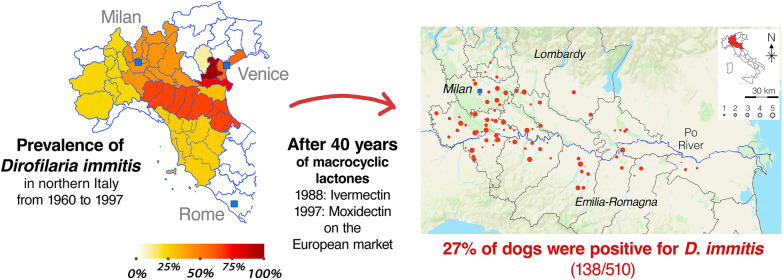 Figure 5
Peer Reviews
No public reviews on file for this paper yet. If you reviewed it on a platform where reviews are public (OpenReview, ICLR, NeurIPS, ICML), you can paste yours below so the community can read it here.
Videos
No videos yet. Explain this paper in a talk, walkthrough, or lecture? Add one.
Taxonomy
TopicsParasitic Diseases Research and Treatment · Mosquito-borne diseases and control · Parasites and Host Interactions