Effect of prone positioning and PEEP on respiratory mechanics in children undergoing scoliosis surgery
Anna Camporesi, Federico Cristiani, Pablo Cruces, Horacio Igarzabal, Giulia Catozzi, Ginevra Bayon, Fernando Fontans, Gimena Falcao, Sofi Odriozola, Jurg Hammer, Sebastiàn Gonzalez-Dambrauskas

TL;DR
This study examines how lying on the stomach and using PEEP during scoliosis surgery affects children's breathing mechanics.
Contribution
The study provides insights into how PEEP and prone positioning influence respiratory compliance in children with severe scoliosis.
Findings
Respiratory compliance worsened in the prone position but improved with PEEP.
Compliance was negatively linked to scoliosis severity and positively to BMI in secondary scoliosis.
PEEP improved compliance in the supine position but not in the prone position.
Abstract
Surgery for severe scoliosis (SS) is usually performed in the prone position. Changes in respiratory mechanics related to position and positive end expiratory pressure (PEEP) titration during anesthesia of SS are understudied. We aimed to investigate the effect of prone position and PEEP on the respiratory mechanics of scoliotic children undergoing spine surgery. Prospective, crossover study performed in two pediatric hospitals (Montevideo, Uruguay-Centro Hospitalario Pereira Rossell- and Milano, Italy-Vittore Buzzi Children’s Hospital). Shortly after intubation, pulmonary mechanics measurements were performed using inspiratory and expiratory breath holds during volume-controlled ventilation with a set tidal volume (TV) of 8 ml/kg and a respiratory rate adjusted to maintain normocapnia. Measurements of peak (PIP), plateau (PPLAT) and total PEEP (tPEEP) were obtained at three levels of…
Genes, proteins, chemicals, diseases, species, mutations and cell lines named across the full text — each resolved to its canonical identifier and authoritative record.
Click any figure to enlarge with its caption.
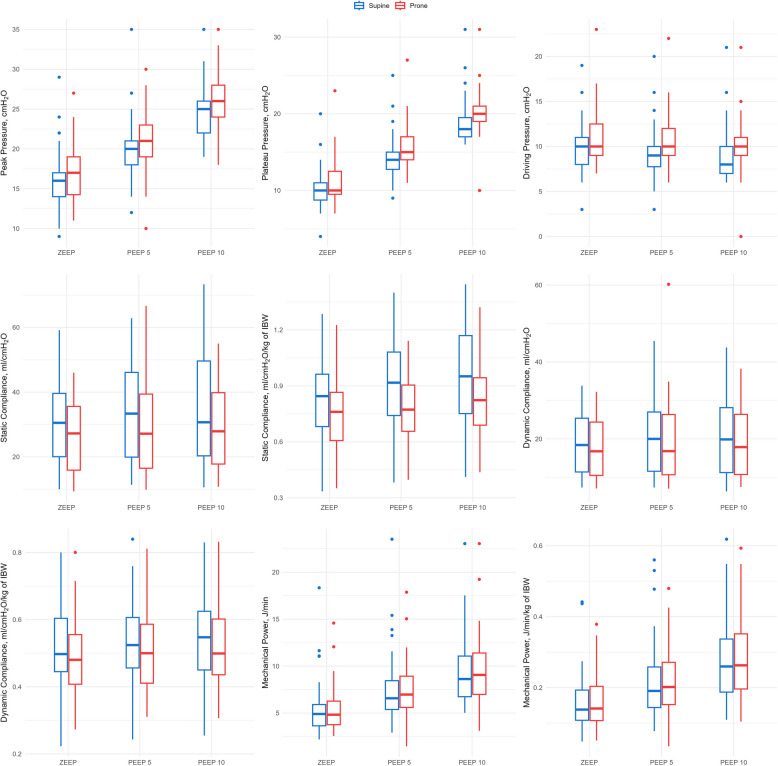 Figure 1
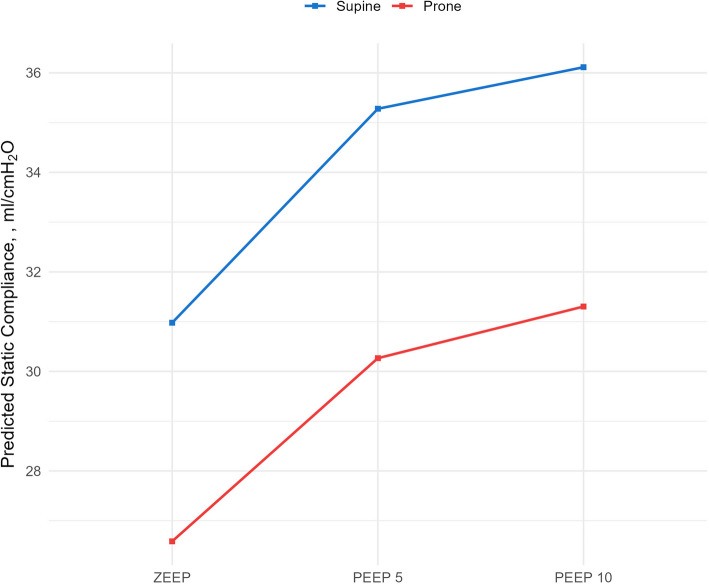 Figure 2
Peer Reviews
No public reviews on file for this paper yet. If you reviewed it on a platform where reviews are public (OpenReview, ICLR, NeurIPS, ICML), you can paste yours below so the community can read it here.
Videos
No videos yet. Explain this paper in a talk, walkthrough, or lecture? Add one.
Taxonomy
TopicsRespiratory Support and Mechanisms · Scoliosis diagnosis and treatment · Congenital Diaphragmatic Hernia Studies