Female fruit flies use social cues to make egg-clustering decisions
Emily R. Churchill, Emily K. Fowler, Lucy A. Friend, Marco Archetti, Douglas W. Yu, Andrew F. G. Bourke, Tracey Chapman, Amanda Bretman

TL;DR
Female fruit flies adjust how they cluster their eggs based on the presence of other females, suggesting social cues influence their reproductive strategies.
Contribution
This study reveals that egg-clustering behavior in fruit flies is socially responsive and increases with group size.
Findings
Females cluster eggs non-randomly and increase clustering as group size increases.
Higher adult female density leads to faster and more clustered egg-laying.
Females prefer to lay eggs in existing clusters, which are often of mixed maternity.
Abstract
The ability to respond plastically to environmental variation is a key determinant of fitness. Females may use cues to strategically place their eggs, for example adjusting the number or location of eggs according to whether other females are present and driving the dynamics of local competition or cooperation. The expression of plasticity in egg-laying patterns within individual patches (i.e. in contact clusters or not) represents an additional, under-researched, and potentially important opportunity for fitness gains. Clustered eggs might benefit from increased protection or defence, and clustering could facilitate cooperative feeding. However, increased clustering is also expected to increase the risk of overexploitation through direct competition. These potential benefits and costs likely covary with the number of individuals present; hence, egg-clustering behaviour within resource…
Genes, proteins, chemicals, diseases, species, mutations and cell lines named across the full text — each resolved to its canonical identifier and authoritative record.
Click any figure to enlarge with its caption.
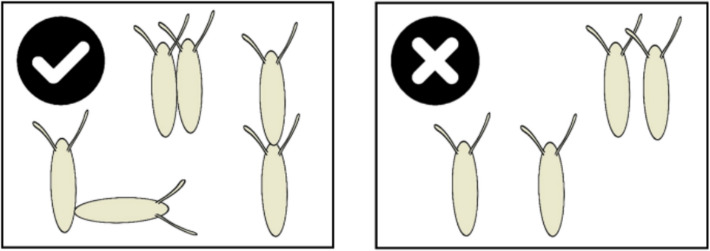 Figure 1
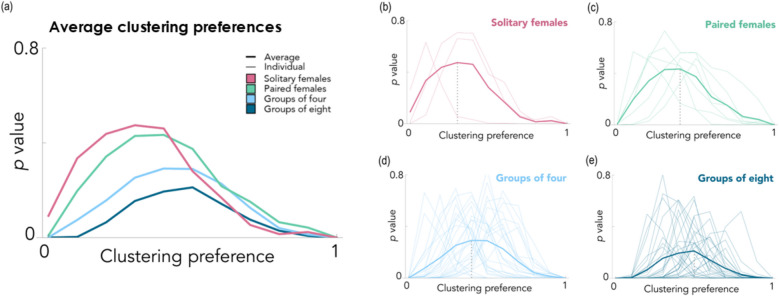 Figure 2
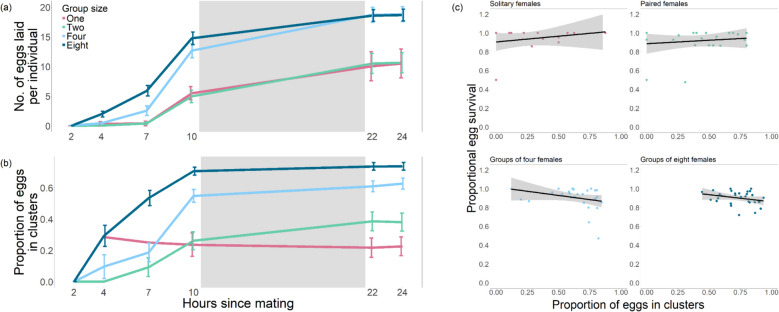 Figure 3
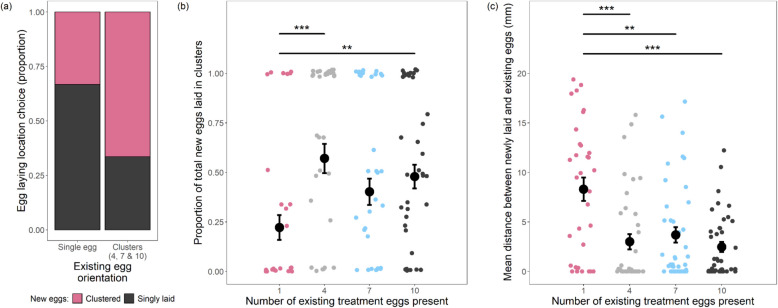 Figure 4
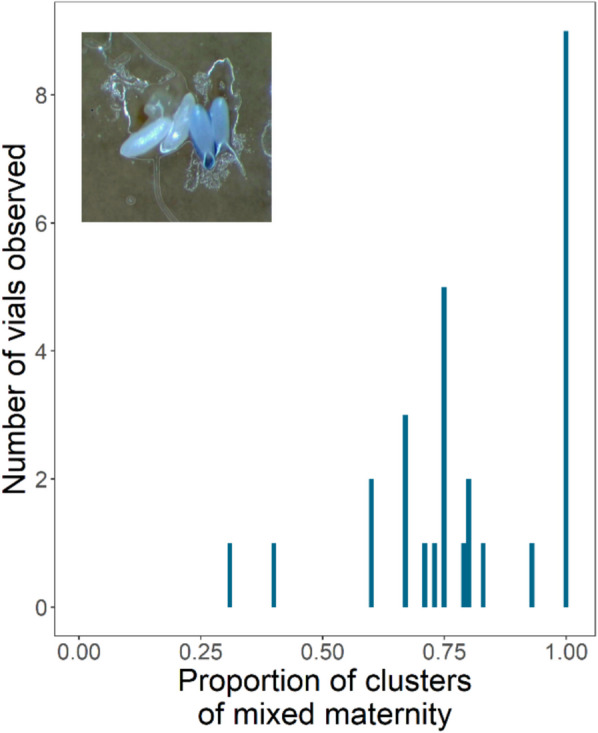 Figure 5
Peer Reviews
No public reviews on file for this paper yet. If you reviewed it on a platform where reviews are public (OpenReview, ICLR, NeurIPS, ICML), you can paste yours below so the community can read it here.
Videos
No videos yet. Explain this paper in a talk, walkthrough, or lecture? Add one.
Taxonomy
TopicsPlant and animal studies · Insect and Arachnid Ecology and Behavior · Animal Behavior and Reproduction