Synthesis, Characterization, and Catalytic Activity of Gold Complexes Bearing Bicyclic Silicon and Germanium Anionic Ligands
Pamela Adienes Benzan Lantigua, Martin Lutz, Marc-Etienne Moret

TL;DR
Researchers created gold complexes with silicon and germanium ligands and found they can catalyze chemical reactions, with germanium ligands being more effective.
Contribution
The study introduces new gold complexes with stabilized anionic silanide and germanide ligands and demonstrates their catalytic activity in hydroamination.
Findings
Gold(I) complexes with tmimSi– and tmimGe– ligands were successfully synthesized and characterized.
Both ligand types catalyze hydroamination, with germanide complexes showing higher efficiency due to increased electrophilicity.
The results suggest that these ligands can serve as effective supporting ligands in catalytic applications.
Abstract
Silanides ([R3Si–]) and germanides ([R3Ge–]) are attracting attention as donor ligands for transition metals, but their use as supporting ligands in catalysis is limited, often due to their high reactivity. In this study, we report the preparation and characterization of gold(I) complexes bearing the anionic silanide and germanide ligands tmimSi– and tmimGe– (tmimH3 = tris(3-methylindol-2-yl)methane), which are stabilized by a bicyclic cage structure. Both the silanide and germanide complexes catalyze the hydroamination of 1-ethynyl-4-fluorobenzene with aniline. The germanide complexes are more efficient than their silanide analogues, likely due to their more electrophilic character. These results show that both ligand types can be used as supporting ligands in catalysis, which warrants further investigations.
Genes, proteins, chemicals, diseases, species, mutations and cell lines named across the full text — each resolved to its canonical identifier and authoritative record.
Click any figure to enlarge with its caption.
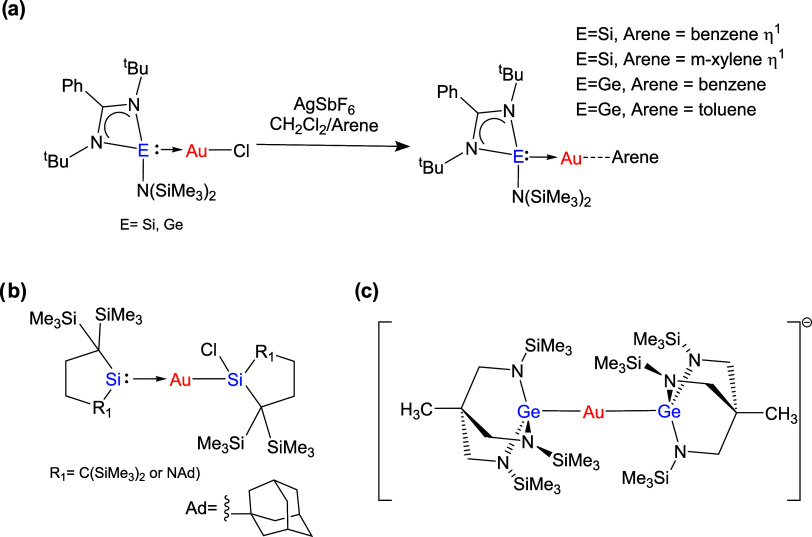 Figure 1
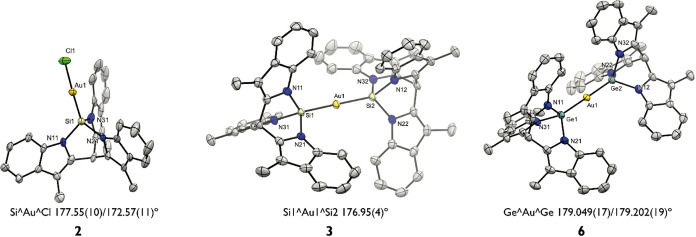 Figure 2
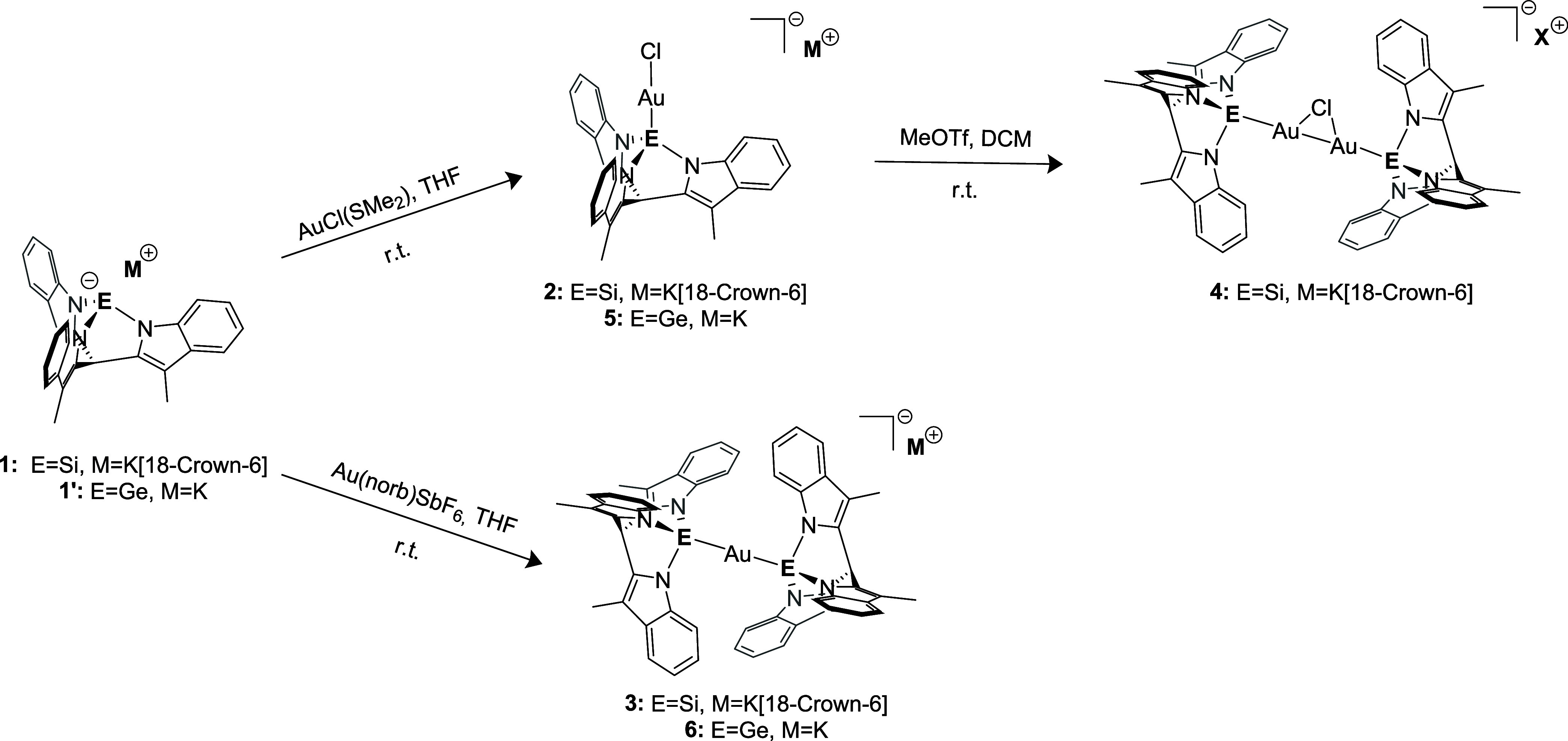 Figure 3
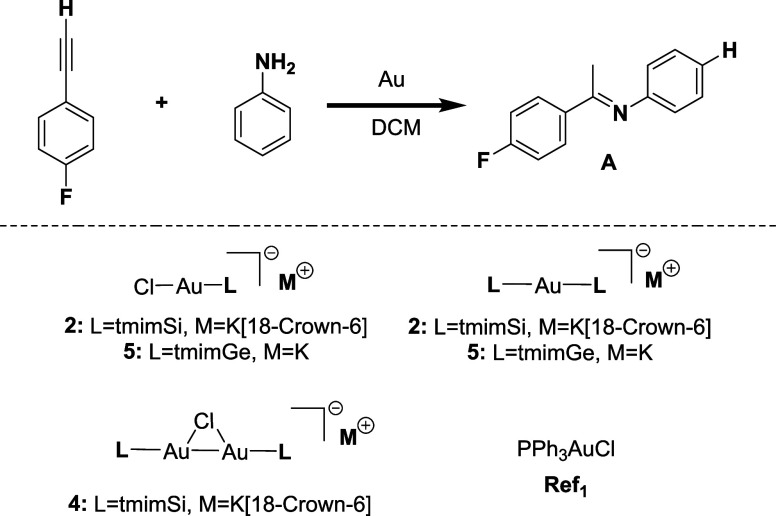 Figure 4
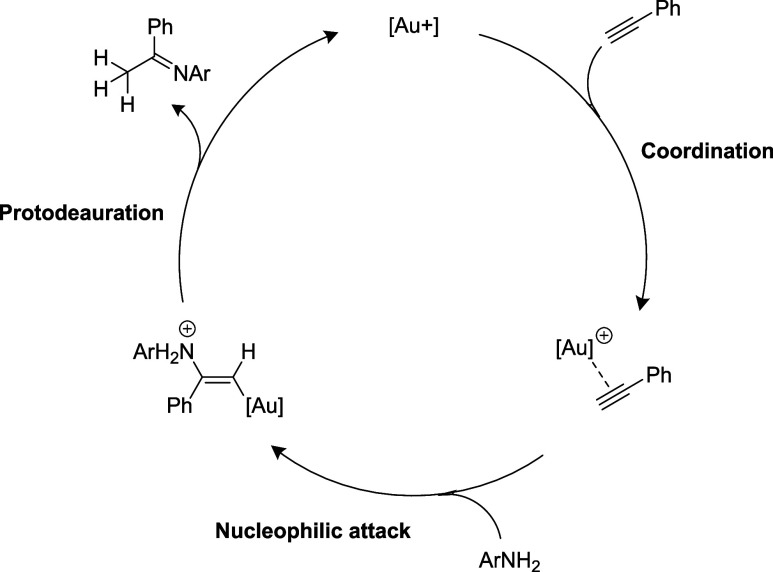 Figure 5
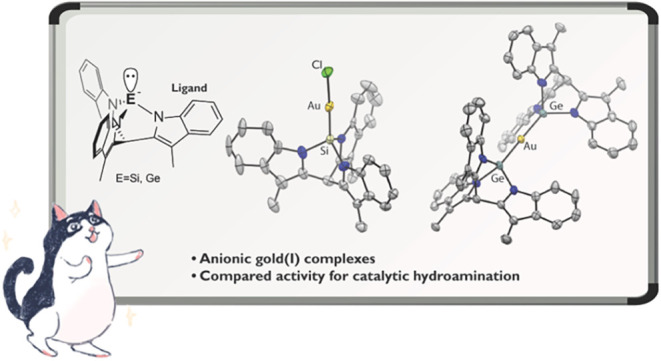 Figure 6
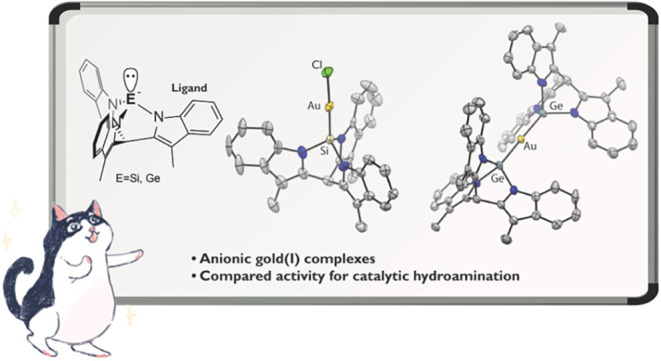 Figure 7
Peer Reviews
No public reviews on file for this paper yet. If you reviewed it on a platform where reviews are public (OpenReview, ICLR, NeurIPS, ICML), you can paste yours below so the community can read it here.
Videos
No videos yet. Explain this paper in a talk, walkthrough, or lecture? Add one.
Taxonomy
TopicsCatalytic Alkyne Reactions · Organometallic Complex Synthesis and Catalysis · Catalysis for Biomass Conversion