Precision exercise in older adults with early Alzheimer’s disease: The study protocol of the FIT-AD Sequential, Multiple Assignment, Randomized Trial (SMART)
Fang Yu, Michael Todd, Dereck Salisbury, Molly Maxfield, Jeremy Pruzin, Rodney P. Joseph, Yi Su, Danni Li, Elsa Baena, David Coon

TL;DR
This study tests how tailoring aerobic exercise to individual fitness responses can improve outcomes in older adults with early Alzheimer's disease.
Contribution
The study introduces a precision exercise approach based on aerobic fitness responses in early Alzheimer’s disease.
Findings
The trial will assess effects of aerobic exercise on aerobic fitness and brain imaging markers in early Alzheimer’s patients.
It aims to identify the best exercise strategy to improve fitness and reduce non-responders over six months.
The study will examine mechanisms linking aerobic exercise to cognitive outcomes in Alzheimer’s.
Abstract
Aerobic exercise is promising for preventing Alzheimer’s disease (AD) and AD-related dementia (ADRD), but exercise trials have shown mixed results. An important, understudied factor potentially contributing to mixed results is individual differences in aerobic fitness responses to moderate-intensity continuous training (MICT). This trial will test the effects and mechanisms of 6 months of aerobic exercise tailored on aerobic fitness response to MICT in community-dwelling older adults with early symptomatic AD. We aim to (I) test the effects of aerobic exercise on aerobic fitness, white matter hyperintensity volume (WMHv), and patient-centered outcomes in older adults with early symptomatic AD; (II) determine the best exercise to improve aerobic fitness and reduce non-responses over 6 months; and (III) examine the mechanisms of aerobic exercise’s action on cognition. This stage II trial…
Genes, proteins, chemicals, diseases, species, mutations and cell lines named across the full text — each resolved to its canonical identifier and authoritative record.
Click any figure to enlarge with its caption.
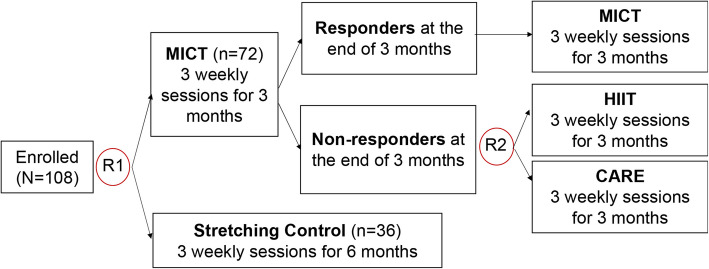 Figure 1
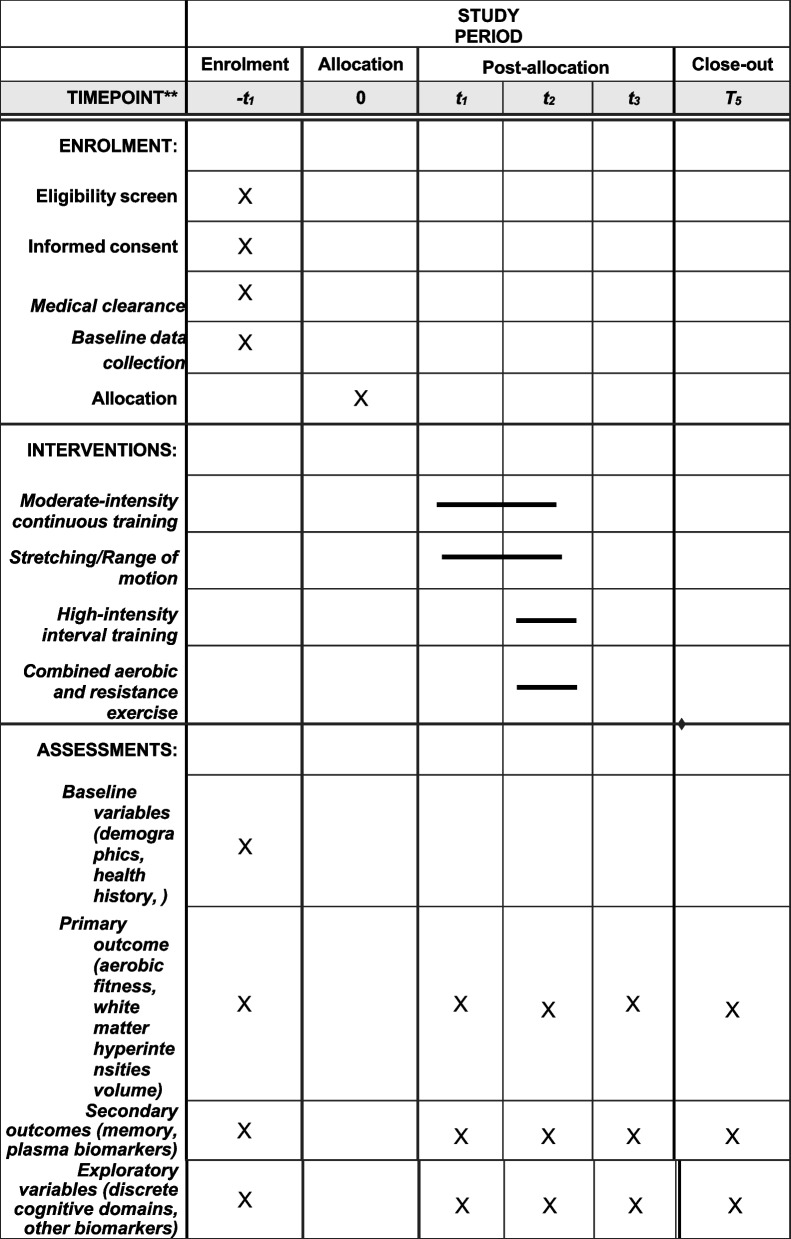 Figure 2
Peer Reviews
No public reviews on file for this paper yet. If you reviewed it on a platform where reviews are public (OpenReview, ICLR, NeurIPS, ICML), you can paste yours below so the community can read it here.
Videos
No videos yet. Explain this paper in a talk, walkthrough, or lecture? Add one.
Taxonomy
TopicsBalance, Gait, and Falls Prevention · Stroke Rehabilitation and Recovery · Cerebral Palsy and Movement Disorders