Phylogenomics of Western Eurasian Tilia: merging GBS datasets to place the Hyrcanian forest limes
Nastaran Ala, Ali Bagheri, Habib Zare, Axel Himmelbach, Dörte Harpke, Frank R. Blattner

TL;DR
This study uses genetic data to clarify the relationships among Tilia species in western Eurasia, focusing on populations in Iran's Hyrcanian forests.
Contribution
The study demonstrates that merging genotyping-by-sequencing datasets from different sources can resolve phylogenetic relationships in Tilia.
Findings
Merged GBS datasets revealed three major groups within Eurasian Tilia species.
Iranian Tilia samples were identified as tetraploid and genetically grouped with T. dasystyla subsp. caucasica.
Hyrcanian populations show a colonization pattern from northwest to east and include individuals resembling T. sabetii.
Abstract
Morphological uniformity in Tilia (Malvaceae s.l., Tilioideae) and unclear species delimitations resulted in over 500 names associated with the about 30 species of this genus. This is also an issue for the Hyrcanian Forest diversity hotspot of northern Iran, where between one and seven Tilia species were described to occur. We used genotyping-by-sequencing (GBS) to analyze the phylogeny of western Eurasian Tilia species, place the Hyrcanian Tilia populations, and infer their phylogeography. To arrive at a complete taxon sample, we merged our own data (104 samples) with a Tilia GBS dataset available in GenBank (11 samples) and processed and analyzed them together. We confirmed GBS data to be additive, i.e. independent datasets can be merged. We found three major groups within the Eurasian Tilia species and our analyses were able to resolve the phylogenetic relationships of the species.…
Genes, proteins, chemicals, diseases, species, mutations and cell lines named across the full text — each resolved to its canonical identifier and authoritative record.
Click any figure to enlarge with its caption.
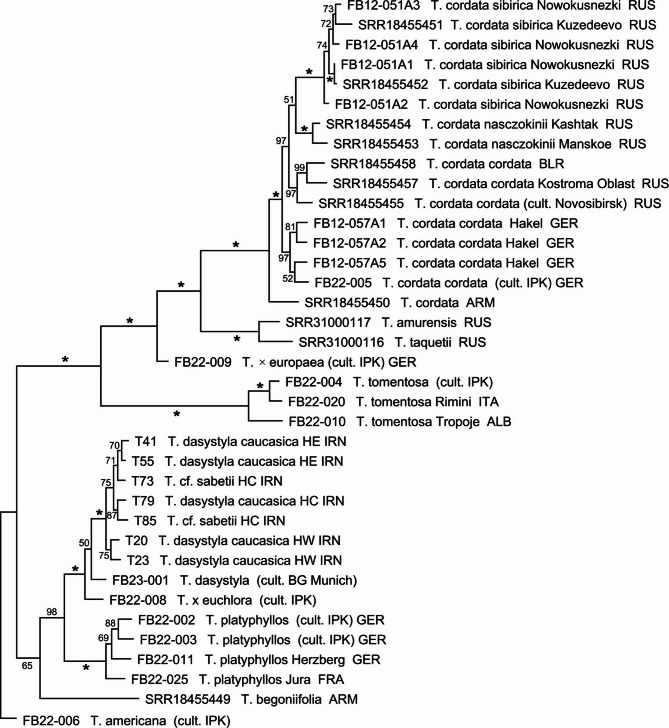 Figure 1
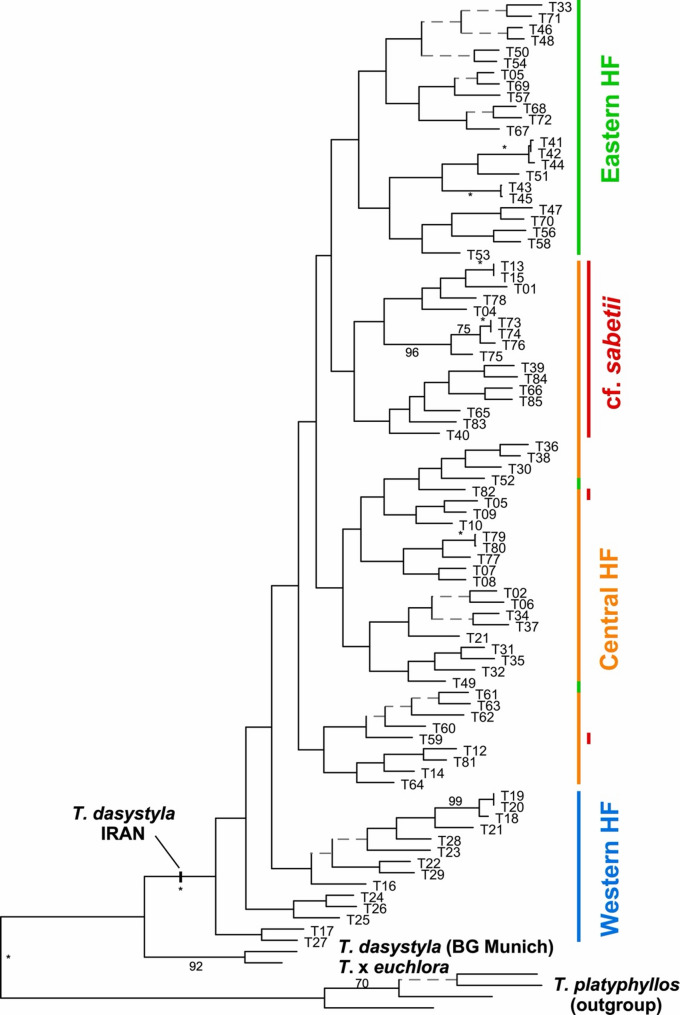 Figure 2
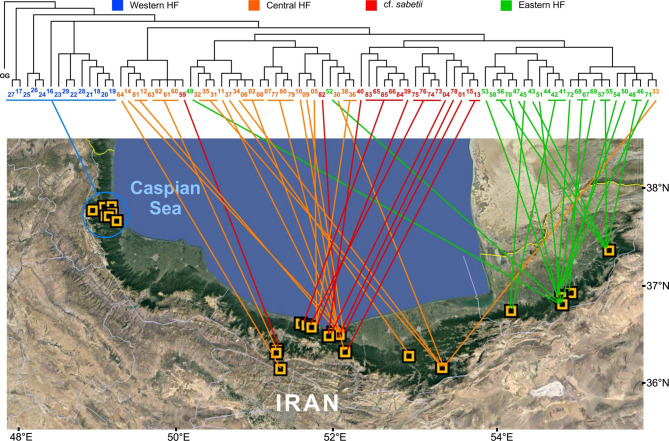 Figure 3
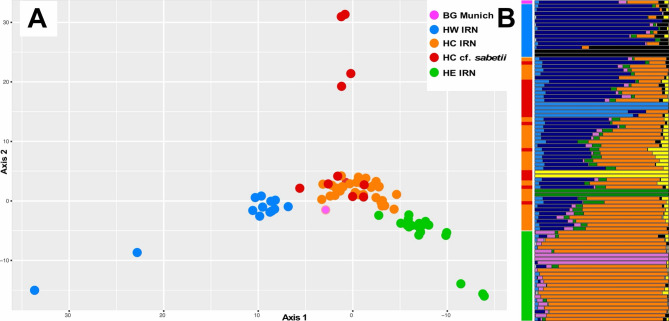 Figure 4
Peer Reviews
No public reviews on file for this paper yet. If you reviewed it on a platform where reviews are public (OpenReview, ICLR, NeurIPS, ICML), you can paste yours below so the community can read it here.
Videos
No videos yet. Explain this paper in a talk, walkthrough, or lecture? Add one.
Taxonomy
TopicsPlant and animal studies · Plant Diversity and Evolution · Genetic diversity and population structure