Prehospital invasive vs. non-invasive blood pressure monitoring: Impact on shock index at hospital admission in critically ill patients – a prospective intervention study
Jakob Ule, Tobias Hüppe, Julian Thiel, Benedikt Merscher, David Conrad, Thomas Schlechtriemen, Thomas Volk, Ulrich Berwanger

TL;DR
Using invasive blood pressure monitoring before hospital arrival improves blood pressure tracking and reduces shock severity in critically ill patients.
Contribution
This study shows prehospital invasive blood pressure monitoring reduces shock index at hospital admission in critically ill patients.
Findings
Patients with prehospital invasive blood pressure monitoring had a significantly lower shock index at hospital admission.
IBP patients received more catecholamine boluses and had better arterial blood gas parameters.
Invasive blood pressure monitoring was independently associated with improved hemodynamic outcomes.
Abstract
Hypotension and shock are potential modifiable contributors to adverse outcome. Inhospital, invasive blood pressure (IBP) monitoring is standard, while prehospital care mainly uses non-invasive blood pressure measurement. This study tested whether prehospital IBP monitoring improves shock index (SI) at hospital admission. This prospective interventional study included patients requiring prehospital intubation, catecholamines, or fluid resuscitation. Patients were assigned to prehospital IBP or Non-IBP group – according to the directives of the emergency physician. Primary endpoint was the SI at hospital admission. Secondary endpoints included catecholamines doses, fluid volume and arterial blood gas parameters (pH, lactate, base excess) at admission. Multiple regression analysis assessed whether IBP independently influenced SI at hospital admission. 392 patients were enrolled, and…
Genes, proteins, chemicals, diseases, species, mutations and cell lines named across the full text — each resolved to its canonical identifier and authoritative record.
Click any figure to enlarge with its caption.
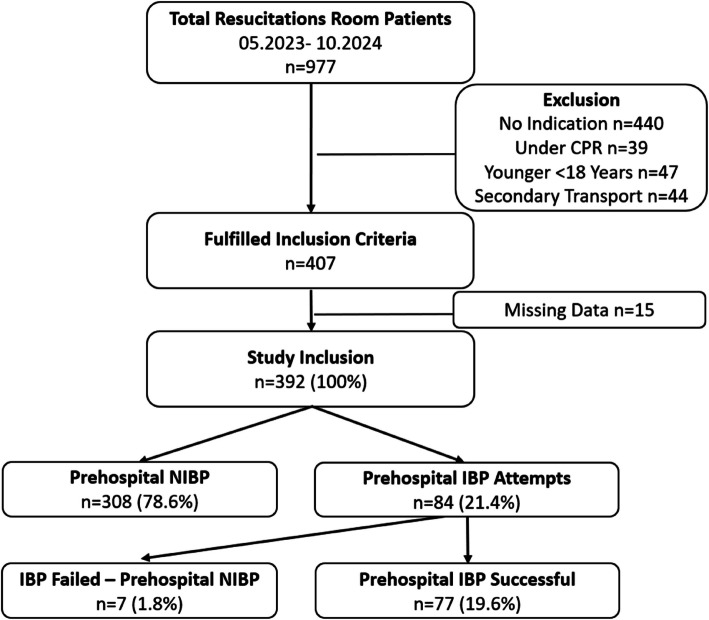 Figure 1
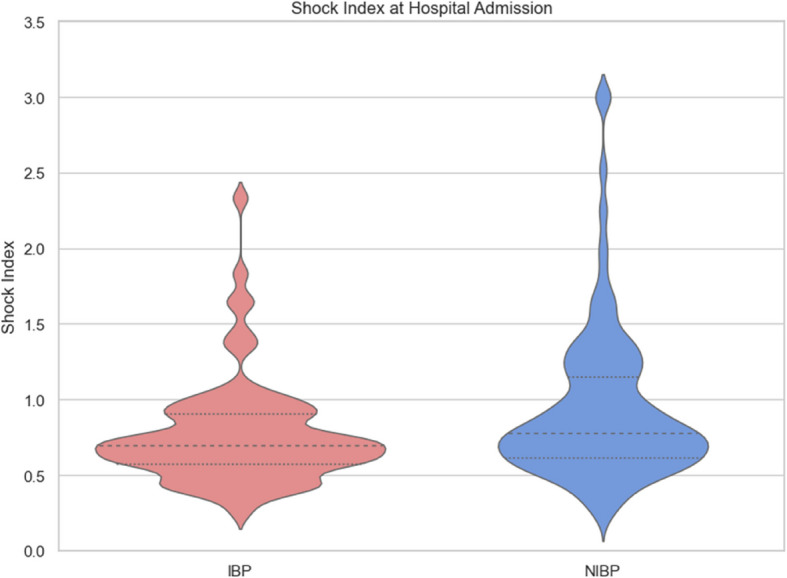 Figure 2
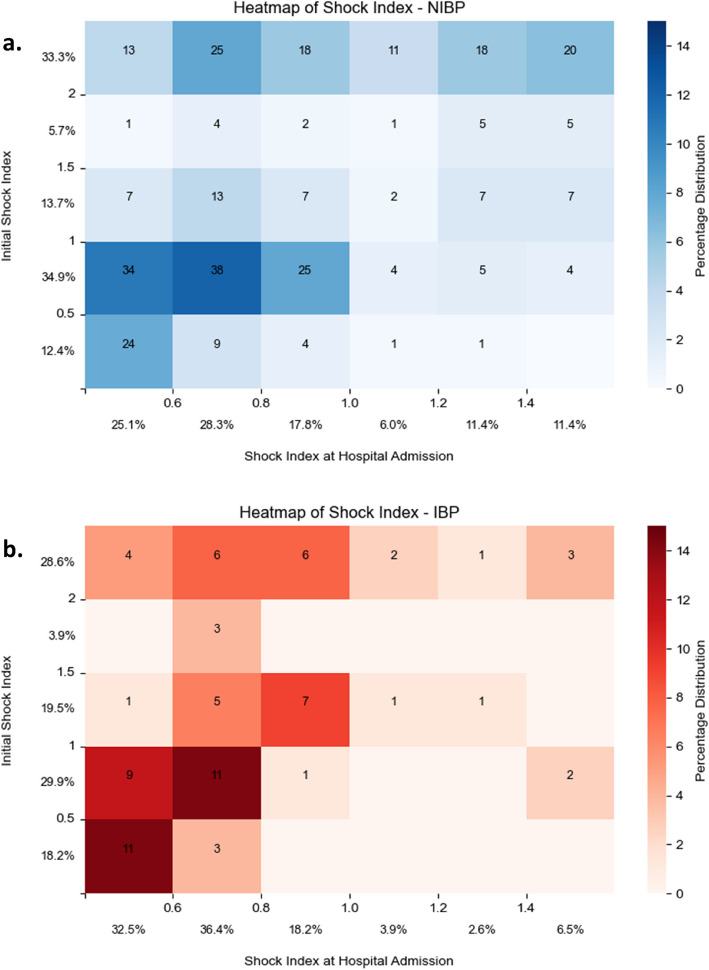 Figure 3
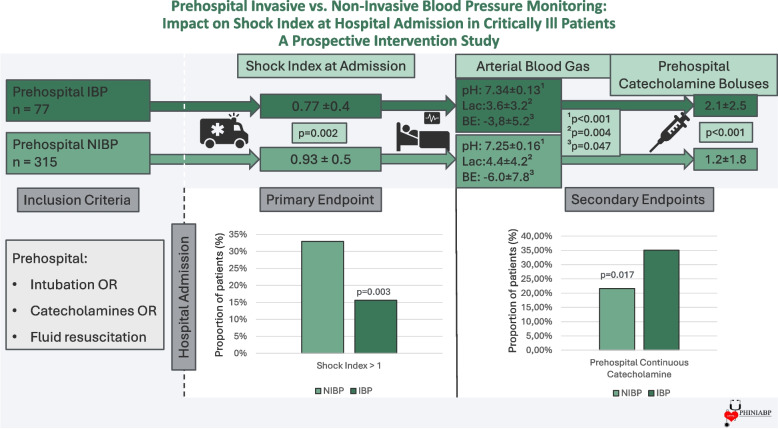 Figure 4
Peer Reviews
No public reviews on file for this paper yet. If you reviewed it on a platform where reviews are public (OpenReview, ICLR, NeurIPS, ICML), you can paste yours below so the community can read it here.
Videos
No videos yet. Explain this paper in a talk, walkthrough, or lecture? Add one.
Taxonomy
TopicsHemodynamic Monitoring and Therapy · Cardiac Arrest and Resuscitation · Sepsis Diagnosis and Treatment