Age and sex influence diurnal memory oscillations, circadian rhythmicity, and Per1 expression
Lauren Bellfy, Gretchen C. Pifer, Megan J. von Abo, Chad W. Smies, Alicia R. Bernhardt, Achintya Perumal, Madison J. Jackson, Janine L. Kwapis

TL;DR
This study shows that memory and circadian rhythms in mice change with age and sex, and the gene Per1 plays a role in these changes.
Contribution
The study reveals sex- and age-dependent effects on diurnal memory oscillations and Per1 expression in mice.
Findings
Old female mice show diurnal memory oscillations, with better memory during the day.
Old male mice have better memory at night and show stronger circadian disruptions.
Per1 expression aligns with diurnal memory patterns in both young and old mice.
Abstract
The circadian system influences many different biological processes across the lifespan, including memory performance and daily activity patterns. The biological process of aging causes decreased control of the circadian system that is accompanied by a decline in memory performance, suggesting that these two processes may be linked. Indeed, our previous work has shown that in male mice, the clock gene Per1 functions within the dorsal hippocampus to exert diurnal control over memory and repression of Per1 in the old hippocampus contributes to age-related impairments in spatial memory. Although it is clear that Per1 may be a key molecular link between memory and the circadian rhythm, next to nothing is known about how sex impacts this role in the young or old brain. Here, we are interested in understanding how the factors of sex and age impact memory performance, circadian activity…
Genes, proteins, chemicals, diseases, species, mutations and cell lines named across the full text — each resolved to its canonical identifier and authoritative record.
Click any figure to enlarge with its caption.
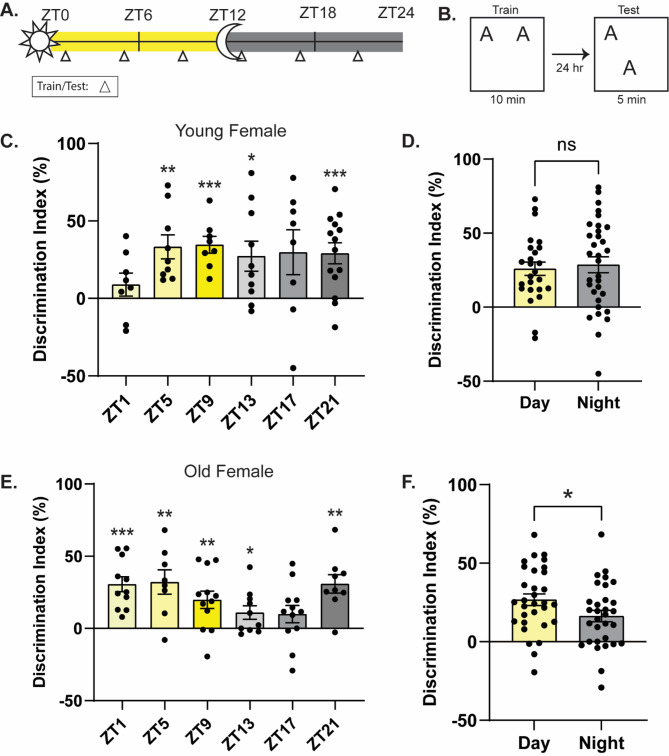 Figure 1
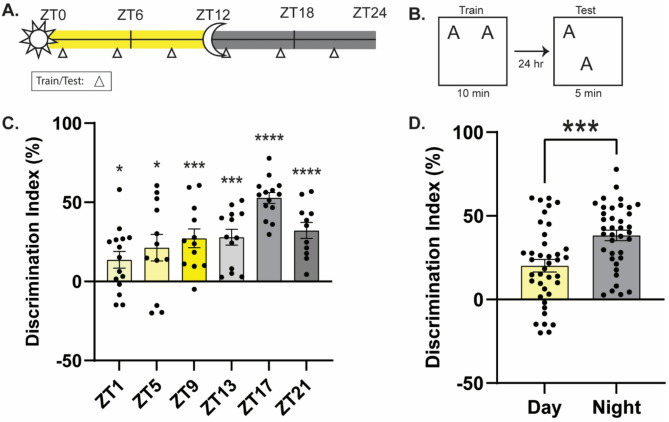 Figure 2
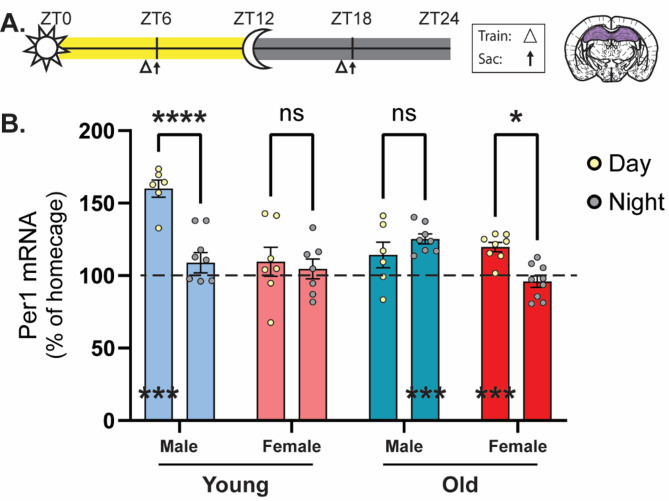 Figure 3
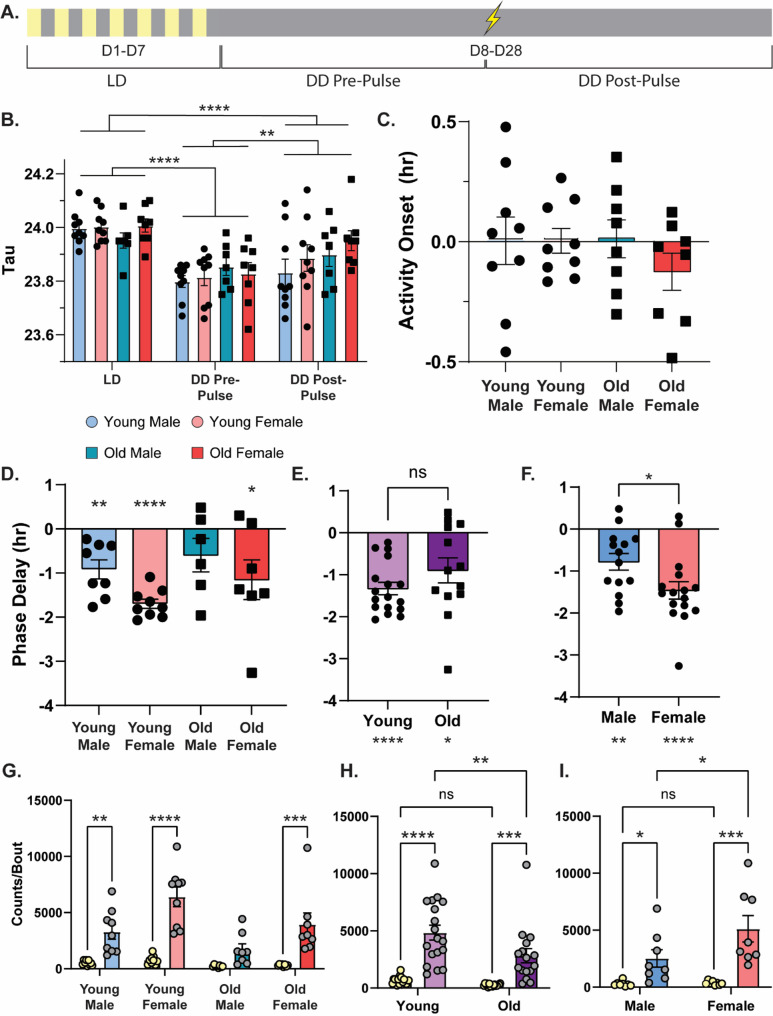 Figure 4
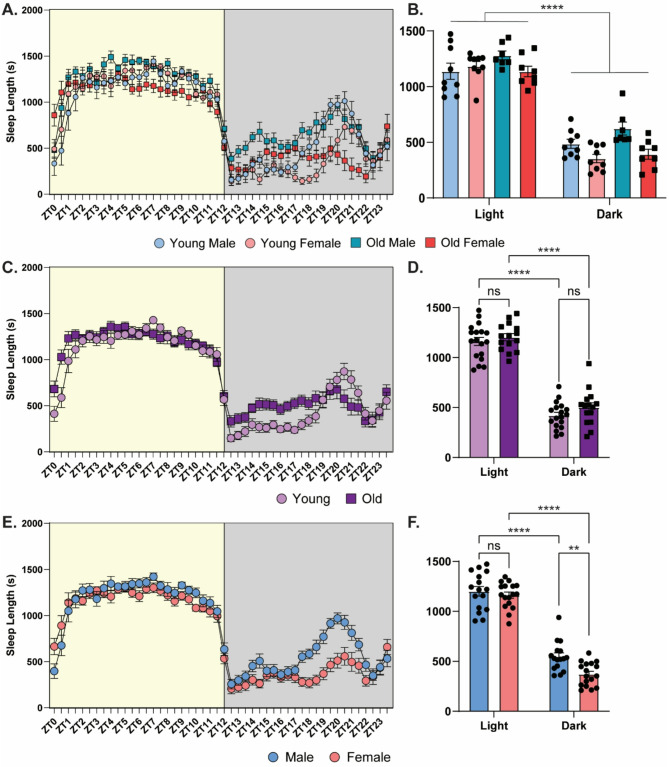 Figure 5
Peer Reviews
No public reviews on file for this paper yet. If you reviewed it on a platform where reviews are public (OpenReview, ICLR, NeurIPS, ICML), you can paste yours below so the community can read it here.
Videos
No videos yet. Explain this paper in a talk, walkthrough, or lecture? Add one.
Taxonomy
TopicsCircadian rhythm and melatonin · Memory and Neural Mechanisms · Sleep and Wakefulness Research